
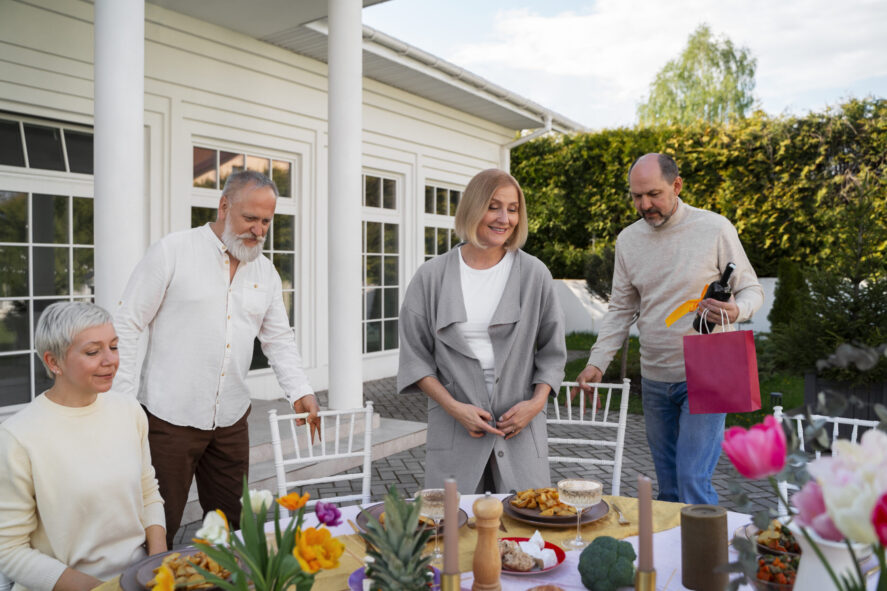
It’s interesting to note that for most of human history, multigenerational living has been the default. Today, it may sound like a special arrangement, but it is simply a way to return to one’s roots.
Two or three generations living under the same roof have a mix of practical and cultural benefits to offer. These include financial efficiency, child/elder care support, and emotional stability.
Now, for this to be the case, the shared living space must be suitable. No, it’s not as simple as owning a large home, although that’s important too. There are certain unique ways in which multigenerational living influences home design. This article will share four of the most prevalent ones.
Accessibility Is Built Into the Infrastructure
With multiple generations residing under the same roof, accessibility becomes a huge factor of consideration. Think of the UAE, wherein the residential elevator and escalator market was sized at 16,000+ units in 2024. At a CAGR of 2.87%, it is expected to reach 19,000+ units by 2030.
This means in cities like Dubai, homes are increasingly being designed with vertical mobility in mind. Ultimately, lifelong usability is the aim as residents want homes that evolve with their needs. By that account, common accessibility features built into modern home infrastructure include:
- Step-free entrances that improve daily movement.
- Wider circulation paths between rooms
- Bathrooms designed for safe use, regardless of age
- Layered lighting options for visual comfort
Within the same context, homeowners are also considering vertical movement during the planning stage itself. Space-saving lift solutions that require minimal structural changes can be installed in just a few days.
In practical terms, homeowners reviewing their layout options may come across systems such as a home lift by Cibes in Dubai while comparing circulation strategies. These may be considered alongside staircases, ramps, or room placement for a better flow from the beginning.
Shared Living Now Requires Separate Zones for Privacy
Did you know that multigenerational living has become a pattern? As per a 2025 report, 17% of homes purchased in 2024 were multigenerational households. That’s the highest share recorded since the time the tracking began.
It’s good news that families want to live under one roof. This surge is driven by economic considerations and caregiving responsibilities. Now, this also means that different routines make privacy and functional separation key factors in design.
To keep up, architects and designers cannot fully rely on open-floor plans either. They are focusing on privacy-centric zoning to balance togetherness and independence. Effective strategies include:
- Distinct bedroom wings that separate quieter sleeping zones from active social areas.
- Independent parent or guest suites positioned near secondary access points.
- Work or study areas with sound insulation for both adults and children.
- Separate areas for leisure and relaxation that exude the vibe of retreats.
- Transitional spaces or corridors that help manage traffic and sound.
Futureproofing Drives Investment Decisions
A view of the future is no longer an optional amenity since families wish to inhabit their homes for decades. A recent housing trend analysis showed that over half of Baby Boomers have pledged to never sell their homes.
Moreover, many members of Generation X plan to occupy their residences until they have no other choice but to move. Such a trend has elevated futureproofing from a stylistic option to one with strategic value.
Modern-day houses must support hybrid work routines, home-based caregiving, and children’s developmental needs. This is precisely why the following future-proof design choices have become commonplace:
- Structural planning that accommodates later conversions, like turning a guest room into an elder suite.
- Smart home infrastructure that supports future automation and monitoring systems.
- Interiors that reduce energy wastage and adapt to changing usage.
- Walls and floors that are ready for stair lifts or assistive technology
Besides stretching a home’s functional lifespan, such features also enhance its resale value.
For a while, homes tried to imitate hotel rooms. Now, they’re leaning more towards harmonious ecosystems. In other words, one living room can host three generations, and the flow of the space matters more than how perfectly the cushions match.
The next phase of multigenerational living won’t look crowded. Expect houses designed to make room for changing routines and lifestyles. Everyone will be able to dwell harmoniously without friction or loss of privacy. Well, that is exactly what a win-win situation looks like.
Blog received on Mail