
OQ Alternative Energy (OQAE) has reached major milestones across its Riyah 1, Riyah 2, and North Oman Solar projects, which are expected to be operational by the end of this year and will collectively deliver 330 MW of renewable power. Together, the projects have set several national records, including the development of Oman’s largest wind farm and the transportation of the country’s longest inland convoy. They have also exceeded their in-country value (ICV) commitments, achieving approximately 30% local content. This strong performance positions these projects as one of Oman’s strongest-performing renewable energy developments, delivering substantial economic impact and setting a new benchmark for national industrial participation.
These projects are a partnership between OQAE and TotalEnergies and represent a combined investment of more than USD 230 million. Comprising the Riyah 1 and Riyah 2 wind projects located at Petroleum Development Oman’s (PDO) Amin and West Nimr fields in southern Oman, as well as the North Oman Solar plant at Saih Nahaydah in northern Oman, the projects and will add more than 330 MW of renewable wind and solar capacity to power PDO’s grid upon commissioning by the end of this year. Beyond clean power generation, the projects have been deliberately structured to serve as platforms for local capability building, industrial participation and workforce development, in line with Oman Vision 2040 and Net Zero 2050 ambitions.
North Oman Solar (NOS) is progressing steadily toward the final stages of mechanical completion, marking an important milestone in delivering utility-scale renewable power to Oman’s grid. The project has reached 95% completion of tracker and photovoltaic (PV) module installation, with full PV module installation targeted by mid-March 2026.
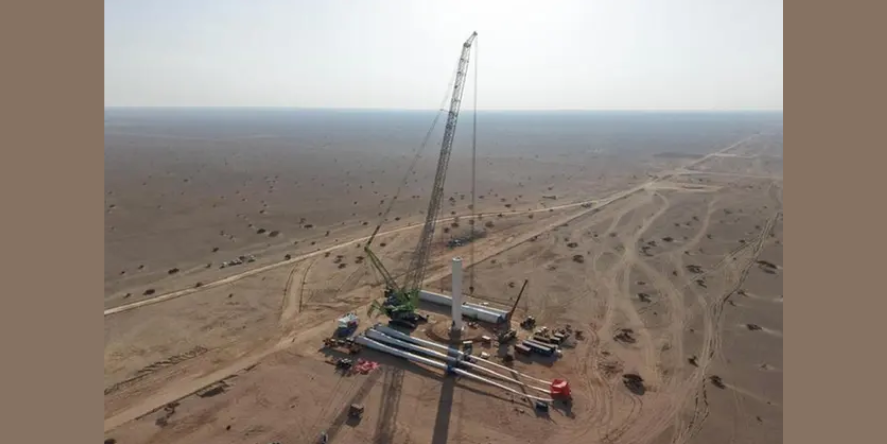
For the Riyah 1 and Riyah 2 wind projects, major construction milestones have also been achieved. Seven wind turbines with a 200 m tip height have been fully erected, with installation activities continuing to complete the remaining turbines. Importantly, all 36 wind turbine generators have successfully arrived in Oman, with 19 already transported from the port to project sites, and 100% of the wind turbine foundations have been completed, enabling the project teams to accelerate turbine erection and advance toward commissioning in the coming months.
From early-stage procurement through construction, the projects have embedded an ICV-first approach. To date, approximately 30% of total project expenditure has been retained within the national economy, engaging local Omani companies across engineering, electrical systems, logistics, roads, civil works and specialist services.

Key local manufacturers including Voltamp, Oman Cables, Al Kiyumi Switchgear and Al Hassan Switchgear supplied critical infrastructure components, covering power transformation systems, medium- and low-voltage equipment, electrical cabling and distribution boards. Substation engineering design was executed locally by Worley Oman, strengthening domestic capabilities and ensuring technical knowledge remains embedded in Oman’s energy ecosystem. Complex logistics and customs management for turbine components were managed by Khimji Ramdas, expanding national expertise in specialised renewable supply chains.
Omanisation performance has also surpassed baseline expectations. The projects have achieved a 40% Omani workforce participation rate, creating approximately 150 direct and indirect jobs across development and construction phases. In coordination with authorities in Wilayat Adam, Shaleem and Al Jazir, a structured community hiring programme was implemented to ensure host communities directly benefit from employment opportunities associated with renewable infrastructure.
Crucially, OQAE has embedded an on-the-job local capability development program within these projects’ structure. Under this program, 15 Omani professionals have been placed shadowing construction management, engineering, HSE and operational functions alongside international specialists. This structured capability-building approach is designed to accelerate the development of national renewable expertise and create a sustainable pipeline of wind and solar energy professionals.
“One of our strategic goals is to promote a local ecosystem for renewable energy. Exceeding our in-country value target by three times reflects this commitment and was deliberately planned. These projects were designed from the outset to ensure that every megawatt delivered simultaneously strengthens Oman’s industrial base, workforce capability and technical expertise”, said Kumail Said, Acting CEO of OQ Alternative Energy. He added, “Renewable energy can do more than decarbonize. By working with local businesses, we help advance the local renewable energy ecosystem, creating lasting benefits for Oman for decades to come”.
As Oman’s designated National Champion for Renewable Energy, OQAE’s mandate extends beyond project delivery to steward the development of a clean energy sector that drives economic diversification, industrial growth and energy security. These projects sit within OQAE’s broader pipeline of renewable opportunities and align with its objectives to displace natural gas, reduce greenhouse gas emissions and catalyse private sector investment. With commissioning targeted for the end of the year, North Oman Solar, Riyah 1 and Riyah 2 are positioned not only to expand Oman’s renewable capacity by 330 MW but also to reinforce the foundations of a domestically anchored, globally competitive clean energy sector.