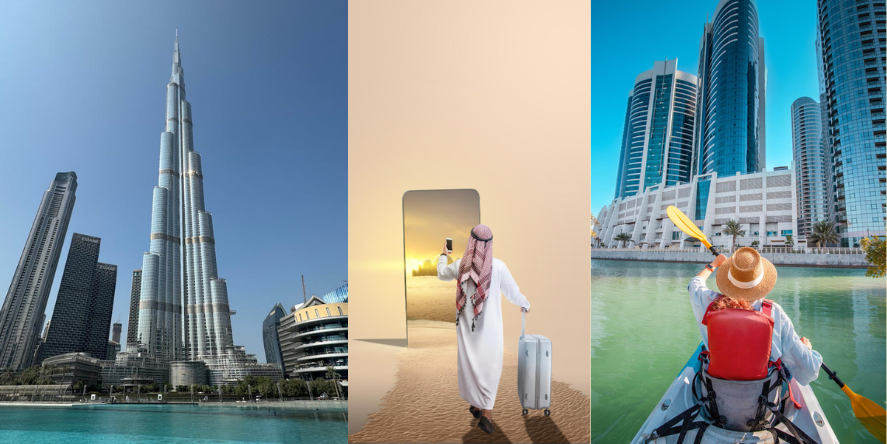

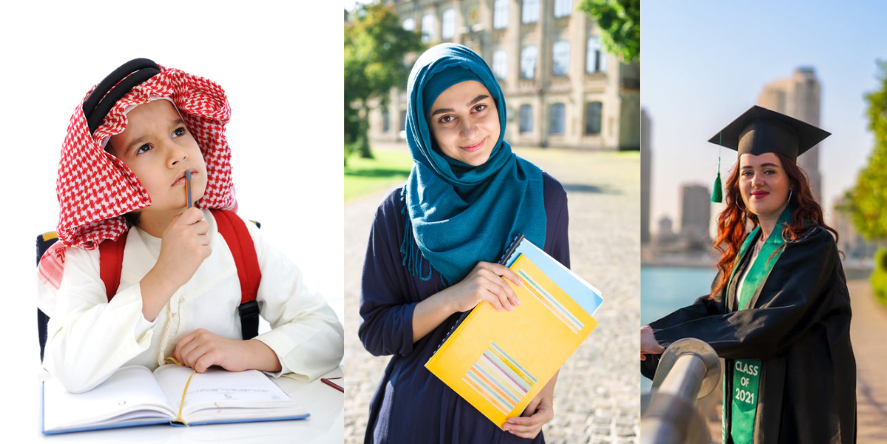
The story of higher education in the UAE is one of ambition, transformation, and global collaboration. In just a few decades, the country has built a system that not only serves its citizens but also attracts students from across the world. The campuses at Abu Dhabi, Dubai, Sharjah, and Al Ain display a fusion of tradition and innovation, where local universities stand alongside international institutions, each contributing to a knowledge ecosystem designed to propel the nation into the future.
The journey of higher education in the Emirates begins with the country’s flagship institutions forming as an artistic mural depicting the diversity of learning and the canvas of education looks promising and vibrant. United Arab Emirates University in Al Ain, established in 1976, remains a cornerstone of Emirati higher education. It offers a wide spectrum of programmes, from medicine and engineering to humanities and commerce, and has become a symbol of the nation’s commitment to nurturing intellectual capital. Khalifa University in Abu Dhabi represents the UAE’s technological frontier. With its focus on engineering, AI, robotics, aerospace, and defence studies, it mirrors the country’s strategic vision of becoming a leader in innovation and security. The University of Sharjah and Zayed University add breadth to this landscape, offering strong programmes in medicine, life sciences, humanities, and management, while the Mohammed Bin Rashid University of Medicine and Health Sciences in Dubai has quickly established itself as a hub for medical education and research.
The global footprints
The UAE’s higher education story is not confined to local institutions. The country has attracted some of the world’s most prestigious universities to establish campuses on its soil, creating a cosmopolitan academic environment. New York University Abu Dhabi offers a liberal arts education with a global outlook, blending humanities, social sciences, and cutting-edge research. Sorbonne University Abu Dhabi brings French intellectual traditions to the Gulf, offering programmes in law, humanities, and management. In Dubai, Heriot-Watt University and the University of Birmingham provide strong foundations in business, commerce, and engineering, while Rochester Institute of Technology Dubai specialises in technology, computing, and robotics. Manipal Academy of Higher Education, with its roots in India, contributes to medicine, engineering, and commerce, reflecting the UAE’s openness to diverse academic traditions.
Across these institutions, the various fields of study mirror the UAE’s national priorities. Technology and AI are at the forefront, with Khalifa University and RIT Dubai (Rochester Institute of Technology) leading research in autonomous systems, machine learning, and robotics. Medicine and life sciences are equally prominent, with Mohammed Bin Rashid University and the University of Sharjah aligning their programmes with the country’s ambition to be a global hub for healthcare and medical tourism. Defence studies, though less visible, are embedded in Khalifa University’s aerospace and security research, reflecting the strategic importance of national resilience. Commerce and management thrive in the programmes of Zayed University, Heriot-Watt, and Birmingham Dubai, preparing graduates for leadership in a globalised economy. Humanities, often overlooked in discussions of innovation, find strong representation at NYU Abu Dhabi and Sorbonne Abu Dhabi, ensuring that the UAE’s knowledge ecosystem remains balanced and culturally grounded.
A global-local blend
What makes this knowledge ecosystem in the Emirates higher education remarkable is not just the diversity of disciplines but the integration of local and global perspectives. Emirati students study alongside peers from Asia, Europe, Africa, and the Americas, creating classrooms that mirror the multicultural fabric of the UAE itself. Faculty members bring expertise from across the world, while research collaborations link UAE universities to international networks. This global-local blend has ensured that students are not only prepared for careers within the region but also equipped to contribute to global conversations in technology, medicine, commerce, and the humanities.
The UAE’s higher education system also reflects its broader national strategies. The country’s AI Strategy 2031, for instance, has spurred universities to invest heavily in Artificial Intelligence and robotics. Khalifa University’s laboratories and RIT Dubai’s programmes are responses to this vision, training the next generation of AI specialists. Similarly, the emphasis on healthcare innovation aligns with Dubai’s ambition to be a medical tourism hub, making institutions like Mohammed Bin Rashid University central to national development. Defence studies, though less publicised, are critical to the UAE’s geopolitical positioning, and universities contribute through research in aerospace, cybersecurity, and policy.
For students, this landscape offers both opportunity and challenge. The opportunity lies in access to world-class education without leaving the region, in fields that are directly tied to the UAE’s economic and strategic priorities. The challenge lies in navigating a system that is both competitive and diverse, requiring adaptability and a global mindset. A student pursuing AI at Khalifa University may find collaborating with peers at NYU Abu Dhabi on ethical implications of technology, or with Sorbonne Abu Dhabi on policy frameworks. A medical student in Dubai may engage in research that links local healthcare needs with global innovations. This is how UAE’s higher education system encourages interdisciplinary thinking and cross-cultural collaboration.
The story of higher education in the UAE is ultimately a story of vision. It is about a nation that recognised early on that oil wealth alone could not sustain its future, and that knowledge, innovation, and human capital were the true engines of future progress. By building universities that span technology, medicine, management, defence, life sciences, humanities, commerce, and AI, and by inviting global institutions to share this journey, the UAE has positioned itself as a rising academic hub.
By carefully analysing the campuses of Abu Dhabi and Dubai, laboratories of Sharjah and Al Ain universities, one sees the contours of a future where the UAE is not just a consumer of knowledge but a producer of ideas. The higher education system is not merely about degrees and diploma – it is about building a society that can think critically, innovate boldly, and engage globally. And in that sense, the UAE’s universities are more than institutions of learning; they are the architects of a nation’s future. It is safe to assume that the UAE is not just building universities—it is building a knowledge ecosystem that positions itself as a global leader in higher learning.
Overview of Higher Education in the UAE
Regulated by the Ministry of Education and the Commission for Academic Accreditation (CAA).
Public universities primarily serve Emirati nationals, while private and foreign universities attract international students.
The UAE emphasizes STEM, innovation, and AI as part of its national strategy for sustainable development.
Major Local Universities
United Arab Emirates University (UAEU, Al Ain): Founded in 1976, offers courses in medicine, engineering, humanities, and business.
Khalifa University (Abu Dhabi): Known for engineering, AI, robotics, aerospace, and defence studies.
University of Sharjah: Offers medicine, life sciences, humanities, and commerce.
Zayed University (Dubai & Abu Dhabi): Courses such as management, humanities, and communications are its strength.
Mohammed Bin Rashid University of Medicine and Health Sciences (Dubai): Specialises in medical education and research.
Foreign Universities in the UAE
Dubai and Abu Dhabi host numerous international branch campuses:
New York University Abu Dhabi (NYUAD): Liberal arts, humanities, social sciences, and global research.
Sorbonne University Abu Dhabi: Humanities, law, and management.
Heriot-Watt University Dubai: Engineering, business, and management.
University of Birmingham Dubai: Business, commerce, and life sciences.
Rochester Institute of Technology (RIT Dubai): Technology, AI, robotics, and Computing.
Manipal Academy of Higher Education (Dubai): Medicine, engineering, and Commerce.
| Fields of Study | |
| Discipline | Key Institutions in UAE |
| Technology & AI/Robotics | Khalifa University, RIT Dubai, UAEU |
| Medicine & Life Sciences | Mohammed Bin Rashid University, University of Sharjah, Manipal Dubai |
| Management & Commerce | Zayed University, Heriot-Watt Dubai, University of Birmingham Defence Studies |
| Defence Studies | Khalifa University (aerospace & defence research), UAEU (Policy studies) |
| Humanities | NYU Abu Dhabi, Sorbonne Abu Dhabi, Zayed University |
Strategic Importance
AI & Robotics: The UAE has invested heavily in AI education, with Khalifa University and RIT Dubai leading research in autonomous systems and machine learning.
Medicine: Dubai’s Mohammed Bin Rashid University is central to healthcare innovation, aligning with the UAE’s ambition to be a medical tourism hub.
Defence Studies: Khalifa University collaborates with national defence sectors, reflecting the UAE’s strategic focus on aerospace and security.
Commerce & Management: International campuses like Heriot-Watt and Birmingham Dubai prepare graduates for global business leadership.
Blog by Imtiaz Ahmed Shariff