
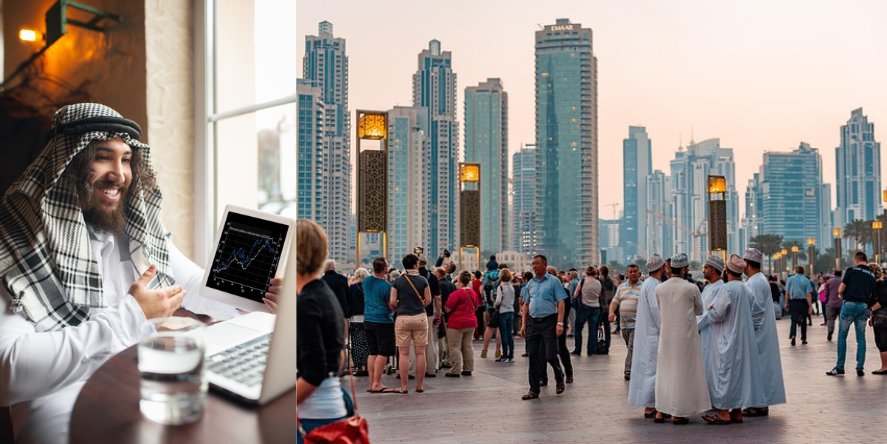
The UAE’s core sector – oil and gas, manufacturing, shipping, and infrastructure – remain the backbone of its economy, driving diversification while reinforcing its global trade hub status. Oil continues to anchor revenues, but manufacturing, logistics, and infrastructure are expanding rapidly to support long-term resilience.
Oil production remains central, with OPEC+ strategies and upstream investments ensuring steady growth. According to International Trade Administration (USA) the UAE is among the world’s 10 largest oil producers. Around 96% of the UAE’s estimated 100 billion barrels of proven oil reserves are located in Abu Dhabi, placing it sixth in the world. The country produces an average of about 3.2 million barrels of petroleum and other liquids each day. The U.S. Energy Information Agency says the UAE holds the seventh-largest proven reserves of natural gas in the world at over 215 trillion cubic feet.
Hydrocarbons play a crucial role in the UAE economy. With 30% of the UAE’s GDP directly based on oil and gas industry and 13% of its exports, the UAE depends heavily on profits from oil and gas exports. The Emirates holds the seventh-largest proven reserves of natural gas in the world at over 215 trillion cubic feet. The UAE is also investing hugely in energy diversification, including renewables and hydrogen, to balance reliance on hydrocarbons. Petrochemicals and downstream industries are being expanded to capture more value from crude exports. Despite global volatility due to the ongoing geopolitical tension in the region, oil revenues continue to fund infrastructure and diversification projects. The Emirates is embarking on diversification at the lightning speed to minimise dependency on “liquid gold” (Most commonly refers to petroleum or crude oil). So the Emirates has adopted a hybrid economic development model where both oil and non-oil sectors bond well to perk up the future growth story of the region.
The Strategic Shift via Diversification
The United Arab Emirates, once synonymous with oil wealth, has transformed into a diversified economy where non-oil sectors drive the GDP. This shift is the result of development policy and a realisation that oil alone cannot sustain long-term prosperity. Today, non-oil sectors contribute over 70% of GDP, with tourism, real estate, logistics, finance, technology, and renewable energy emerging as the country’s new core business pillars. The UAE leaders realised that the UAE’s core sectors form a mosaic of resilience and a new growth story beyond oil.
The uniqueness of this new development approach of the Sheiks of UAE is farsightness. The logic of this change is based on the principal that tourism showcases culture, real estate builds skylines, logistics connects continents, finance drives innovation, technology shapes the future, and renewables ensure sustainability. The diversified sectors driving growth of the Emirates are:
Tourism and Hospitality
Tourism is arguably the UAE’s most visible non-oil sector. Dubai and Abu Dhabi have become global icons of luxury travel, attracting millions of visitors annually. From the Burj Khalifa and Palm Jumeirah to cultural landmarks like the Louvre Abu Dhabi, the Emirates have positioned themselves as destinations blending tradition and modernity. Mega-events such as Expo 2020 and subsequent cultural festivals cemented the UAE’s reputation as a hub for global gatherings. By the end of 2026, tourism sector is expected to contribute billions to GDP, supported by world-class hospitality brands and a thriving aviation sector led by Emirates Airlines and Etihad Airways. Tourism contributes over 12% of GDP, with Dubai and Abu Dhabi welcoming millions annually.
Building Skylines and Communities
As part of the hybrid growth strategy, Real Estate, as a Core sector, remains a cornerstone of the UAE’s growth trajectory. Dubai’s skyline continues to evolve with futuristic projects, while Abu Dhabi invests in sustainable urban planning. Flagship developments like Dubai Creek Harbour and Masdar City showcase a blend of luxury, sustainability, and smart-city innovation. The sector is not just about skyscrapers – it also reflects the UAE’s role as a safe haven for global investors, with property laws and freehold ownership attracting expatriates and multinational corporations. However, due to the ongoing geopolitical tensions in the region, experts, developers, investors and the stakeholders are keeping their fingers crossed.
Policy makers, urban planners, bureaucrats, investors, housing finance institutions and foreign buyers of homes are hoping that the crisis will end soon so that this sector picks up the brick that was left behind before the crisis unfolded.
Top projects: Dubai Creek Harbour, Masdar City, Expo Legacy District. Freehold ownership laws attract global investors, while sustainable projects like Masdar City showcase the UAE’s commitment to smart living.
Logistics and Trade hub
The UAE’s strategic location makes it a natural logistics hub. One of the largest airports in the globe is Jebel Air Port located in Dubai,while Abu Dhabi’s Khalifa Port continues to expand capacity. Coupled with Dubai International Airport and Abu Dhabi International Airport, the UAE has positioned itself as a global gateway for goods and people. Logistics is not just about infrastructure – it is about connectivity. The UAE’s free zones, such as Dubai’s JAFZA, provide tax incentives and streamlined regulations, making the country a magnet for multinational supply chains. Ports, airports, and free zones like JAFZA make it a seamless hub for global trade. Every container, every flight reinforces its role as a crossroads of commerce.
Finance and Fintech Segment
The UAE’s financial sector, non-oil segment, has matured into a regional powerhouse. The Dubai International Financial Centre (DIFC) hosts over 1,000 Fintech firms, making it one of the largest concentrations outside Silicon Valley and Singapore. By the end of 2026, Dubai’s digital economy is expected to contribute 25% to GDP, surpassing earlier targets. Fintech, blockchain, and digital banking are reshaping the financial landscape, while Abu Dhabi’s ADGM (Abu Dhabi Global Market) strengthens the country’s role as a global investment hub.
Finance & Fintech DIFC hosts over 1,000 Fintech firms; digital economy also contribute 25% of Dubai’s GDP.
Dubai International Financial Centre and Abu Dhabi Global Market are magnets for Fintech innovation. Blockchain, AI-driven banking, and digital currencies are reshaping the financial landscape, positioning the UAE as a regional capital of smart finance. AI, quantum computing, and green technologies are nurtured through accelerators and government-backed programmes. The UAE’s ambition is clear: to lead in digital transformation and sustainable innovation for sustaining growth.
AI, Technology and Innovation
Technology is no longer a supporting sector. It is now central to the UAE’s economic vision under the hybrid approach. Dubai’s Smart City initiatives and Abu Dhabi’s Masdar City highlight the country’s commitment to innovation. Smart City initiatives aim for 100% paperless governance in Dubai. Over 80% of government services now run on AI-driven platforms.
Artificial Intelligence, quantum computing, and green technologies are actively promoted, with government-backed accelerators nurturing startups. The UAE’s ambition is to be a global leader in digital transformation and sustainable innovation. Dubai Future Foundation incubates over 200 AI startups annually.
Accelerators, venture capital, and free zones nurture startups in AI, robotics, and biotech. The UAE’s ecosystem is designed to attract global talent, offering incentives and infrastructure that rival Silicon Valley.
The UAE’s Digital Economy strategy aims to double the contribution to non-oil GDP to 20% by 2031. The Dubai Chamber of Digital Economy aims to boost the digital economy’s contribution to over $100 billion annually by 2031. According to IMF’s Country Report, the Digital Economy Strategy (DES) of the UAE, The Emirates is focusing on six key areas:
- Digital infrastructure
- Unified digital platform, and common digital enablers
- Integrated, easy, and fast digital services
- Digital capabilities and skills
- Legislation
- Raising efficiency of government work
.
The UAE is steadily advancing reforms driven by information and communication technology across various economic sectors to strengthen digital transformation.
Renewable Energy for Sustainable Future
While, oil built the UAE, renewable energy is set to sustain it. Masdar City is a symbol of this transition, exporting green technologies and hosting solar and wind projects. The UAE has pledged to achieve net-zero emissions by 2050. The renewable energy projects are expanding rapidly. Investments in hydrogen fuel, solar farms, and carbon capture technologies reflect the country’s determination to balance economic growth with environmental responsibility. Solar panels are increasingly stretching across desert landscapes. Solar farms, hydrogen fuel projects, and carbon capture initiatives highlight the country’s pivot toward sustainability.
Human Capital at the Core
Beyond infrastructure and finance, the UAE invests heavily in healthcare and education. Medical tourism is growing, with Dubai Healthcare City attracting patients from across Asia and Africa. Meanwhile, universities such as NYU Abu Dhabi and Khalifa University strengthen the country’s knowledge economy. These sectors are not just about services – they are about building human capital, ensuring that Emiratis and expatriates alike thrive in a competitive global environment.
Dubai Healthcare City attracts medical tourists; Khalifa University leads in AI research.
Healthcare and education are not peripheral, they are central to the UAE’s growth. Universities and medical hubs strengthen the knowledge economy, ensuring Emiratis and expatriates thrive in a competitive global environment.
The UAE’s story is one of deliberate and definitive reinvention. Oil wealth provided the foundation, but diversification is building resilience. Tourism is showcasing culture and luxury, real estate creating skylines, logistics connecting continents, finance is driving innovation, technology is shaping the future, and renewable energy enabling sustainability. Together, these sectors form a mosaic of progress – each piece essential, each reflecting the UAE’s ambition to be more than an oil economy.
By the end of this year, the UAE may not just be a Gulf nation – it will turn into a global business hub, a crossroads of commerce, culture, and creativity. Its core sectors are not isolated industries but interconnected ecosystems, each reinforcing the other. The Emirates are proving that with vision, policy, and investment, a nation can transform itself from oil dependency into a diversified powerhouse.
Manufacturing
- The UAE’s manufacturing sector is growing in metals, plastics, food processing, and pharmaceuticals. Industrial free zones (e.g., Jebel Ali Free Zone, KIZAD) provide tax incentives and advanced logistics for manufacturers.
- Government initiatives under “Operation 300 bn” aim to make manufacturing contribute 25% of GDP by 2031, focusing on advanced industries like aerospace and defence.
Shipping
The UAE is home to Jebel Ali Port, one of the world’s largest and busiest, serving as a gateway for Asia–Middle East–Europe trade. DP World, headquartered in Dubai, operates ports globally, reinforcing the UAE’s maritime influence. Shipping is integrated with aviation logistics through Dubai International Airport and Al Maktoum Airport, creating a seamless multimodal hub.
Infrastructure
The UAE continues to invest in mega projects such as Expo City Dubai, Etihad Rail, and smart city initiatives. Construction and real estate remain strong, driven by population growth and foreign investment. Transport infrastructure – roads, metro systems, and airports – are being expanded to support tourism and trade.
A figurative view
The Central Bank of the UAE (CBUAE), in its Quarterly Economic Review, has estimated the real GDP growing by 4.4% in 2025 (Up from 4.0% in 2024) before accelerating further to 5.4% in 2026. It pointed out that the non-oil sector will continue to grow on the back of ongoing investment-friendly policies that foster innovation in sectors from manufacturing and tourism to transport and the digital economy.
According to ICAEW (Institute of Chartered Accountants in England and Wales) report the
non-oil exports of the UAE recorded a near 45% increase year-on-year in H1 of 2025.
According Federal Competitiveness and Statistics Centre, in 2024 non-oil economy contributed 75.5% of GDP due to surge in trade, finance, and construction activities.
According to Mordor Intelligence report, the UAE is expanding in areas such as green hydrogen to produce 15 million tonnes per year by 2050. Its analysis says by technology, solar energy captured 97.60% of the UAE’s Energy market share is 2025. Wind energy is set to expand at a 47.9% CAGR through 2031.
Key highlights from sectoral performance in 2024 & 2025 (Partial):
- Transport and storage emerged as the fastest-growing sector, attaining 9.6% YoY, perked up by high airport traffic with 147.8 million passengers.
- Construction and building grew by 8.4% due significant investment in urban development projects.
- Real Estate grew by 4.8%.
- Manufacturing: Grew by 7.7% in the first quarter of 2025. Industrial exports surged by 25% to reach $71.3 billion in 2025, driven by a 42% growth in medium and high-technology industries.
- Financial and Insurance Activities: Recorded a 7% increase in 2024. Total assets of UAE-based banks grew by 13% year-on-year by March 2024, with top listed banks generating a 63% year-on-year profit increase.
- Tourism and Hospitality: Hospitality and food services grew by 5.7% in 2024. Dubai welcomed a record 19.59 million overnight visitors in 2025, a 5% increase over the previous year.
- Real Estate: Activities expanded by 4.8% in 2024 and accelerated to 6.6% in early 2025. Dubai’s real estate transaction value reached AED 761 billion in 2024, marking a 35.8% increase.
Contribution to GDP by non-oil sectors
- Trade contributed 16.8% to GDP
- Manufacturing accounted for 13.5%
- Financial and insurance stood at 13.2%
- Construction contributed 11.7%
- Real estate made up 7.8% of the non-oil economy.
Blog By Imtiaz Ahmed Shariff