
Across the Gulf, economic diversification has long moved in parallel with infrastructural modernisation. In the UAE, that alignment has become more technical, policy-driven, and metrics-based.
The national urban sector today is not merely concerned with zoning or density. Instead, it is shaped by digital integration, resource optimisation, and compliance with multi-tier sustainability frameworks. Anchored by initiatives such as Estidama, LEED, and Net Zero 2050, cities are now designed with defined obligations to reduce their operational impact while showcasing architectural form.
Masdar City has emerged from this policy setting as a fully functional urban innovation zone. One that delivers real-time outcomes across emissions reduction, social equity, and economic participation. Built on a master plan that integrates environmental and community targets at every level, Masdar City has moved beyond the demonstration phase.
It now serves a fully operational role in the UAE’s innovation economy. With over 2,000 registered companies, a clean-tech investment ecosystem, and 25 certified green buildings, the city operates as a node for policy, private capital, and technological innovation.
Considering this, the International Business Magazine awards Masdar City across four critical pillars:
- Most Sustainable Free Zone – UAE
- Fastest-Growing Business Community – UAE
- Most Sustainable Urban Development & Design – UAE
- Excellence in Customized Business Solutions – UAE
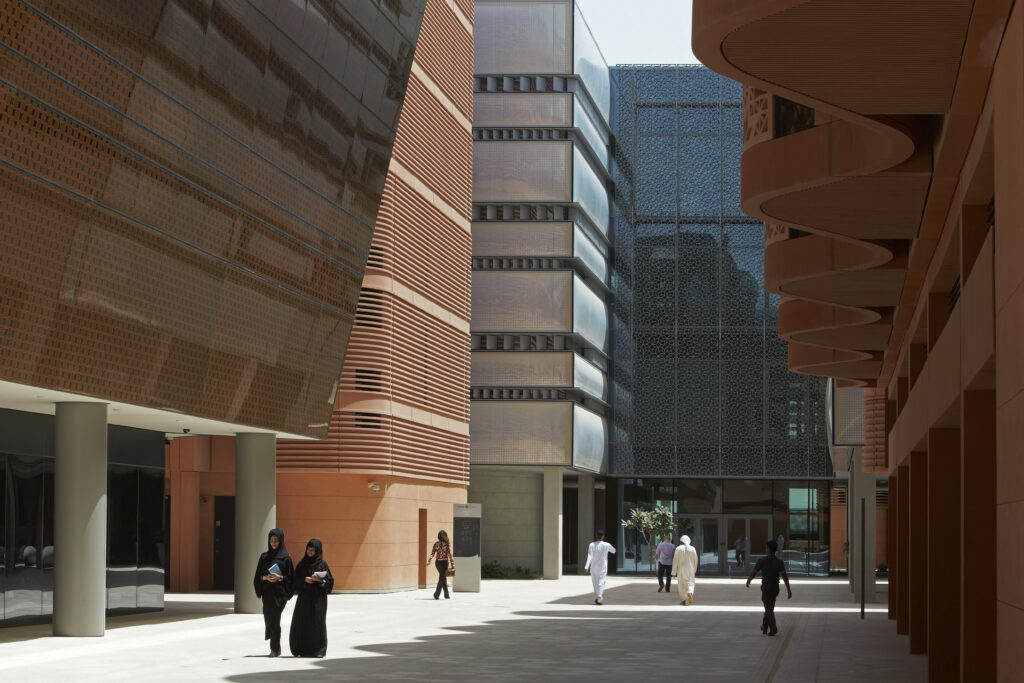
Masdar City applies sustainability as an operational baseline rather than a separate feature. Construction materials are selected for low impact; recycled aluminum and green concrete are used by default. LEED and Estidama certifications are embedded in most properties across the zone. These practices have positioned Masdar City as the ‘Most Sustainable Free Zone – UAE 2025‘, demonstrating that this is achieved through the consistent application of a clear standard across its entire urban layout.
The title Fastest-Growing Business Community – UAE 2025 shows the pace and consistency of company formation within the city’s Free Zone. Over 2000 firms now operate from within its boundaries, spanning climate systems, food resilience, automation, mobility, and health innovation. Their Free Zone combines modular offices, build-to-suit leasing, and layered licensing, all of which lower entry barriers and shorten setup timelines. Growth has come not just in volume but also in the diversity of operating sectors.
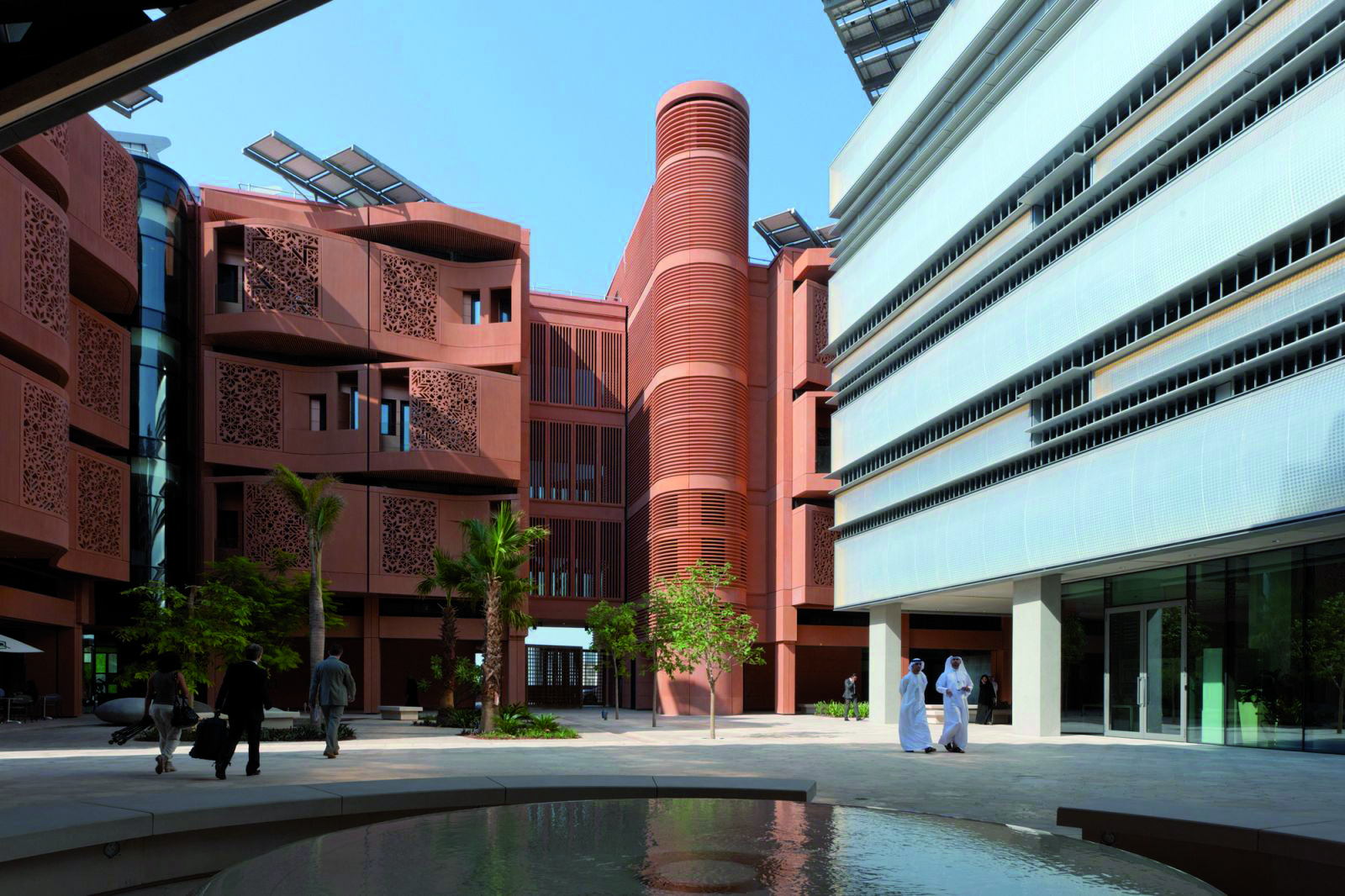
Its recognition for ‘Most Sustainable Urban Development & Design – UAE 2025‘ is tied to the Masdar City’s ability to reduce thermal load, optimise wind movement, and cut utility consumption through passive architectural strategies. Each building, street, and transit corridor has been constructed with the region’s environmental conditions in mind.
The award for ‘Excellence in Customized Business Solutions – UAE 2025‘ shows the way Masdar City approaches commercial infrastructure. Offices, retail units, and full-scale developments are shaped in partnership with tenants, allowing each space to serve a specific operational need. This level of adaptability supports early-stage ventures as well as large multinationals seeking regional hubs. Leasing structures are designed to accommodate both short-term agility and long-term presence, without compromising environmental or design standards.
Infrastructure Expansion Aligned With Functional and Environmental Outcomes
Built from the ground up to function under regional climate constraints, Masdar City applies passive design as a starting point rather than a design add-on. The next generation of projects is shaped around modular delivery, net-zero readiness, and integrated AI functionality.
Since its establishment in 2006, Masdar City has become one of the world’s most recognised models for sustainable urban development. It began as a strategic step by the UAE’s leadership to advance clean energy, drive innovative business, and establish a new standard for low-carbon urban living.
Today, Masdar City, a Mubadala company, has evolved into a thriving ecosystem. It hosts global organisations such as IRENA, Siemens, and the Mohamed bin Zayed University of Artificial Intelligence, alongside 2000 registered entities, forming a community where research, technology, and business converge within the Free Zone. The city also focuses on six high-impact industry clusters: AI, agritech, space tech, energy, life sciences, and mobility, fostering collaboration and innovation across these sectors.
The city’s achievements are equally impressive. Buildings in Masdar City consume around 40% less energy and water than conventional structures, and the city features the region’s highest cluster of LEED Platinum certified buildings, with 25 in total. It has also delivered several regional firsts, including the region’s first net-zero energy mosque, alongside pioneering work in autonomous mobility.
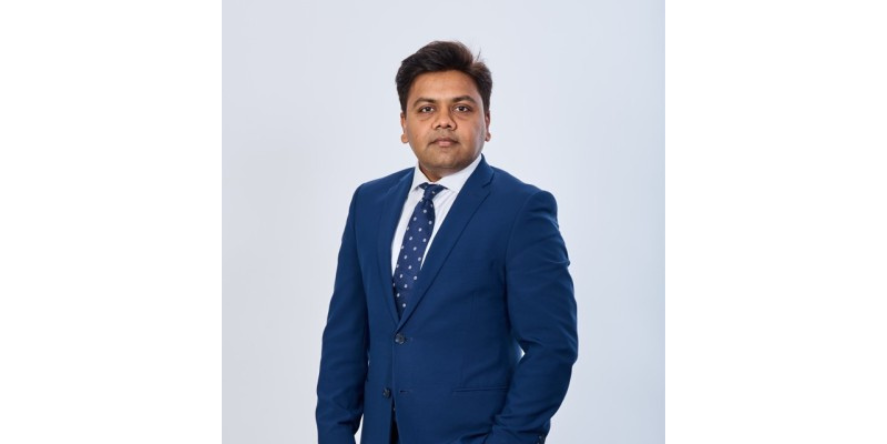
By blending traditional architectural principles with advanced technology, Masdar City shows how sustainability can become a natural part of daily life. Ahmed Baghoum, CEO of Masdar City, guides the city as it stands not just as a community but as a living testbed and business hub for the UAE’s net zero ambitions, offering a real-world “green print” for future cities.”
Translating Technical Experience into Global Impact
The global footprint of Masdar City is defined less by size than by situational relevance. In many host regions like Central Asia, West Africa, and the Western Balkans, climate volatility exists alongside fragile infrastructure and fragmented regulation.
Deploying energy systems into these conditions requires clean technology and institutional precision. Masdar City enters through agreements that layer utility development with workforce training, grid integration, and sector-specific outcomes.
This approach draws from the company’s work in Abu Dhabi, where it learned to build under thermal stress, water scarcity, and evolving compliance standards.
Masdar City’s value lies in translating technical familiarity with constrained environments into project design that remains operable, bankable, and nationally aligned even in states with limited resilience capacity.
Urban Development Framed Around National Outcomes
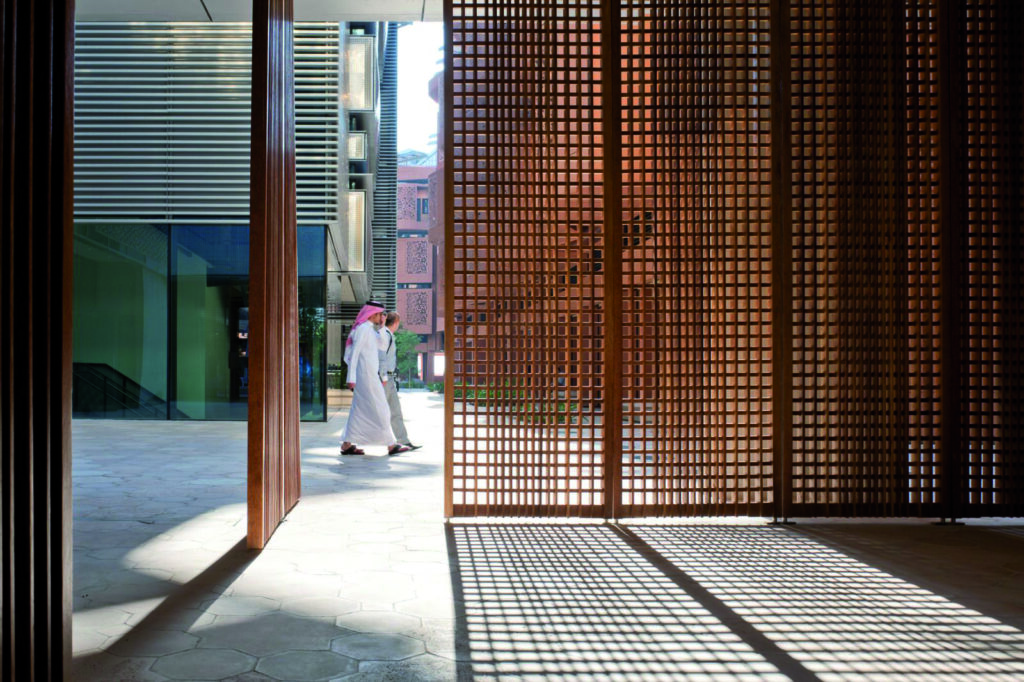
Masdar City holds a defined position within the UAE’s long-range development architecture. It supports the national direction across three functional areas: climate performance, industrial adaptation, and infrastructure planning, each of which ties directly into the Net Zero 2050 initiative.
Urban growth is shaped through standards that prioritise emissions control, energy load balancing, and building efficiency at every stage of construction and occupancy.
Design systems within the city are geared to limit utility intensity at scale. Core infrastructure is laid out to reduce pressure on national grids, optimise water distribution, and enable passive energy use. With photovoltaic integration across rooftops and canopies, together with high-performance facades and digital metering, the built environment acts as a replicable format for low-emission urbanisation.
Beyond construction, Masdar City contributes to the country’s knowledge economy by serving as a base for innovation-led sectors. Firms operating in energy, mobility, agri-tech, and AI development are co-located with educational and research institutions. This integration reinforces economic diversification through practical channels, through real tenancy, local hiring, and platform sharing.
The city’s visibility also extends to international sustainability diplomacy. Its frameworks and projects are regularly shared at forums hosted under the UAE’s climate strategy, including Abu Dhabi Sustainability Week and the Zayed Sustainability Prize platform.
These mechanisms allow for domestic advances in water, energy, and transport to be translated into exportable formats, helping position the UAE as a regional provider of low-carbon urban systems.
Masdar City’s contribution is not based on symbolic development. Its function lies in showing that long-term infrastructure can meet environmental and commercial criteria at the same time without placing strain on state capacity, policy cohesion, or utility resources.
Article received on Mail