
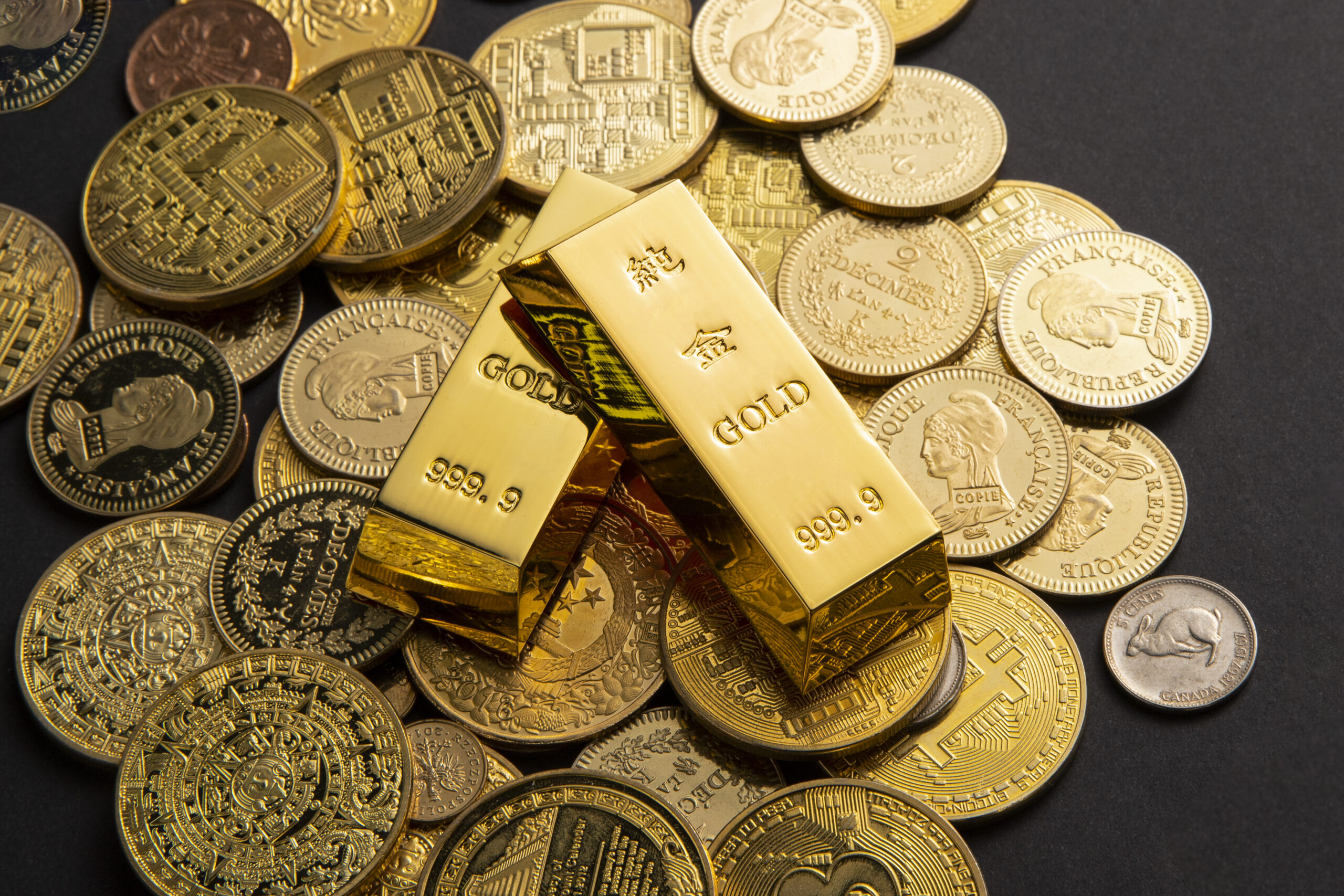
Gold’s performance in 2025 was nothing short of remarkable, with prices surging approximately 65% throughout the year. The precious metal, traditionally viewed as a safe-haven asset, has captured the attention of investors worldwide as geopolitical tensions, central bank policies, and economic uncertainty continue to shape global markets. However, as we look ahead to 2026, the outlook becomes more complex and multifaceted. What can we expect from gold prices in the coming months, and which factors will drive the market?
The Stunning Rally of 2025 and Current Market State
The gold rally that began in late 2024 has proven to be one of the most powerful in recent history. From the beginning of 2025 through early 2026, gold prices reached record highs, with the price touching approximately $5,595 per ounce in late January. This extraordinary appreciation was driven by a combination of factors: aggressive central bank buying, a global interest rate cutting cycle, elevated safe-haven demand stemming from geopolitical tensions, and a weakening U.S. dollar. Central banks, particularly China’s central bank, maintained their buying spree, with China extending gold purchases for fifteen consecutive months into January 2026.
However, the market experienced significant volatility in late January 2026, with gold suffering a dramatic reversal. Prices plummeted over 14% from their peak, marking the largest single-day loss on record. This sharp pullback raises important questions about the sustainability of gold’s rally and whether the extreme gains have created an overbought market condition ripe for consolidation.
Diverse Analyst Forecasts for 2026
Market analysts and financial institutions have offered a wide range of price predictions for gold in 2026, reflecting the complexity of forecasting in such volatile conditions. The diversity of these forecasts underscores the uncertainty that currently surrounds the precious metal.
According to LongForecast’s analysis, gold prices could experience significant appreciation throughout 2026. Analysts at this firm predict that by summer, gold could climb to approximately $6,780, and by year’s end, the price may reach an all-time high of $8,491. This bullish scenario is based on the assumption that inflation pressures and geopolitical unrest will continue to support precious metal demand.
However, more conservative estimates provide a different perspective. WalletInvestor suggests that gold prices may stabilize at around $4,723 in February, with potential recovery to above $5,000 in the second half of the year. This more measured forecast assumes a consolidation phase following the sharp January correction.
CoinCodex offers an even more bullish outlook, predicting that XAU/USD quotes could fluctuate between $5,184 and $9,999 in the first three quarters, with year-end prices potentially reaching $11,683. Meanwhile, Traders Union forecasts average mid-year prices around $6,895, with year-end averaging approximately $6,643.
Key Factors Driving the 2026 Outlook
Several critical factors will determine gold’s trajectory throughout 2026. Examining these elements provides insight into how prices may move as the year progresses.
Federal Reserve Policy and Interest Rates
The direction of U.S. interest rates remains paramount to understanding gold’s future price movements. During 2025, expectations of rate cuts provided strong support for gold, as lower rates reduce the opportunity cost of holding non-yielding bullion. However, the Federal Reserve’s inflation-fighting priorities and the Trump administration’s desire for lower borrowing costs create uncertainty. The relationship between anticipated rate cuts and actual Fed action will significantly impact whether gold can sustain higher price levels or experiences consolidation.
Central Bank Demand
Central banks, particularly China and other emerging market economies, have been relentless gold purchasers. However, at the elevated price levels reached in early 2026, demand patterns may shift. According to the World Gold Council, central bank gold purchases are expected to ease slightly from 863 tonnes in 2025 to 850 tonnes in 2026. This marginal decrease in official-sector demand could potentially remove some structural support from prices that was present in 2025.
U.S. Dollar Dynamics
Gold’s inverse relationship with the U.S. dollar cannot be overstated. Throughout 2025, dollar weakness provided a significant tailwind for precious metal prices. However, any dollar strengthening—whether from higher interest rates, risk-on sentiment, or geopolitical factors—could limit upside potential for gold. The appointment of Kevin Warsh as Federal Reserve chairman (if confirmed) temporarily eased dollar debasement concerns but also triggered a sharp gold selloff, illustrating the sensitivity of prices to monetary policy expectations.
Geopolitical Developments
Safe-haven demand from persistent geopolitical tensions, particularly between the United States and Iran, has supported gold prices. However, if diplomatic progress leads to improved global conditions, this support could diminish. The trajectory of conflicts and international tensions will remain a key variable throughout 2026.
The XAU/USD Chart Perspective and Technical Analysis
Examining the xau/usd chart reveals important technical considerations for 2026. The sharp reversal in late January demonstrated that the market had become extremely overbought, with prices stretched significantly above long-term moving averages. The 52-week moving average sits around $3,439, meaning gold traded over $1,100 above this key indicator at its peak – an unsustainable elevation that typically precedes consolidation.
Key technical support levels to monitor include the former resistance at $4,381, which could now act as support following the principle that “old tops become new bottoms.” Further support emerges at $4,218, representing the 50% retracement of the recent rally. The longer-term bullish trend structure remains intact as long as prices stay above the 52-week moving average.
Market Consensus and Realistic Expectations
Despite the diversity of forecasts, several themes emerge from analyst consensus. Most financial professionals agree that while gold’s explosive 65% rally in 2025 is unlikely to repeat in 2026, the precious metal is not heading into a bear market. Instead, many expect consolidation within ranges rather than sustained one-directional movement.
The broader consensus suggests gold prices in 2026 will likely fluctuate between approximately $4,700 and $6,500, with the most probable outcome being a period of relative consolidation following the sharp January reversal. This range-bound trading pattern would allow market participants to digest the extraordinary gains of 2025 before the next major move develops.
Analysts emphasize that the fundamental case for owning gold remains intact. Elevated real interest rates, structural dollar dynamics, central bank demand, and geopolitical risks all provide ongoing support.
Investment Implications for 2026
For investors considering gold exposure in 2026, the year presents a different character than 2025. Rather than a straightforward bull market, 2026 appears likely to be a year of consolidation and position-building. The sharp January reversal serves as a reminder that even commodities with strong fundamental support can experience rapid corrections, particularly when they reach overbought technical extremes.
Long-term investors may view pullbacks and consolidation as opportunities to build positions at more reasonable valuations than existed in late January. Conversely, traders accustomed to the strong directional moves of 2025 may need to adjust strategies to accommodate a potentially more range-bound market.
Central bank buying will likely remain supportive but less aggressive than in 2025. Geopolitical tensions and monetary policy divergence across major economies will continue to provide floor support for prices.
Conclusion
Gold’s journey through 2026 will be shaped by the complex interplay of monetary policy, geopolitical developments, and central bank decisions. While the spectacular 65% rally of 2025 appears unlikely to repeat, the fundamentals supporting gold demand remain largely intact. Most credible analysts expect gold prices to trade between $4,700 and $6,500 for much of 2026, with the market potentially consolidating after the extreme valuations reached in January.
The sharp reversal that accompanied the record $5,595 high is actually a healthy development for long-term gold investors, as it helps correct the overbought technical conditions that had become unsustainable. Investors should recognize that gold’s role as a portfolio stabilizer and inflation hedge will remain relevant regardless of whether prices appreciate another 65% or consolidate at lower levels.
As always, gold investment decisions should reflect individual financial circumstances, investment horizons, and risk tolerance rather than short-term price forecasts subject to significant uncertainty.
Blog Received on Mail