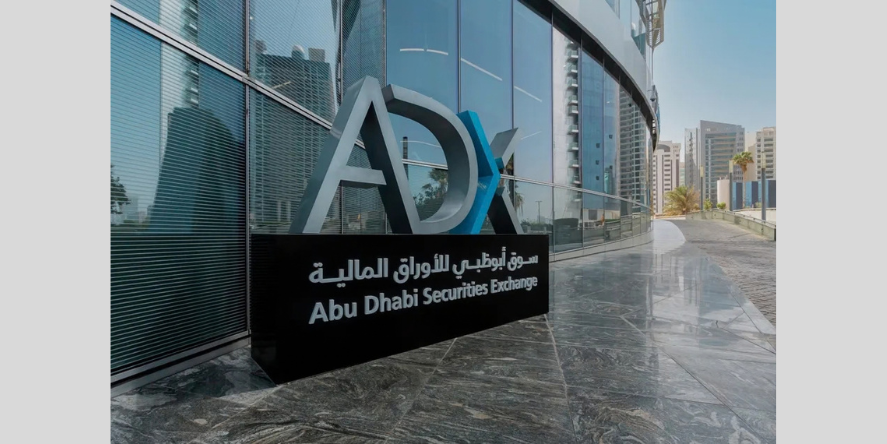


The United Arab Emirates has established itself as one of the most important financial centres in the world. Dubai and Abu Dhabi attract banks, hedge funds, fintech companies, and trading firms from across the globe. The Dubai International Financial Centre and Abu Dhabi Global Market provide world-class regulatory frameworks that rival London and Singapore. But while institutional finance has thrived in the region for decades, a quieter revolution is taking place: the rapid growth of retail forex trading and the educational infrastructure supporting it.
A Region Built for Trading
The UAE’s geographic position between the London and Tokyo trading sessions makes it uniquely suited for forex trading. When markets in Asia are closing and European markets are opening, traders in Dubai are at their desks during some of the most liquid hours of the trading day. This overlap creates opportunities that traders in other time zones simply cannot access as conveniently.
Beyond geography, the regulatory environment has matured significantly. The Securities and Commodities Authority and the Dubai Financial Services Authority have implemented frameworks that protect retail traders while allowing legitimate brokers to operate. This balance between accessibility and protection has encouraged a growing number of residents and expatriates to explore currency trading as a serious pursuit rather than a speculative gamble.
The demographics support this trend as well. The UAE’s population is young, tech-savvy, and internationally connected. Many residents come from countries with strong trading cultures — India, Pakistan, the Philippines, Egypt, and the broader Middle East — bringing with them an existing interest in financial markets that the UAE’s infrastructure makes easy to act upon.
Shariah-Compliant Trading: A Growing Priority
For many traders in the UAE and the broader Gulf region, one of the most important considerations when entering the forex market is whether trading can be conducted in accordance with Islamic finance principles. Conventional forex accounts charge or pay overnight swap fees — essentially interest on positions held past the daily rollover. Under Islamic law, the payment or receipt of interest (riba) is prohibited, which creates a barrier for observant Muslim traders.
The industry has responded with Islamic swap-free accounts, which eliminate overnight interest charges and replace them with alternative fee structures that comply with Shariah principles. These accounts allow Muslim traders to participate in the forex market without compromising their religious obligations.
However, not all swap-free accounts are created equal. Some brokers simply rebrand their standard accounts, removing the swap label while introducing hidden fees elsewhere. Others impose time limits on how long positions can be held without charges. Understanding the differences between genuine Shariah-compliant offerings and marketing-driven alternatives requires careful research. Resources that explain how Islamic swap-free trading accounts work in practice help traders evaluate their options and choose a broker that genuinely respects both their financial and spiritual needs.
The demand for transparent, properly structured Islamic trading accounts is growing rapidly. As the UAE’s retail trading population expands, brokers who offer authentic Shariah-compliant products — with clear fee structures and legitimate scholarly endorsement — will capture a significant and loyal market segment.
Why Financial Education Matters More Than Ever
Despite the UAE’s favourable trading environment, a significant gap exists between the number of people interested in forex trading and those who approach it with adequate preparation. The forex industry has historically been better at marketing than educating. Flashy advertisements promising quick profits attract beginners who then lose money because they started trading before understanding the fundamentals.
This pattern is not unique to the UAE, but the consequences are amplified in a region where many retail traders are expatriate workers investing savings they cannot afford to lose. The need for accessible, honest, and structured forex education has never been greater.
Effective education covers several critical areas that most beginners overlook in their rush to start trading. Market mechanics — how currency pairs are quoted, what drives exchange rate movements, and how trading sessions affect liquidity — form the essential foundation. Risk management, including position sizing, stop loss placement, and leverage awareness, determines whether a trader survives long enough to become profitable. And trading psychology — managing fear, greed, and the impulse to overtrade — is often the deciding factor between long-term success and failure.
Building a Sustainable Trading Practice
The most successful retail traders in the UAE share a common trait: they treat trading as a skill to be developed over time rather than a shortcut to wealth. This means investing weeks or months in education before risking real capital. It means starting with a demo account to practise execution and test strategies. It means beginning with minimal position sizes when transitioning to live trading. And it means maintaining a trading journal to track decisions, outcomes, and emotional patterns.
This methodical approach may lack the excitement that attracts many people to forex in the first place. But it is the only approach that produces consistent, sustainable results. The traders who rush past these steps are the ones who contribute to the statistic that seventy to eighty percent of retail participants lose money.
The UAE’s Opportunity
The combination of strategic location, robust regulation, diverse population, and growing digital infrastructure positions the UAE as a natural leader in retail forex education. The tools and resources exist. The market access is among the best in the world. What remains is closing the gap between aspiration and preparation — ensuring that every trader who enters the market does so with the knowledge, discipline, and risk awareness required to participate responsibly.
For a region that has built its reputation on ambition, innovation, and global connectivity, raising the standard of forex education is not just a market opportunity. It is a responsibility that benefits traders, brokers, regulators, and the broader financial ecosystem alike.
This article is for informational purposes only and does not constitute financial or investment advice. Forex trading carries significant risk, and past performance does not guarantee future results.
Blog Received on Mail