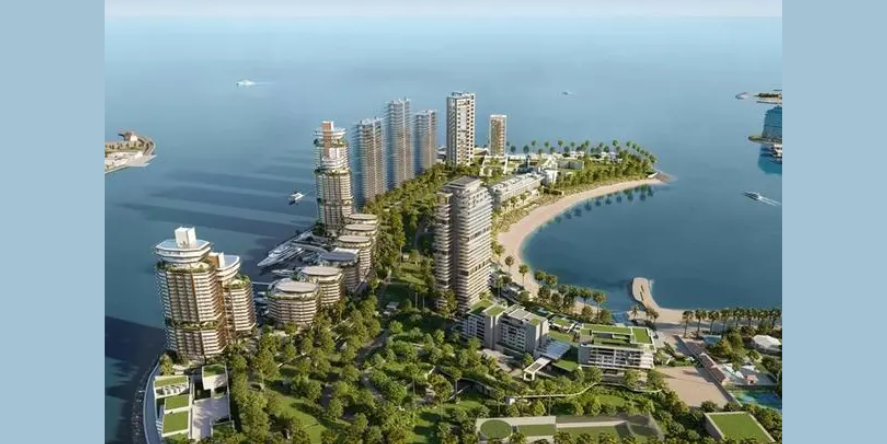

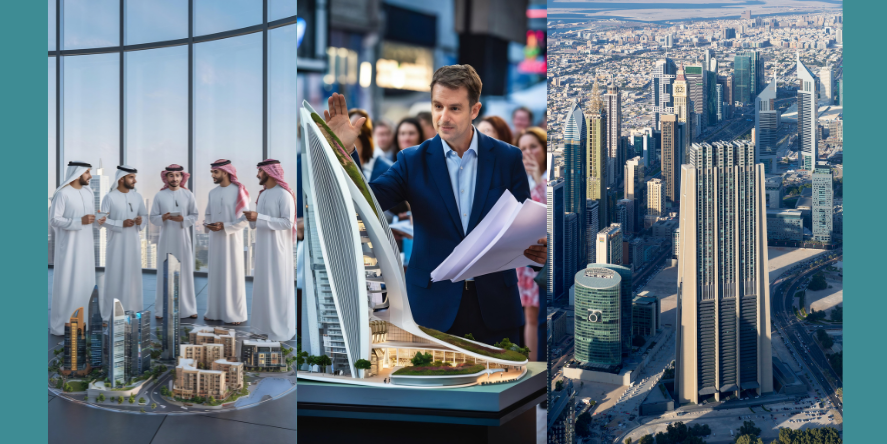
The real estate story across the Middle East and North Africa in 2026 reads like a sweeping narrative of ambition, resilience, and reinvention. In the Gulf, the skyline itself has become a symbol of national aspiration. Today, the MENA’s property market is no longer speculative—it is infrastructural, shaping the nations’ future as much as their skyline. The Realty landscape in MENA region is undergoing transformation from Vision to Value.
According to the Global Real Estate Transparency Index 2024 based on a global survey of JLL and LaSalle the UAE, Saudi Arabia and MENA region have made progress and are focused on enabling higher levels of institutionalisation with a potential to offer strong long-term prospects.
In the UAE’s landscape, the realty sector has transformed from government initiatives to overseas investment flows, the UAE’s property market has evolved into one of the world’s most dynamic sectors, balancing local ambition with international demand. Similarly, North Africa’s real estate markets are shifting from speculative growth to structured, sustainable expansion.
Saudi Arabia’s NEOM (Also known as The Line) project a cognitive city stretching across 170 kilometres, across desert and coast, is an experiment in futuristic living powered by renewable energy, AI-driven infrastructure, and car-free communities. Riyadh is also being reshaped by Vision 2030, with King Salman Park and Qiddiya entertainment city anchoring new cultural and social identities.
Dubai’s realty sector has matured into a hub where luxury meets sustainability, while Doha builds on its post-World Cup momentum to expand residential and commercial offerings. The Emirates has long been recognised as a global hub for innovation, commerce, and lifestyle. At the heart of this transformation lies its real estate sector, which has grown from modest beginnings into a multi‑billion‑dollar industry that shapes skylines, attracts global capital, and anchors economic diversification. Today, the UAE’s property market is not just about bricks and mortar—it is about policy, vision, and the ability to adapt to global shifts while offering investors stability and opportunity.
The UAE Government Push: Policy as the Foundation
The UAE government has consistently positioned real estate as a pillar of national growth. Strategic initiatives have included regulatory reforms, infrastructure expansion, and incentives for foreign investors. Freehold property zones, first introduced in Dubai in the early 2000s, opened the market to expatriates and overseas buyers, transforming the emirate into a global property hotspot.
The Golden Visa & Residency Rights
More recently, long‑term residency schemes such as the Golden Visa have tied property ownership to residency rights, encouraging investors to view the UAE not just as a speculative market but as a home base.
Government support schemes also extend to financing and ownership facilitation. Programmes designed for Emiratis and expatriates alike provide easier access to mortgages, tax benefits, and reduced transaction costs. These policies have created a resilient ecosystem where property ownership is accessible, transparent, and attractive to both individuals and corporations. Expatriates are taking advantage of this scheme and their strategy is to move from a rental house to own house. They are leveraging the reality price dynamics and a long duration stay Visa without bothering to renew it periodically.
Overseas Investment: Individuals and Corporations
For overseas investors, the UAE offers a clear framework. Individuals can purchase property in designated freehold zones across Dubai, Abu Dhabi, and other emirates. These zones include high‑profile districts such as Downtown Dubai, Palm Jumeirah, and Yas Island. Ownership rights are secure, with escrow systems and regulatory oversight ensuring transparency.
A Boon for Corporations
Corporations benefit from liberalised policies that allow foreign companies to own property in commercial zones, often tied to free trade areas. This has encouraged multinational firms to establish regional headquarters in Dubai and Abu Dhabi, leveraging real estate as both an asset and a strategic foothold. The combination of residency incentives, tax advantages, and strong legal protections has made the UAE one of the most attractive destinations for overseas property investment.
Population growth, a key driver
Dubai continues to attract expatriates, with migration fuelling demand for residential units. Commercial property is buoyed by diversification into finance, tourism, and technology, while industrial real estate benefits from logistics and e‑commerce expansion. Each emirate functions as a micro‑market, with Dubai leading in luxury and off‑plan developments, Abu Dhabi focusing on cultural and sustainable projects, and Sharjah and Ras Al Khaimah carving niches in affordable housing and tourism‑linked real estate.
In 2026, the UAE realty market is entering a new phase defined by stability and long‑term value. Buyers are becoming analytical, focusing on fundamentals such as rental yields, developer reputation, and sustainability credentials. Emerging hotspots include Dubai South, home to Expo City and Al Maktoum International Airport; Abu Dhabi’s Yas and Saadiyat Islands, and Sharjah’s Aljada, a master‑planned community attracting younger families.
North Africa Realty Moving toward Stability
The real estate landscape in North Africa is also undergoing a dynamic transformation propelled by factors such as urbanisation, demographic growth, and renewed investor confidence. Countries like Morocco, Egypt, and Tunisia are seeing strong demand for residential and mixed-use developments, driven by expanding middle-class populations and infrastructure investments. Commercial real estate is also gaining traction, particularly in Cairo and Casablanca, where international capital is flowing into office spaces, retail hubs, and logistics facilities.
The Egypt Story
Egypt, the land of the Great Pyramid and the legendary Sphinx, is also seeing change in its realty landscape. It’s New Administrative Capital rises east of Cairo as both a solution to congestion and a symbol of renewal, blending government relocation with residential vibrancy. Along the North Coast and Red Sea, coastal developments cater to both domestic demand and tourism, reinforcing Egypt’s dual focus. Key projects focus on smart, mixed-use communities, including the new Administrative Capital, luxury North Coast projects like Ras El Hekma, and Red Sea developments. One of the key realty project in gated community and luxury living led by G Developments, nee New Giza Development, is driving the Egyptian real estate market with high-quality gated communities. In Egypt the real estate market is driven by private sector growth and foreign investment, notably from the GCC.
Marrakech continues to thrive
Morocco’s Tangier Med expansion is reshaping logistics and industrial real estate, while Casablanca’s finance city and Rabat’s cultural districts attract international capital. Marrakech continues to thrive as a magnet for lifestyle investors, blending heritage with modern hospitality.
Tunisia moving ahead cautiously
Tunisia, after years of turbulence (characterised by a profound economic crisis and the recent catastrophic flooding) is cautiously re-emerging as a Mediterranean hub, with tourism-driven projects and attractive rental yields restoring confidence. At the same time, Algeria and Libya remain markets of latent potential, tied to energy wealth and urban expansion, awaiting political clarity to unlock their promise.
MENA’s real estate growth story has run through smooth and rough paths and encountered stumbling blocks in its growth trajectory. The growth graph faces issues such as affordability gaps, uneven regulatory frameworks, and geopolitical uncertainties. Despite this, now the MENA real estate sector is evolving from cycles of speculative booms into structured, sustainable growth. Each flagship project—whether NEOM’s futuristic vision, Egypt’s administrative capital, or Morocco’s logistics hub—serves as a blueprint for broader ambitions. Together, they tell a story of transformation, where cities are reshaped to reflect new economic and cultural realities, and where real estate becomes both the stage and the script for the region’s unfolding future.
Uniqueness of diverse geographies
What unites MENA’s diverse geographies is the rise of institutional capital and long-term partnerships. Sovereign wealth funds, private equity, and global developers are embedding themselves in projects that go beyond speculation, aligning with governments on housing, infrastructure, and industrial zones. Sustainability is no longer a buzzword but a necessity, with green building standards, renewable energy integration, and smart technologies woven into new developments. Real estate in this geography is not merely about bricks and mortar—it is about nation-building, about creating spaces that anchor economic diversification, social cohesion, giving boost investors and cultural identity.
Growth forecast for next 7 years
As per Deep Market Insights findings, the overall value of Middle East and Africa’s Luxury Residential Real Estate Market was estimated to be around at US$84.01 Billion in 2024. As per experts, the market can expand to US$148.68 billion by 2033.
- In this year and the next six years – 2026 to 2033, experts expect the market will expand at a CAGR of 6.58%.
- When it comes to Property Type, surprisingly, Penthouses represented the largest segment of the market in 2024
- During the forecast period, Waterfront Estates is anticipated to remain the highest-growth segment within the Property Type category.
THE UAE
Major Players in UAE: Local and Global
The UAE real estate sector is dominated by a mix of local giants and international firms. Among the leading local developers are:
• Emaar Properties – Known for Burj Khalifa, Downtown Dubai, and Dubai Marina.
• DAMAC Properties – Specialises in luxury developments and branded residences.
• Aldar Properties – Abu Dhabi’s flagship developer, with projects on Yas and Saadiyat Islands.
• Nakheel – Creator of Palm Jumeirah and other iconic master‑planned communities.
• Sobha Realty – Focused on premium residential projects with high construction standards.
• Aldar Properties PJSC- It is a real estate development company owned by the Abu Dhabi government.
.
Notable International players
Foreign companies also play a significant role, partnering with local developers or operating independently in sales and property management. They provide advisory, brokerage, and valuation services. The list:
- Knight Frank
- CBRE
- Savills
- Colliers International
- Deca Properties (Boutique firm)
- H&S Real Estate(Boutique firm)
.
Egypt
Top Construction & Contracting Firms in Egypt
- Orascom Construction PLC: Leading contractor for infrastructure, industrial, and high-end commercial projects.
- The Arab Contractors (Osman Ahmed Osman & Co.): One of the largest construction firms in the Middle East.
- Hassan Allam Holding: A major player in engineering, construction, and infrastructure.
- REDCON Construction: Prominent for commercial and residential construction.
- GAMA Construction: Specialises in turnkey projects and high-profile clients.
- Rowad Modern Engineering (RME): Known for large-scale, complex construction.
- SIAC Construction: Expert in Industrial Construction & Engineering.
- CRC (Construction & Reconstruction Engineering Co.)
Popular Developers
- Maid Al Futtain
- Larz Developments
- Nations of the Sky Developemnts
- Orbis Development
- Kulture Development
- Centrada Developments
- Zaya Developments
- Arkan Palm Developments
- El Garby Developments
- Concrete Developments
Saudi Arabia
Top 10 Construction Companies in Saudi Arabia
- Saudi Binladin Group
- Controltap General Contracting Company
- Almabani General Construction Company
- Al Rashid Trading & Contracting Company
- Al-Kifah Contracting Company
- Quality Leaders Group
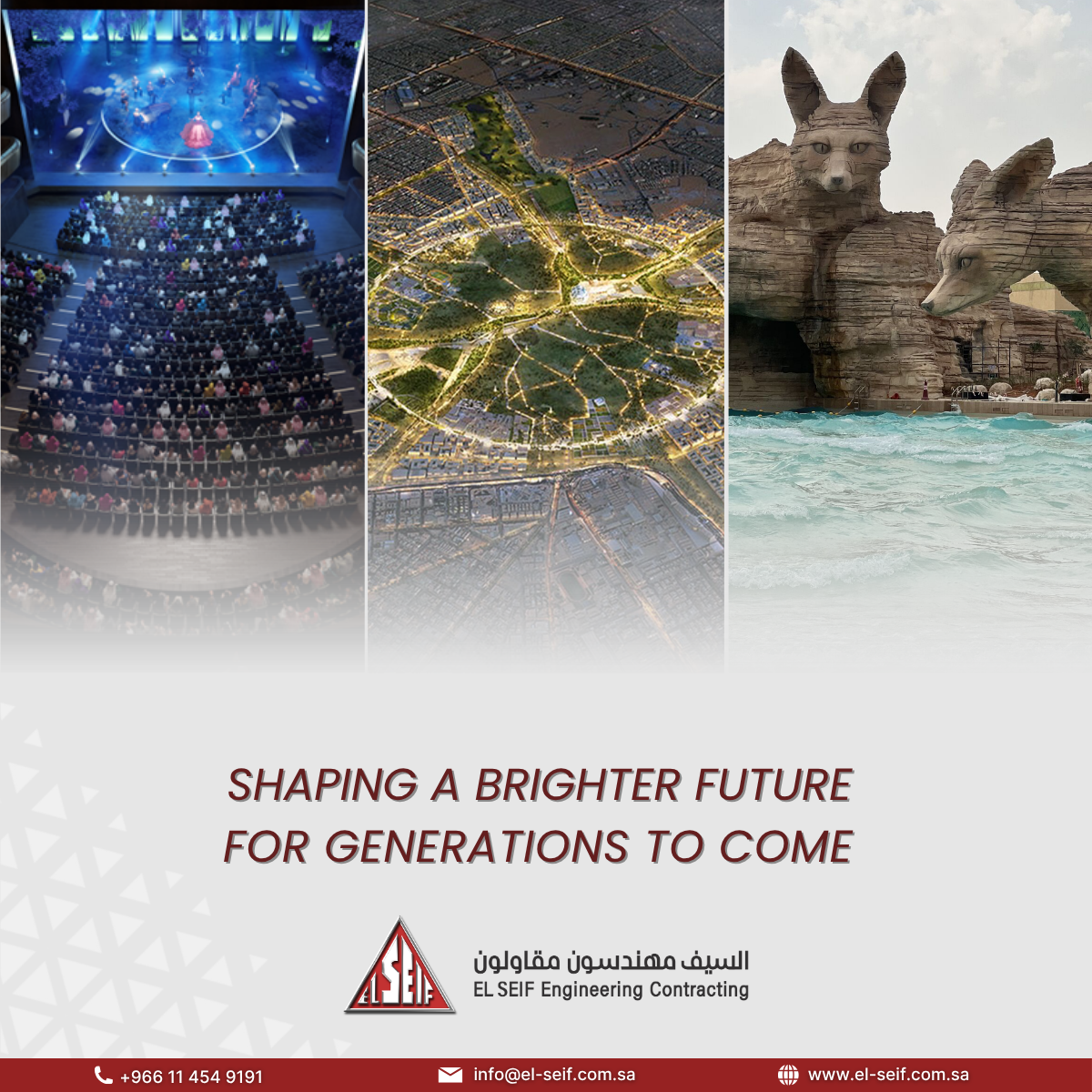
- El-Seif Engineering Contracting
- Nesma & Partners Contracting Co. Ltd.
- Al Harbi Contracting Co. Ltd.
- Alfanar Construction
.
Morocco
Leading Real Estate and Construction Companies
- TGCC (Travaux Généraux de Construction de Casablanca)
- Somagec
- Groupe Addoha
- Alliances Développement Immobilier
- Groupe Jamai
- Palmeraie Développement
- Groupe Aksal
- CGI (Compagnie Générale Immobilière)
Specialised Players
- Eco-dome Maroc: Focuses on ecological and sustainable construction using local materials.
- SMEG (Société Marocaine des Etudes GeoRadar): Pioneer in geophysical exploration and geotechnical studies.
.
Tunisia
Real estate companies and agencies
- Optygros Real Estate
- IQ Smart Building & Business Center
- Ipalpex
- Sanibains Real Estate
- Industrial Land Agency (Agence Foncière Industrielle)
- Daari
- TunRooms
- Regus Carthage Center
.
Article by Imtiaz Ahmed Shariff