
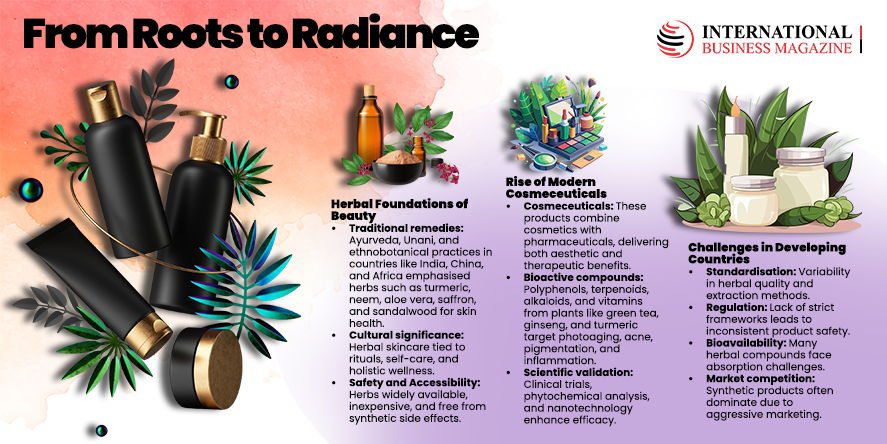
The changing face of skincare in developing countries embodies resilience, cultural pride, and global relevance, positioning herbal remedies as the foundation of modern beauty.
Today, herbal remedies serve as the foundation of beauty traditions in developing countries, proving the old adage that “beauty is skin deep.” While English poet Sir Thomas Overbury coined the phrase in his 1613 poem A Wife to argue that physical traits are superficial compared to inner character, these traditional cultures view the concept through a different lens. Driven by cultural heritage and an abundance of natural resources, their ancestral skincare protocols seamlessly blend inner wellness with outer aesthetics.
For centuries, people relied on botanicals like turmeric, neem, aloe vera, saffron, and sandalwood to cleanse, heal, and rejuvenate. Beyond mere cosmetics, these therapeutic treatments effectively addressed acne, pigmentation, wounds, and aging. This reliance on botanicals is deep rooted in the cultures of Asian region.
Botanicals abundance, accessibility, and safety made them indispensable, especially in rural populations. Now, even in Urban populace, these herbs are gaining ground rapidly. Today, these practices evolved into formal structured systems such as Ayurveda in India, Unani in the Middle East, and ethnobotanical traditions across Africa, embedding herbal skincare into the social and spiritual fabric of societies. The modern era introduced cosmeceuticals, a hybrid of cosmetics and pharmaceuticals, which revolutionised skincare by offering products that not only beautify but also heal. This change has transformed the way skincare is adopted in developing countries.
Unlike conventional cosmetics that provide temporary enhancement, cosmeceuticals deliver measurable physiological benefits. This shift was driven by scientific validation of herbal compounds, such as polyphenols in green tea, curcumin in turmeric, and aloin in aloe vera. These bioactive molecules demonstrated anti-inflammatory, antioxidant, and regenerative properties, making them powerful tools against photoaging (the premature aging of the skin caused by long-term exposure to ultraviolet light), acne, and pigmentation. Nanotechnology further enhanced their efficacy, improving absorption and targeted delivery, and transforming traditional remedies into advanced formulations that could compete in global markets. Key herbal ingredients continue to dominate modern formulations.
In most developing countries, turmeric, with its anti-inflammatory and brightening effects, remains central to anti-acne and anti-aging creams. Aloe vera, known for hydration and wound healing, is widely used in gels and moisturisers. Neem’s antibacterial properties make it a staple in acne treatments, while green tea catechins combat oxidative stress and aging. Saffron, prized for radiance and pigmentation control, has moved from traditional masks to luxury serums. These herbs, once applied in raw forms, are now refined into extracts, used into creams, serums, sunscreens, and masks.
Despite progress, challenges persist in developing countries. Standardisation of herbal extracts is inconsistent, leading to variability in product quality. Regulatory frameworks are often weak. Bioavailability remains a hurdle, as many herbal compounds are poorly absorbed by the skin.
Also, developing countries face a number of issues such as unscientific harvesting of medicinal plants, poor post-harvest handling, and soil or pesticide contamination. These factors lower the safety and quality of plant ingredients. Added to this is the lack of scientific testing, clinical trials, and toxicological evaluation makes it hard to prove benefits of the herbal cosmetics.
Additionally, synthetic cosmetics, backed by aggressive marketing and global branding, often overshadow herbal alternatives, especially among younger consumers seeking instant results. Yet, the growing global demand for natural, eco-friendly skincare presents immense opportunities. Sustainable sourcing of herbs ensures long-term viability and appeals to environmentally conscious buyers. Technological innovations like nanocarriers and encapsulation enhance delivery and efficacy of herbal actives. The future of skincare in developing countries lies in balancing heritage and science and is a about roots and radiance.
Article by Imtiaz Ahmed Shariff