
Modern lighting solutions have transformed global illumination, reshaping the way we light our homes, workplaces, public and private facilities, automobiles, railways, and shipping networks.
The future of lighting isn’t just about brightness; it’s about intelligent, sustainable, and human-centric design.
Advanced lighting technologies—ranging from high-performance light-emitting diodes (LEDs) and sun-powered outdoor fixtures to smart, network-linked systems—are transforming how power is utilized and regulated. Eco-friendly illumination is becoming a crucial element across the global shift toward sustainable construction, intelligent urban environments, and reduced-carbon living.
Eco-friendly illumination
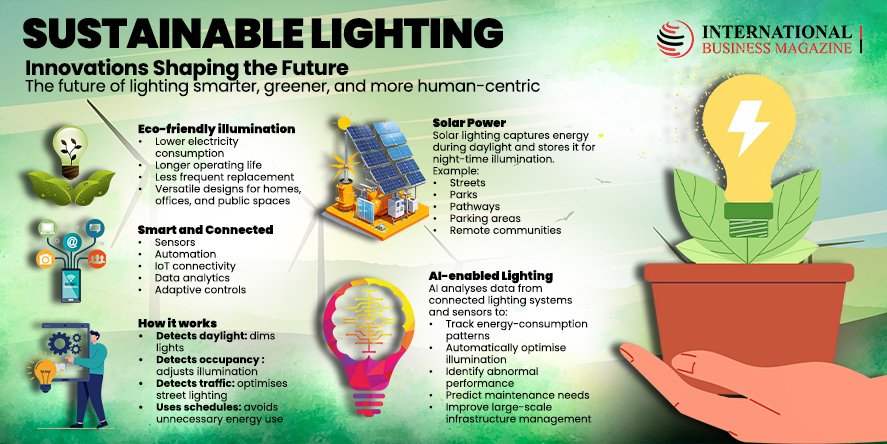
LED lighting has revolutionized the industry by dramatically cutting electricity consumption and lasting much longer than traditional bulbs, which require frequent replacement and waste significant energy.
LED bulbs are energy efficient compared to incandescent lights. LED lights can be made in several shapes and combinations. Experts can design creative lighting systems that look great and work well.
Smart and Sustainable Lighting
The integration of smart technology is one of the key advancements driving the future of sustainable lighting. Connected lighting systems use sensors, automation, and data analytics to automatically adjust illumination based on occupancy, daylight, time of day, or user preferences. They are adaptive in nature. For example, in an office environment, these systems can save energy by dimming when there is enough natural sunlight and switch off automatically when there is no one in the room.
Furthermore, smart street lighting spontaneously adjusts brightness based on real-time vehicular movement and pedestrian activity. This system reduces energy consumption by dimming the lighting system when roads are empty, while still ensuring visibility and safety when people or vehicles are present. This smart lighting solution is a game changer. Operating on fixed schedules and dynamically adjusting based on its surroundings is the in thing.
Sustainable lighting goes beyond using LEDs. It encompasses the entire ecosystem, including energy generation, smart controls, manufacturing, installation, maintenance, and disposal.
Solar Energy, A Paradigm Shift
Renewable energy lighting systems use solar panels to absorb and store energy during daylight hours, then use it to power illumination after dark. Using Solar is useful for outdoor areas like streets, parks, pathways, parking lots, and remote communities. Tapping and using solar energy is also cost-effective compared to traditional power. Renewable-powered lighting could become increasingly viable for many different environments as solar panels, battery systems, and energy-management technologies improve.
Human-Centric Lighting and Physical Health
The state-of-the-art lighting system focuses on environmental and human impact, rather than just lowering power consumption. The key goal is nurturing spaces where people can thrive in safety and comfort.
Human-centric lighting alters the illuminated interior and colour to suit what people are doing and mimic the natural patterns of daylight. The option of various settings—including workplaces, hospitals, schools, and homes—can be improved by adopting lighting systems tailored to support comfort, focus, rest, and overall eye health. This marks a vital shift in lighting design, seamlessly bonding sustainability and human experience rather than treating them as competing goals.
Leveraging AI to track trends
Artificial Intelligence has the ability to elevate intelligent illumination to the next level by leveraging data from connected hardware and sensors to autonomously track power consumption trends and fine-tune illumination settings.
For major urban centres and large-scale structures, this technology facilitates proactive upkeep, automated power regulation, and highly adaptable infrastructure. Smart platforms detect abnormal performance trends, allowing operators to fix lighting issues proactively rather than waiting for system failures.
Connecting light to the Internet of Things (IoT) enables smart lighting systems to gather practical data regarding their surroundings and daily functioning.
Regenerative Illumination
A lighting product’s environmental footprint extends far beyond its daily energy consumption. True sustainability requires assessing the entire lifecycle of a fixture—from the raw materials used in its production and its overall lifespan to how easily it can be repaired, recycled, and safely discarded.
Consequently, future lighting options may focus on the circular economy. To support this goal, producers can invest in long-lasting parts, modular setups, eco-friendly materials, and engineering that simplifies repairs and part upgrades. These methods cut down on garbage and make items last longer while helping build a smarter, resource-saving economic system.
Multipurpose Networked Poles
Urban centres offer the greatest potential for sustainable lighting innovation. Because public and street lighting require massive infrastructure networks, they are ideal candidates for modern upgrades. By expanding their capability beyond simple illumination, these networked poles can host telecommunications, gather environmental data, and streamline asset management. This evolution transforms traditional, single-use lighting infrastructure into a versatile, multi-purpose platform.
The Journey Ahead
Despite rapid innovation, obstacles remain in the widespread adoption of sustainable lighting. Implementing smart lighting demands full lifecycle planning, spanning from initial setup costs and security risks to system maintenance and eco-friendly disposal.
The most effective options will therefore need to strike a balance between high-tech features and being affordable, reliable, accessible, and environmentally sustainable.
Conclusion
The future of lighting is growing brighter, driven by technological innovation rather than a simple increase in brightness. Advancements in smart, sustainable, and highly adaptable technologies are driving highly efficient improvements in modern illumination.
By integrating into eco-friendly buildings, smart homes, solar roadways, and connected urban areas, sustainable illumination significantly lowers energy consumption while upgrading our day-to-day experiences.
Article by Baldeb Ram