
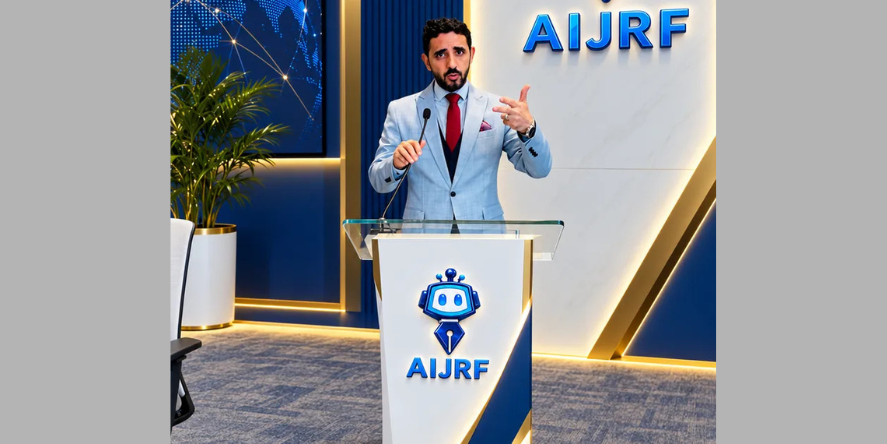
The Artificial Intelligence Journalism for Research and Forecasting (AIJRF), a leading scientific, research, and applied institution specializing in artificial intelligence, advanced technologies, and content creation since 2018, has announced the development of what it aims to be the first specialized Arabic-language guide on professional and ethical standards for Agentic AI, including the fundamental principles of data protection and information security.
The guide, titled “AIJRF Code of Ethics and Professional Conduct for Agentic AI (ACPAI),” will establish a comprehensive professional and ethical framework for the responsible design, deployment, management, and use of autonomous and semi-autonomous AI agents across various institutional sectors.
H.E. Dr. Mohamed Abdulzaher, Chief Executive Officer of AIJRF, stated that the guide is being developed by academics and experts specializing in Agentic AI tools and technologies as part of a dedicated professional training program.
The initiative primarily aims to qualify specialized experts capable of developing, implementing, and strengthening professional and ethical standards for Agentic AI, while ensuring data protection and information security in government services, education, and the content creation industry.
Dr. Abdulzaher explained: “With the rapid and substantial growth in the adoption of Agentic AI, and the increasing development and deployment of AI agents capable of planning, executing tasks, performing specific actions, and interacting with digital systems and data, there is a growing need to establish clear professional and ethical standards to ensure the safe and responsible use of these technologies.
Accordingly, AIJRF has placed significant emphasis on developing this guide by strengthening the capabilities of a multidisciplinary team of experts representing various sectors, who will oversee its preparation, review, and publication.”
Certified Expert in Professional Ethics for Agentic AI
As part of this initiative, AIJRF has announced the launch of a specialized advanced professional training and qualification program designed to prepare certified experts in Agentic AI ethics from government, educational, media, and other institutional sectors.
The program is officially titled: Advanced Training Program: Certified Expert in Professional Ethics for Agentic AI and Data Protection (AIESP)
Program Slogan: Building Safer, More Responsible AI Agents in Compliance with Professional and Ethical Standards.
The program seeks to achieve two principal objectives:
First: Qualifying specialized experts in the development, implementation, and enhancement of professional and ethical standards for Agentic AI, including data protection and information security in institutional environments.
Second: Developing the first specialized Arabic-language professional and ethical guide addressing Agentic AI and the fundamental principles of data protection and information security, under the title:
AIJRF Code of Ethics and Professional Conduct for Agentic AI (ACPAI).
The training program is designed to equip participants with the knowledge and practical competencies required to understand and apply professional and ethical principles governing the design, deployment, operation, and management of AI agents.
It also focuses on safeguarding data and information, developing institutional governance and human oversight policies, and mitigating the security, operational, and legal risks associated with autonomous and semi-autonomous intelligent systems.
Target Participants and Professional Sectors
The program targets professionals, executives, academics, and specialists involved in artificial intelligence, governance, information security, and institutional digital transformation.
The primary target groups include:
- Government leaders and executives, including directors of artificial intelligence, digital transformation, and innovation departments.
- Information security and cybersecurity professionals, including data protection and privacy officers.
- Legal experts and consultants specializing in regulatory compliance, corporate governance, and risk management.
- Academics, university faculty members, and researchers specializing in artificial intelligence, law, media, and communication.
- AI agent developers and digital systems engineers involved in designing and deploying intelligent systems.
- Quality assurance, institutional excellence, and internal audit professionals.
- Media executives and digital content creators seeking to strengthen the responsible adoption of AI technologies.
- Human resources professionals and intelligent systems managers responsible for integrating AI into institutional operations.
- Professional consultants and entrepreneurs specializing in artificial intelligence applications and advanced technologies.
Ten Strategic and Professional Objectives
The AIESP program has been developed around ten core objectives that integrate professional ethics, institutional governance, information security, and applied research.
1. Promoting Professional and Ethical Awareness
Introducing participants to the fundamental concepts of Agentic AI, the nature and limits of agent autonomy, and the responsibilities of individuals and institutions involved in designing, deploying, and using AI agents.
2. Developing Specialized Professional Competencies
Equipping participants with the knowledge and practical skills needed to understand international professional and ethical standards and apply them to AI agents and multi-agent systems.
3. Strengthening Governance and Accountability
Developing participants’ capabilities to establish institutional policies defining roles, responsibilities, operational permissions, levels of autonomy, and human intervention requirements.
4. Enhancing Data and Information Protection
Enabling participants to identify privacy risks, data leakage vulnerabilities, unauthorized access threats, and appropriate preventive and protective controls.
5. Improving AI Agent Security
Introducing emerging security threats associated with Agentic AI, including prompt injection attacks, misuse of tools and permissions, and manipulation of AI agent objectives.
6. Assessing Institutional AI Risks
Developing practical competencies in identifying, analyzing, documenting, and mitigating professional, technical, and operational risks associated with institutional AI deployments.
7. Ensuring Human Responsibility and Oversight
Establishing effective mechanisms for human monitoring, intervention, control, and evaluation of autonomous and semi-autonomous AI systems.
8. Promoting Compliance and Transparency
Applying principles of disclosure, accountability, continuous auditing, and the documentation of decisions, automated actions, and operational processes.
9. Advancing Specialized Arabic-Language Knowledge
Engaging participants in the development of scientific, professional, and applied Arabic-language content to strengthen knowledge and support the establishment of ethical standards for Agentic AI.
10. Producing a Publishable Institutional Reference Guide
Preparing a comprehensive draft guide covering professional and ethical standards, governance models, data protection requirements, and information security frameworks, with the objective of publishing it under the AIJRF name.
Scientific and Applied Training Modules
The specialized program incorporates six major scientific, professional, and applied components:
Module 1: Agentic AI Ethics and Professional Standards
Understanding the ethical foundations of Agentic AI, including transparency, accountability, fairness, responsibility, and professional conduct.
Module 2: AI Agent Governance and Human Accountability
Developing governance frameworks that define operational permissions, levels of autonomy, institutional responsibility, and mechanisms for meaningful human oversight.
Module 3: Information Security and AI Agent Protection
Exploring the fundamental principles of data protection, privacy, cybersecurity, and the security risks associated with deploying and operating intelligent AI agents.
Module 4: Risk Assessment, Compliance, and International Standards
Applying risk assessment methodologies and examining relevant international standards, regulatory frameworks, and institutional compliance requirements.
Module 5: Research and Applied Laboratory for Developing the AIJRF Guide
Engaging participants in a dedicated research and practical laboratory to develop the scientific content, professional recommendations, governance models, and technical guidance required for the publication.
Module 6: Contribution to the First Specialized Arabic Professional and Ethical Guide
Providing participants with an opportunity to contribute directly to the preparation of the proposed Arabic-language guide on Agentic AI professional ethics, data protection, and information security.
Developing an Arabic Professional Reference for Responsible Agentic AI
Through the AIESP program and the development of the AIJRF Code of Ethics and Professional Conduct for Agentic AI (ACPAI), AIJRF aims to establish a specialized Arabic-language professional reference that supports the responsible adoption of AI agents across government institutions, universities, media organizations, and other sectors.
The initiative seeks to bridge the gap between the rapid technological advancement of autonomous AI systems and the development of practical ethical, professional, and institutional governance frameworks.
It also aims to contribute to the preparation of a new generation of professionals capable not only of using Agentic AI technologies, but also of evaluating their risks, establishing ethical standards, protecting institutional data, and ensuring responsible human oversight.