
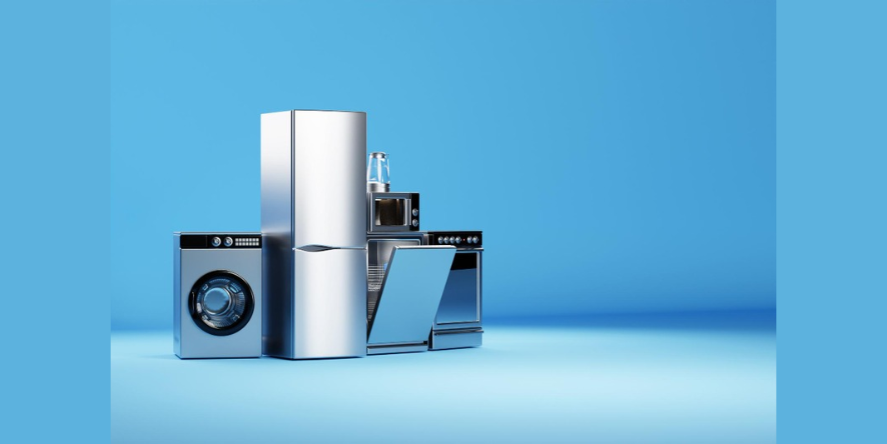
What began as simple tools for survival gradually evolved into sophisticated systems designed to save time, reduce physical effort, improve hygiene, and enhance quality of life.
The evolution of home appliances closely mirrors the broader journey of human progress. Early civilisations depended entirely on fire, stone, water, and manual labour to manage daily household chores. Over thousands of years, continuous technological innovation steadily reshaped how people cook, clean, and maintain indoor comfort, paving the way for today’s connected, AI-driven smart homes and emerging kitchen robotics.
Among all domestic breakthroughs, food preservation stands out as one of the most transformative developments in daily life. Long before modern cooling technology existed, households relied on larders, cool underground cellars, and naturally ventilated storage rooms to protect ingredients from rapid spoilage. In the nineteenth century, invention of the ice box was considered as a revolutionary milestone. By storing harvested blocks of ice inside lined compartments, people could keep meat, milk, and fresh produce edible for much longer periods.
The invention of electric refrigeration in the early twentieth century completely changed the way food is stored and preserved. Today’s smart refrigerators as IoTs go even further, seamlessly combining energy-efficient systems, precise temperature controls, specialised storage compartments, and intelligent monitoring technology to extend food freshness and significantly reduce everyday household food waste.
Clay & Stones, a Thing of the Past
The earliest ovens consisted of simple pits or chambers heated by open flames. Ancient civilisations used clay and stone structures to bake bread and cook food. The Industrial Revolution introduced coal and gas ovens, making cooking more efficient and controllable. Electric ovens later brought greater convenience, cleaner operation, and enhanced safety. The twentieth century witnessed another major breakthrough with the arrival of the microwave oven, which used electromagnetic waves to heat food rapidly.
Today, people have access to a range of advanced cooking appliances, including convection ovens, induction cooktops, steam ovens, and smart kitchen devices that can be controlled remotely through smartphones and voice assistants. Air fryers too have entered modern kitchen to help people cook healthy food.
Dishwashing goes High-Tech
Dishwashing is another example of how technology replaced labour-intensive household tasks. For centuries, every dish, pot, and utensil had to be cleaned by hand. In large households, this task often consumed several hours each day. The development of mechanical dishwashers in the late nineteenth century introduced a more efficient method for cleaning tableware. As plumbing and electricity became common in homes, automatic dishwashers gained popularity. Modern dishwashers feature sensor-driven wash cycles, water-saving technologies, high-temperature sanitation functions, and energy-efficient performance, turning a once-demanding chore into a simple automated process.
Furthermore, the evolution of appliances has dramatically changed how modern kitchens look. Traditional kitchens were centred around fireplaces and separate workstations where food preparation, storage, and cooking occurred independently. As refrigerators, ovens, dishwashers, and other appliances became commonplace, kitchen layouts evolved to accommodate them. The concept of the “work triangle” emerged, positioning the refrigerator, sink, and stove for maximum efficiency. In contemporary homes, appliances are often integrated seamlessly into cabinetry, creating sleek and functional spaces. Smart kitchens now connect appliances through digital networks, enabling homeowners to monitor energy usage, automate tasks, and manage inventory more effectively.
Humble Bread Toasts Pops up in Minutes
Among smaller kitchen appliances, the toaster illustrates how innovation can simplify everyday routines. Before its invention, bread was typically toasted over an open flame or on metal forks placed near a fire. The development of electric toasters in the early twentieth century provided a safer and more consistent method. Automatic pop-up toasters soon followed, becoming a staple in households worldwide. Modern toasters include multiple browning settings, digital controls, and specialised functions for different types of bread, reflecting the growing demand for convenience and precision.
From Open Fires to Modern Stoves
The development of stoves marked another major milestone in household technology. Early cooking relied entirely on open fires, which produced uneven heat and posed significant safety risks. Cast-iron stoves emerged during the eighteenth and nineteenth centuries, offering greater control, improved efficiency, and reduced fuel consumption. Gas stoves later provided instant heat regulation, while electric stoves introduced additional precision and ease of use. More recently, induction stoves have become increasingly popular due to their energy efficiency, rapid heating capabilities, and enhanced safety features.
Blow Hot, Blow Cold Tech
Maintaining comfortable indoor temperatures has always been a priority for households. Keeping cool in warm climates once depended on architectural design, shade, natural ventilation, and hand-operated fans. Ancient civilisations utilised thick walls, courtyards, and water features to reduce indoor temperatures. Mechanical fans became widespread during the Industrial Revolution, providing a more effective means of air circulation. The invention of air conditioning transformed modern living by enabling precise climate control regardless of outdoor conditions. Today’s cooling systems incorporate smart thermostats, energy-efficient compressors, and zoning capabilities that maximise comfort while reducing energy consumption.
Heating technologies have followed a parallel journey. Early homes relied on open hearths and fireplaces as sources of warmth, although much of the heat generated was lost through chimneys. Advances such as wood-burning stoves, coal furnaces, and steam heating systems significantly improved efficiency. The twentieth century saw the widespread adoption of central heating, allowing entire homes to be heated evenly through ductwork or radiators. Modern heating systems utilise advanced controls, heat pumps, smart thermostats, and renewable energy sources to provide sustainable and cost-effective comfort.
The Drums of Cleanliness
Laundry care too experienced one of the most dramatic transformations in domestic history. Early mechanical washing devices introduced rotating drums and manual cranks to reduce physical effort to wash cloths with hands and wooden handles. With the advent of electricity, washing machines became increasingly automated. Modern machines use sophisticated sensors, programmable wash cycles, and water-saving technologies to achieve superior cleaning results. Many modern models can even detect load size, fabric type, and soil levels, optimising performance while minimising resource consumption, particularly precious water.
Together, these innovations form a vast and interconnected ecosystem of home appliances that has evolved continuously through centuries of human ingenuity. Each advancement, whether in refrigeration, cooking, cleaning, laundry care, heating, or cooling, has contributed to making daily life safer, healthier, and more convenient. Today, the home appliance industry stands at the threshold of another transformation, driven by artificial intelligence, smart connectivity, automation, and sustainability.
Article by Imtiaz Ahmed Shariff