
ESG in global banking is no longer a peripheral concern – it has become a central pillar of risk management, brand reputation, and long-term competitiveness. Banks that embed Environmental, Social, and Governance principles into their operations are not only mitigating risks but also unlocking new opportunities in sustainable finance, AI-driven compliance, and customer trust. Banks are adopting Green Ledger policy where ESG is reshaping the banking sector.
According to The Compliance Digest, in April 2021, United Kingdom’s the then Prince of Wales collaborated with 40 banks globally to form the Sustainable Markets Initiative’s Financial Services Taskforce. This initiative enabled Net-Zero Banking Alliance, a commitment by these banks to align their lending and investment strategies with net-zero emissions by 2030. This ambitious plan not only focuses on reducing the industry’s carbon footprint but also steers financial resources towards organisations actively engaged in carbon emission reduction.
The banking sector today stands at the intersection of finance and sustainability, where ESG is reshaping how they lend, invest, and operate. Banks channel capital by aligning with ESG. They direct funds toward renewable energy, inclusive growth, and ethical governance. This shift is not just about compliance – it is about resilience, reputation, and relevance in an over capitalistic world facing climate crises and social inequalities.
ESG: What it means
The importance of ESG reporting in the banking sector is to inform stakeholders and policymakers with reliable information to evaluate a company’s ESG performance, risks, and opportunities. What these three areas (ESG) mean?
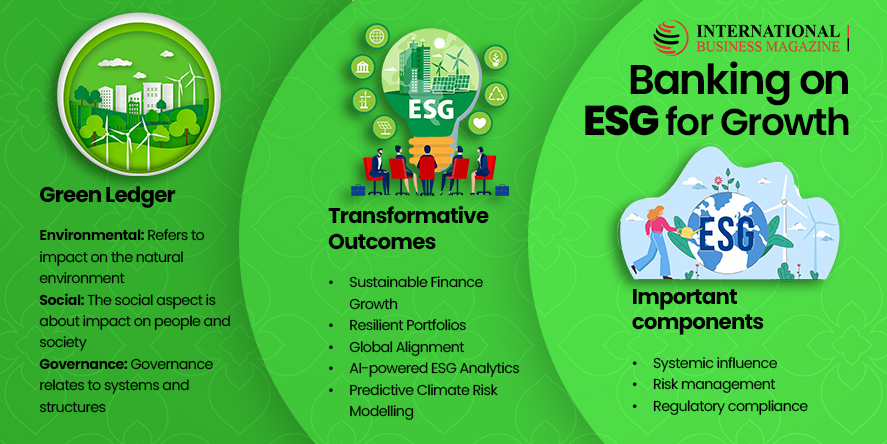
Environmental: Refers to factors related to a company’s impact on the natural environment. It includes considerations such as resource usage, pollution, climate change, waste management, energy efficiency and biodiversity impacts.
Social: The social aspect of ESG covers a company’s impact on people and society. It entails examining factors including labour practices, employee engagement and relations, diversity, equity and inclusion (DEI), community participation, customer satisfaction, and respect for human rights.
Governance: Governance refers to the systems and structures that guide a company’s operations and decision-making processes. This includes board business model resilience, business ethics (e.g., board composition, executive compensation, shareholder rights, and transparency), climate related-risks, competitive behaviour, risk management and management of the legal and regulatory environment.
Why ESG Matters in Banking?
ESG in banking has three important components, which shape the financial landscape that determine how banks operate and interact with their stakeholders. ESG in a broader sense has a set of norms and standards used to evaluate the sustainability and impact on society. The three factors are:
Systemic influence: Banks are capital allocators; their lending and investment decisions shape industries and economies. Integrating ESG ensures funds flow toward sustainable projects and prevent harmful activities.
Risk management: Climate Change, social inequality, and governance failures pose systemic risks. ESG frameworks help banks anticipate and mitigate these threats.
Regulatory compliance: Global directives like the EU’s Sustainable Finance Disclosure Regulation (SFDR), a framework designed to combat greenwashing and bring transparency to sustainable investments, and India’s Business Responsibility and Sustainability Reporting (BRSR) mandate ESG disclosures, pushing banks toward transparency and accountability.
ESG Enhances Risk Management
The advantages of the Green Ledger are clear. ESG is reshaping the Global Banking Sector. It strengthens trust, attracts investors, and fosters innovation in products like green bonds and inclusive digital banking. ESG enhances risk management by reducing exposure to climate shocks and governance scandals. Yet challenges persist: data gaps, greenwashing risks, and global disparities complicate ESG adoption.
The outcomes are transformative. ESG, as part of Green Ledger initiative, has mainstreamed sustainable finance, created resilient portfolios, and built customer loyalty among socially conscious generations. Globally, banks are aligning with net-zero commitments, embedding ESG into their DNA.
Further, AI is supercharging ESG in banking. AI-powered analytics are processing ESG data at scale, predictive models forecast climate risks, and automated compliance ensure transparency. Personalised sustainable finance is emerging, offering customers tailored green investment options. Ethical AI governance is safeguarding fairness and accountability, ensuring that technology amplifies ESG rather than undermines it.
Therefore, the story of ESG in banking is one of convergence – finance and sustainability, profit and purpose, technology and ethics. The future AI-led, ESG-enabled banking sector may be faster, smarter, and more responsible, redefining banking as a force not just for economic growth but for planetary and social well-being.
Advantages of ESG
Among the many advantages, ESG adoption strengthens brand credibility and attracts sustainability-focused investors. The most important are:
Financial resilience: ESG-aligned portfolios are less exposed to regulatory shocks and stranded assets. Green bonds, sustainable loans, and inclusive digital banking services emerge from ESG-driven strategies are some of the Innovation products.
Talent and diversity: ESG fosters workplace inclusivity, attracting top talent and improving organisational culture.
Challenges in ESG
The ESG adoption is not free from challenges. There are some issues like.
Banking Data Quality: Reliable ESG metrics are scarce, this makes risk assessment complex.
Greenwashing Risks: Banks face scrutiny if ESG claims are not backed by genuine practices. Greenwashing refers to overstating or misrepresenting environmental initiatives by an organisation. European Commission in a report in 2021 mentioned that 42% of the company reports on ESG performance involve “greenwashing” – that is, either inadvertently or intentionally offering exaggerated or misleading claims about the environmentally friendly nature of their products.
Balancing profit and purpose: Short-term profitability pressures can conflict with long-term ESG goals.
Global disparities: ESG standards vary across geographies, complicating multinational compliance.
Outcomes of ESG Adoption
Challenges apart, ESG adoption has enabled some good outcomes that are worth mentioning.
Sustainable Finance Growth: ESG has mainstreamed green finance, making it a core banking priority.
Resilient Portfolios: Banks reduce exposure to high-carbon industries and governance scandals.
Customer Loyalty: Ethical banking practices resonate with younger, socially conscious customers.
Global Alignment: Initiatives like the Net-Zero Banking Alliance tie banks to climate targets.
AI-powered ESG Analytics: Machine Learning models process ESG data, flag risks, and guide lending decisions.
Automated Compliance: AI streamlines ESG reporting, ensuring accuracy and reducing manual errors.
Predictive Climate Risk Modelling: Banks are able to use AI to forecast climate-related financial risks, safeguarding portfolios.
Ethical AI Governance: ESG frameworks ensure AI systems in banking remain transparent, fair, and accountable.
By Imtiaz Ahmed Shariff