
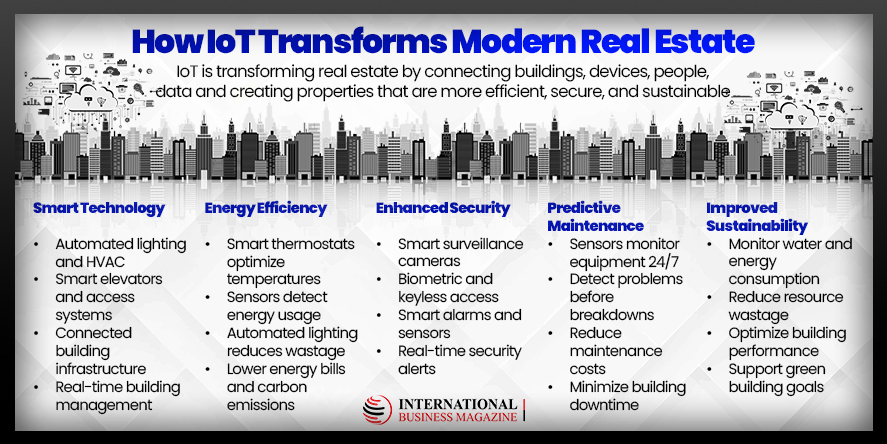
The real estate industry has undergone an exceptional digital transformation over the past decade. Technology driven by the Internet of Things (IoT) is the game changer. Powered by smart tech and green design, they mix modern style with tools that save energy and make life easy. IoT is revolutionising how structures are built by embracing smart tech, predictive lighting, and ensuring safety and security.
IoT drives real estate innovation by delivering convenience, efficiency, and sustainability for buyers and tenants. The IoT has transformed modern buildings by improving operational efficiency, creating security vulnerabilities, and pointing toward an AI-driven, hyper-connected tomorrow.
Understanding IoT in Real Estate
IoT in real estate refers to smart building technology, connected properties, and intelligent real estate. It describes physical properties embedded with sensors and connected devices to automate operations.
These connected devices talk to each other and monitor functions from remote areas using smart devices or control systems. This connectivity enables users to keep watch and optimise building performance, automate routine tasks, and make smart, data-driven decisions.
The role of IoT in Realty
1. Smart home technology is redefining everyday life
Smart homes are a major visible impact of the Internet of Things (IoT), driven by homebuyers expecting comfort-enhancing intelligent technologies.
Digital Homes now feature
- Programmable climate controls
- Voice-activated illumination
- Remote-controlled locks
- Doorbell cameras
- Network cameras
- Smart blinds and curtains
- Intelligent household appliances
- Water leakage detectors
These features let homeowners control their homes from afar, save energy, and feel safer. Smart home tech makes properties easier to sell and worth more money
2. Upgraded Property Protection
IoT in real estate security uses smart access, live cameras, and auto-alerts to shift protection from reactive fixes to active prevention.
IoT-powered security systems include:
- Smart security systems
- Connected surveillance ecosystems
- Intelligent safety platforms
- Networked IP security solutions
- Cloud-managed access control
- Movement Sensors
- Digital Locks
Property owners get instant alerts for suspicious activity, which speeds up response times and lowers security risks. Commercial buildings use intelligent visitor management systems and digital access controls to boost safety by replacing paper logs with verified digital identities, restricted area permissions, and real-time occupancy tracking.
3. Proactive maintenance saves money
Traditional maintenance relies on scheduled and breakdown approaches. Preventive tasks happen on fixed time intervals to stop failures early, while reactive tasks fix equipment only after it breaks down completely.
IoT changes this approach through Condition-based maintenance. Sensors in critical building systems continuously monitor operational parameters like vibration, temperature, pressure, speed, and electrical current to ensure safety, optimize energy use, and enable predictive maintenance.
- Temperature
- Pressure
- Vibration
- Energy consumption
- Operating hours
- Equipment performance
- General categorization
When unusual activity is spotted, the system highlights early warning signs to fix equipment before it breaks down.
Benefits:
- Lower repair bills
- Decreased maintenance expenses
- Minimized fix costs
- Reduced system downtime
- Less equipment idle time
- Shorter operational pauses
Predictive maintenance prevents costly emergency repairs and keeps buildings reliable.
4. Eco-friendliness and Sustainability
Sustainability is now a core priority in modern real estate
IoT optimises building energy use through real-time monitoring, automated controls, and predictive analytics.
- Lighting based on occupancy
- HVAC operations
- Water consumption
- Electricity usage
- Solar energy integration
- Smart irrigation systems
Saving Energy by Going Green
- Lower utility bills
- Carbon reduction
- Superior Energy Performance
- Greater sustainability
Green buildings equipped with IoT technologies attract eco-conscious buyers and tenants by lowering utility bills, improving indoor air quality, and providing transparent sustainability data.
5. Superior Property Management
IoT-enabled platforms have transformed property management by driving operational efficiency, enabling predictive maintenance, and optimizing energy consumption.
A centralised dashboard enables managers to monitor multiple properties.
They gain real-time visibility into:
Building Operations
- Occupancy levels
- Utility consumption
- Security systems
Management and Upkeep
- Equipment performance
- Maintenance schedules
- Tenant requests
Automated reporting saves time and reduces administrative work by eliminating manual data entry, speeding up workflows, and cutting human errors.IoT enables remote diagnostics, allowing managers to fix problems without visiting sites.
6. Elevated resident journey
Tenants today want a smooth digital experience, not just a physical space
IoT lets Personalised services, including:
- Mobile Device Management
- Automated Parking Guidance Systems
- Digital check-in software
- Indoor mapping
- Automated parcel machines
- Intelligent elevators
- Occupancy-driven HVAC control
Commercial offices use IoT to help workers find rooms, save desks, and work better
7. Digital Commercial Buildings
Commercial real estate uses the Internet of Things (IoT) to optimize energy management, enable predictive maintenance, and improve space utilisation.
Smart office buildings use interconnected systems to manage energy use, indoor climate, and occupant security.
- Meeting Room capacity
- Smart lighting control
- Air cleanliness
- Climate control
- Elevator dispatching
- Vacant parking
- Premises protection
Sensors collect occupancy data to help companies optimize office layouts and reduce unused space.
Facility managers gain insights for planning maintenance and improving building performance.
8. Evidence-based decision-making
IoT efficiently generates high volumes of real-time data.
This specific real estate data helps developers, investors, and property managers make smart choices about property projects regarding:
- Property usage
- Energy management
- Renter requirements
- Maintenance scheduling
- Space planning
- Investment approaches
Analytics platforms convert raw sensor telemetry into meaningful business intelligence by automating data processing, revealing operational bottlenecks, and enabling predictive maintenance
9. Remote Property Surveillance
IoT enables real estate professionals to remotely track and manage property conditions, security, and energy use in real time
Using a cloud platform, they can:
- View live surveillance
- Tracking consumption
- Receive Service Notifications
- Equipment condition monitoring
- Manage Physical security
- Manage lights and climate
This capability helps property managers save time by making it easy to handle many buildings at the same time from one place.
10. Higher real estate worth
Smart-enabled properties command higher market values due to energy efficiency, enhanced security, and modern convenience.
IoT-enabled Buildings Typically Offer
- Reduced Operational Expenses
- Improved Protection
- Greater accessibility
- Superior Energy Performance
- Modern Facilities
- Minimized Maintenance Spending
IoT integration in real estate acts as a core competitive differentiator by lowering operating costs by up to 30%, boosting tenant retention through enhanced comfort, and streamlining compliance with green building standards
Key Benefits
The integration of Internet of Things (IoT) technology delivers powerful advantages for every key stakeholder
For Land Owners
- Minimized operational expenditures
- Better wealth management
- Escalation of property value
- Decreased repair expenditures
- Improved facility Operation
For Tenants
- Greater comfort
- Improved Accessibility
- Increased protection
- Reduce energy costs
- Individualized Home Environments
IoT For Real Estate Managers
- Autonomous maintenance
- Central Surveillance
- Quick Resolution
- Optimal Resource Utilization
- Upgraded Resident fulfilment
- Enhanced project value
- Lasting Durability
IoT For Developers
- Competitive advantage
- Unique selling proposition (USP)
- Enhanced credibility
- Greater Project Attractiveness
- Long-term Viability
Difficulties of Implementing IoT
IoT adoption faces major challenges, led by security vulnerabilities, privacy concerns, and interoperability issues.
Cyber Threats
Securing connected devices requires strong encryption, regular software updates, and secure authentication to prevent cyber attacks.
Data Confidentiality
IoT devices gather a significant amount of user data, making privacy rules and clear data practices very important.
Substantial Startup Cost
Smart infrastructure requires high upfront costs for hardware, networks, and software, but it delivers massive long-term savings through lower energy use, fewer repairs, and better resource management
Connection Complication
Mixing devices from different brands can cause problems. Open standards and careful planning help fix this.
Regular servicing
Sustaining secure and effective IoT ecosystems relies on three core lifecycle pillars: continuous monitoring, software updates, andhardware replacement
Emerging IoT Movement in Real Estate
The future of IoT in real estate is driven by predictive maintenance, energy automation, andsmart access control:
- Autonomous building systems
- Virtual building management using digital twins
- High-speed connected public systems
- Digital infrastructure merging
- AI-driven maintenance systems
- Smart energy management
- Smart parking Systems
- Space utilization analytics
- Asset performance management
- Eco-friendly structures
These technologies use IoT sensors, AI algorithms, and automated management systems to connect core operations like climate, lighting, and security.
Upcoming connected real estate trends:
Future smart buildings will use IoT technology to predict maintenance needs, optimize energy use in real time, and provide personalized experiences for people.
The integration of artificial intelligence, cloud computing, edge computing, and 5G connectivity creates a powerful network that enables connected properties to operate faster.
Developers who use Internet of Things (IoT) technology today will satisfy customer demands, meet green rules, and stay ahead of the competition.
Conclusion
The Internet of Things (IoT) has revolutionized real estate by enabling energy efficiency, predictive maintenance, and enhanced security. IoT delivers high value in real estate through smart automation, predictive maintenance, and energy efficiency. It helps owners, managers, and occupants save money and stay safe.
Long-term benefits outweigh obstacles like cybersecurity risks, privacy concerns, and high implementation costs. IoT drives the future of real estate by enabling energy efficiency, predictive maintenance, and enhanced occupant comfort. Organizations using artificial intelligence and smart automation are boosting work speed and building modern, responsive homes and offices.
Article by Baldeb Ram