
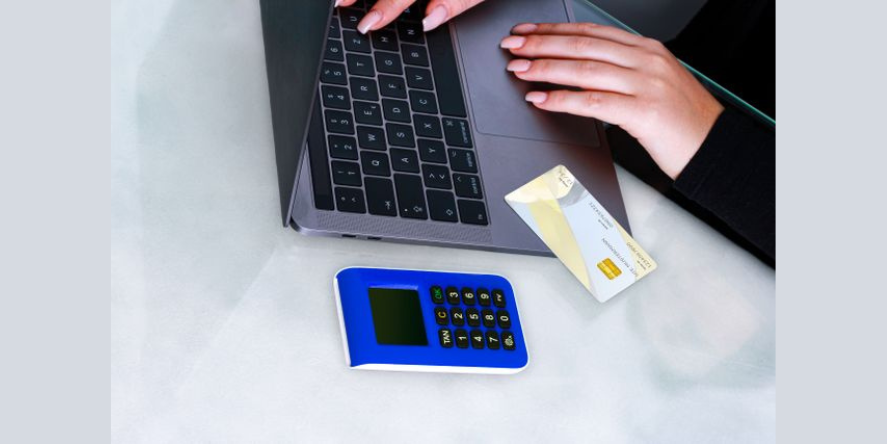
For a supplier that bills other businesses, the card fee on an invoice payment often matters less than the number of days the invoice stays unpaid. Paid by card over the phone, an invoice settles the day the customer calls. The same customer paying by check settles it after the check is cut, mailed, opened, deposited and cleared, and someone on the supplier’s side still has to match it to the right invoice.
Checks in Business-to-Business Billing
Paper checks remain common between businesses. The Association for Financial Professionals found that checks made up 26% of business-to-business payments in 2025, down from 33% in 2022. The same organization’s fraud survey found that 63% of organizations faced attempted or actual check fraud in 2024, more than for any other payment method.
Many suppliers ask customers to pay invoices by card or bank transfer instead. A card payment taken by phone gives the supplier an immediate authorization, a known settlement date and no paper to lose in the mail.
Taking Invoice Payments by Phone or Email
The customer’s accounts payable clerk calls with the invoice number and a company card, or replies to the invoice email asking to pay by card, and the supplier’s staff key the payment in a browser. Most terminals include fields for an invoice number and a customer reference, so the payment record has the same identifiers as the invoice in the accounting system.
When one line on a $9,400 invoice is in dispute, the customer can pay the undisputed $8,100 now, and the terminal records that amount against the invoice number so the balance stays open for the item in question.
Commercial Card Data and Lower Interchange
Many business customers pay with purchasing or corporate cards, and those cards are priced differently from consumer cards. Under the rates Visa published for April 18, 2026, a standard commercial card-not-present sale costs 2.70% plus 10 cents in interchange. Sales on purchasing and corporate cards that include detailed transaction data qualify for a lower rate of 1.75% plus 10 cents.
The detail is the line-item information a buyer’s procurement system wants anyway, such as the sales tax amount, the customer’s purchase order number, product codes, quantities and unit prices. On a $12,000 invoice, the difference is $324.10 in interchange at the standard rate against $210.10 with full data. Suppliers using virtual terminals for payment card processing that can send those fields, or pull them from the invoice, keep the $114 gap on each large payment.
Surcharges and Convenience Fees on Invoices
Some suppliers pass card costs to the customer. Visa has capped credit card surcharges at 3%, or the merchant’s actual cost of acceptance if that is lower, since April 15, 2023. Card network rules do not let merchants charge extra for debit purchases, and the merchant must notify its acquirer 30 days before it starts surcharging. Connecticut and Massachusetts prohibit surcharges outright.
A surcharge also has to be disclosed before the payment is taken. For invoice payments, that means a line on the invoice and a statement from the person taking the call. New York’s transparency law on surcharges, in effect since February 2024, requires sellers to show the higher card price up front and limits the surcharge to what the card company charges the business. Suppliers that sell to customers in several states often apply the surcharge only where it is allowed, which a terminal can handle with a separate fee setting per customer record.
Days Sales Outstanding and Cash Timing
Finance teams track how long invoices stay unpaid with days sales outstanding, usually shortened to DSO, which is receivables divided by credit sales and multiplied by the number of days in the period. A distributor with $500,000 in receivables and $3 million in annual credit sales has a DSO figure of about 61 days. Phone payments shorten that figure in two ways. Paying by card on the day the invoice arrives removes the mailing and clearing time from the cycle, and a supplier that offers card payment at the moment of a collection call can settle an overdue balance during the conversation.
Matching Payments to Open Invoices
Each payment has to be applied to the invoice it pays. When the invoice number is entered at the time of the card payment, the export from the terminal can be imported into accounting software and matched automatically.
Payments without a reference end up in an unapplied cash queue, where staff have to work out from the amount and the customer name which invoice was meant. Some customers pay several invoices with one card payment, so the reference field should list every invoice number covered, or the amount should be split across invoices in the accounting system on the same day.
Short payments and overpayments need a written policy. A customer who pays $50 less than the invoice because of a deducted shipping charge should receive a note confirming the deduction was accepted or rejected, so the balance does not stay open with no explanation.
—–
Payment Links for Self-Service Payment
Some customers prefer to enter their own card details. Many terminals can generate a payment link for a specific invoice, which the supplier emails to the customer’s accounts payable team. The customer pays through a hosted page and the payment appears in the same transaction list as keyed sales, so the supplier’s staff never see the card number.
Card Data Handling in Accounts Receivable
Accounts receivable staff see a steady stream of card numbers, and some customers send them by email to save a phone call. Unless both sides use encrypted email, a card number in a message is readable by anyone who can open the sender’s or the recipient’s mailbox, and the payment card security standard requires strong encryption whenever a card number is sent through messaging tools. The safer practice is to reply with a request to call or a secure payment gateway, then delete the original message.
A Monday Morning on the Receivables Desk
On a Monday, the receivables clerk at a building supply wholesaler starts with 14 open invoices past 30 days. By noon, 6 customers have paid by phone with company cards, 2 of them sending the purchase order data that drops their interchange rate, and each payment has been applied to its invoice before lunch. The remaining 8 are still waiting on checks somewhere in the mail.
Article received on email.