
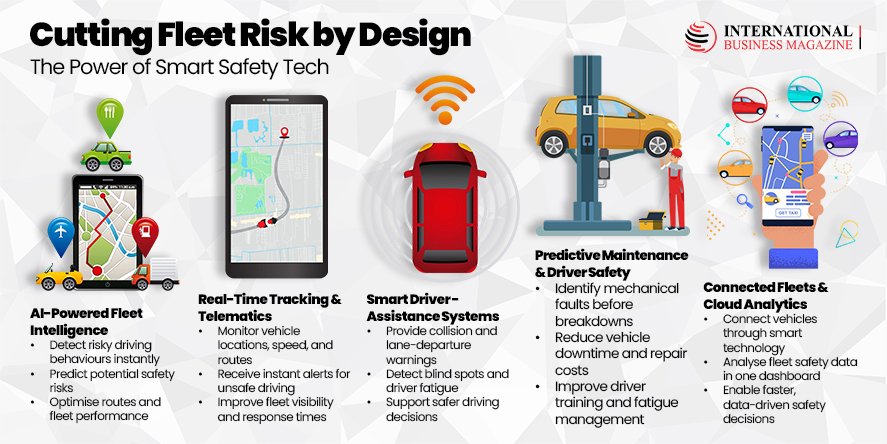
Technology is changing the way fleets are managed for personal commutes, goods, and services. The cutting-edge technology has enabled a paradigm shift in the way fleet management and safety are dealt with. It’s about cutting risk by design via the power of smart safety technology.
As fleets grow and road networks become more complex, businesses struggle to prevent accidents, lower risks, protect drivers, and ensure on-time deliveries becomes key concerns that needs to be addressed.
Conventional fleet management generally depends on manual checks, driver feedback, and fixing vehicles only after they break down. Although these strategies remain valuable, they may fall short of addressing modern transportation needs. Technology is changing the industry by allowing companies to track fleets instantly, evaluate driving habits, anticipate service needs, and address safety risks before they worsen.
Digital technology—such as artificial intelligence, telematics, smart dash cameras, and driver-assistance systems—shifts fleet safety from a damage-control reaction after an accident to a data-backed prevention strategy.
The Increasing Significance of Fleet Safety
Fleet safety isn’t just about blocking collisions. It relies on driver well-being, dependable vehicles, legal compliance, efficient workflows, and community safety. A single accident can trigger a costly chain reaction, impacting everything from driver safety and vehicle upkeep to delivery timelines, insurance premiums, and brand reputation. For large fleets, even minor enhancements in safety protocols yield substantial operational benefits.
Driver fatigue, distractions, speeding, bad weather, neglected maintenance, and heavy traffic all drive up fleet risks. Overcoming these challenges takes more than written policies; it requires actionable data, rapid responses, and continuous monitoring. Implementing the right technology empowers operators to spot dangers early, make smarter choices, and build a lasting culture of safety.
AI drives rapid fleet deployment
AI transforms raw fleet data into actionable intelligence by evaluating real-time telematics, driver behaviour, and vehicle diagnostics to automate and optimize decisions. AI-powered systems replace manual report reviews by automatically detecting risky driving, unusual behaviour, and inefficient routes.
Real-time fleet and telematics platforms monitor driving behaviour on the road and send instant alerts to drivers to curb risky habits and boost fuel efficiency. Intelligent routing platforms dynamically update schedules based on real-time traffic flows, minimizing delays and maximizing operational speed.
Vehicle Tracking and Real-Time Fleet Monitoring
Telematics combines machine data, satellite positioning, and communication tools so fleet supervisors can track vehicle performance and driver behaviour in real time.
Centralised dashboards enable managers to track vehicle locations, speeds, routes, driving habits, and key health indicators. Fleet operators receive prompt notifications relating to speeding, unauthorized driving, prolonged idling, or route deviations.
Such visibility accelerates organizations to accelerate their response times when facing incidents or unforeseen fleet disruptions. Accurate routing information empowers managers to mitigate risks by proactively avoiding precarious conditions, heavy congestion, and severe weather.
Telematics strengthens organizational accountability by substituting subjective estimates with objective data. Instead of waiting for accident reports to expose issues, fleet managers can proactively spot emerging risks and resolve them using driver coaching, route optimization, or updated policies.
Advanced Driver-Assistance Systems
Intelligent driving tools use cameras and radar arrays to monitor surrounding traffic conditions and guide motorists away from danger. Depending on the specific build and package of your car, these options may include collision-stopping brakes, front crash warnings, lane-drifting alerts, side-blindness sensors, speed-adjusting cruise control, and fatigue monitors.
These systems assist drivers in detecting hidden dangers, which is especially helpful during extended drives, heavy traffic, or low-visibility conditions. Automated capabilities range from passive notification systems to active intervention protocols triggered by specific environmental criteria.
While ADAS provides support, it does not substitute for active driving, because its capabilities fluctuate with vehicle models, weather conditions, lane markings, and real-time environments.
Predictive insights stop trouble in its tracks
Advanced analytics enable fleet managers to anticipate mechanical failures and act early rather than responding to problems after a crash or breakdown. By tracking vehicle data live, these systems detect early signals of problems—like performance drops, unexpected engine behaviour, or worn components—before they become critical issues.
These insights enable technicians to resolve faults before they cause a vehicle failure or service interruption. Accordingly, vehicle operators can minimize downtime, prevent expensive fixes, and extend the productive lifespan of their transport units.
Driver, Training, and Fatigue Monitoring Management
Fleet safety finally depends on drivers. While technology offers helpful insights, achieving safer results requires actively supporting the people behind the wheel. Driver-monitoring systems track specific unsafe driving habits, empowering fleet managers to deliver customized training instead of generic safety lectures.
Different driving problems require different solutions. Hard-braking drivers need tips on keeping a safe distance, while speeding drivers need support with time management and route planning. Fatigue management is important in long-distance transport, requiring responsible scheduling over tech-based alerts. Driver monitoring systems must be fair, transparent, and focused on Enhanced safety rather than punishment.
Automotive Connectivity Platforms
Connected vehicle technology enables vehicles and infrastructure to share real-time data, allowing fleet operators to improve routing decisions based on live traffic, weather, and road conditions. Intelligent route planning improves driving safety, lowers mileage, and enhances time management. For commercial delivery fleets, it also relieves driver stress by eliminating inefficient scheduling.
Connected vehicle and telematics systems use GPS, sensors, and wireless communication to automatically share real-time location and critical crash data with fleet managers or emergency responders. Connected mobility utilizes vehicle data and external road information to better understand risk. The final goal is to transport people and goods more safely and reliably, rather than just increasing travel speed
Cloud Computing Service and Data-Driven Decisions
Cloud-based fleet management platforms consolidate multi-vehicle and safety data into a single system. This allows managers to easily track incidents, evaluate performance, manage corrective steps, and spot systemic issues across all locations.
Dashboards and reports help organizations track and analyze key fleet performance indicators by consolidating complex data into visual, actionable summaries.
Route-specific safety data allows organizations to make informed decisions by recognizing recurring incident hot spots and investigating contributing factors like unsafe road conditions, tight schedules, or driver concerns. If vehicles suffer chronic mechanical issues, technicians should evaluate their diagnostic techniques and component durability.
Effective safety measurement requires consistent context and a focus on meaningful outcomes rather than raw alert counts, as an increase in detected events often signals better monitoring rather than worse driving behaviour.
Challenges in Implementing Fleet Safety Technology
Technology implementation creates heavy financial and operational burdens for organizations through upfront and ongoing requirements. Managing a mixed fleet creates data silos because organizations must combine information from vehicles with different technological capabilities and platforms using incompatible formats.
Businesses must balance privacy and cybersecurity by protecting sensitive data like location records, driver behaviour, and video footage.
Technology alone cannot solve security risks if underlying operational setbacks—such as insufficient training, neglected Vehicle servicing, overworked drivers, and unrealistic delivery schedules are left unaddressed.
Achieving success requires a well-rounded approach that combines the right tools, capable staff, defined guidelines, and dynamic optimization. The future may see more cutting-edge technology, which might further change the way the fleets are managed.
Article by Baldeb Ram