
The democratisation of investment opportunities enabled by digitalisation may unlock trillions of dollars in previously illiquid assets and create more inclusive financial ecosystems.
The concept of wealth has undergone a dramatic transformation throughout human history. From land ownership and precious metals to stocks, bonds, and real estate, every era has redefined what society considers valuable. Today, the world is witnessing another profound transition as digital assets emerge as a new form of wealth creation, preservation, and transfer.
Driven by rapid technological innovation, decentralisation, blockchain networks, artificial intelligence, and the digitisation of financial systems, digital assets are reshaping traditional ways of ownership and investment. As global economies become highly interconnected and digital-first, the future of wealth is taking shape in digitally authenticated and electronically transferable forms and digital assets are emerging as a multi-generational asset class.
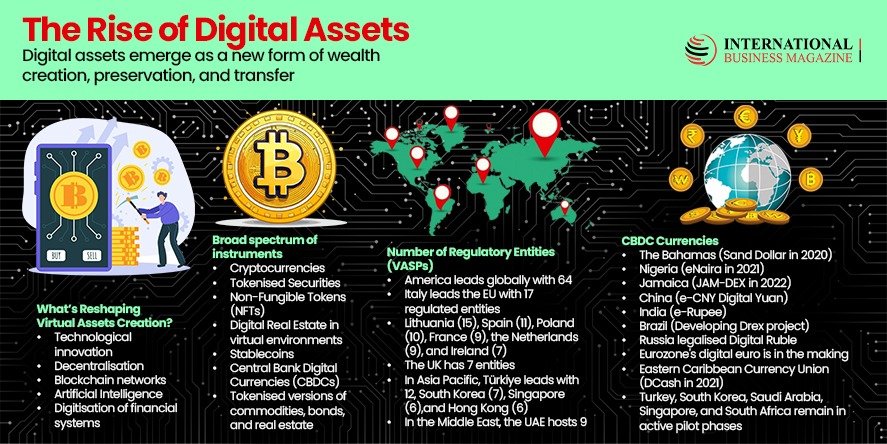
Once viewed as a fringe asset class, digital assets are now an option for investors, digital assets encompass a broad spectrum of instruments, including cryptocurrencies, tokenised securities, non-fungible tokens (NFTs), digital real estate in virtual environments, stablecoins, Central Bank Digital Currencies (CBDCs), and tokenised versions of traditional assets such as commodities, bonds, and real estate. The growth of these assets reflects a larger shift in how economic value is created and exchanged in the digital age. Global investors are increasingly diversifying beyond conventional portfolios, recognising that digital assets can provide new opportunities for capital appreciation, portfolio diversification, and access to previously unavailable markets.
One of the most significant trends influencing the future of wealth is the tokenisation of real-world assets. Tokenisation enables physical and financial assets to be represented digitally on blockchain networks, allowing fractional ownership and increased liquidity. Traditionally, investments in premium real estate, fine art, infrastructure projects, or private equity required substantial capital commitments and were often accessible only to institutional investors or high-net-worth individuals. Now, through tokenisation, these assets can be divided into smaller digital units, enabling broader participation from retail investors worldwide.
Regulatory Maturity Drives Stability
Another defining trend is the growing institutional acceptance of digital assets. Earlier, cryptocurrencies were viewed primarily as speculative instruments. However, globally financial institutions, asset managers, payment processors, pension funds, and sovereign wealth funds are increasingly integrating digital assets into their long-term strategies including regulatory mechanism. Over 100 countries globally have established or are implementing formal regulatory frameworks for digital asset exchanges and Virtual Asset Service Providers (VASPs). The establishment of regulated digital asset exchanges, cryptocurrency investment products, and digital custody solutions has helped improve investor confidence and accelerated mainstream adoption. As far as regulatory framework is concerned, North America leads globally in regulated VASP entities for top crypto exchanges, with 64 in the U.S.
In Europe, the rollout of MiCA (Markets in Crypto-Assets) allows existing VASPs to rely on grandfathering periods while maintaining local AML/CFT (Anti-Money Laundering and Combating the Financing of Terrorism) compliance. Italy leads the EU with 17 regulated entities, followed by Lithuania (15), Spain (11), Poland (10), France (9), the Netherlands (9), and Ireland (7). The UK counts 7 entities following Coinbase’s FCA approval. In Asia Pacific, Türkiye leads with 12 federal-level regulated VASPs, alongside South Korea (7), Singapore (6), and Hong Kong (6). In the Middle East, the UAE hosts 9 regulated entities across Dubai’s VARA (Virtual Assets Regulatory Authority) and Abu Dhabi’s ADGM (Abu Dhabi Global Market) frameworks. Regulatory maturity across these key global regions is paving the way for deeper institutional involvement, ultimately legitimising digital asset markets through enhanced stability and transparency.
Stablecoins, the New Kid on Digital Block
Furthermore, stablecoins are also emerging as a crucial component of the future wealth ecosystem. Stablecoins are engineered to preserve price parity with designated reference assets, exemplified by USDT’s (Tether USD) one-to-one parity with the U.S. Unlike traditional cryptocurrencies that often experience significant volatility, stablecoins are typically pegged to fiat currencies or other reserves, allowing for more predictable value storage and efficient cross-border transactions. Their ability to facilitate low-cost, near-instant settlements has attracted interest from businesses, financial institutions, and consumers alike.
The U.S. dollar-denominated stablecoin market has grown to $225 billion, making up 99% of global stablecoins and 7% of the $3 trillion crypto ecosystem. J.P. Morgan projects it could reach $500–750 billion. As global trade and digital commerce continue expanding, stablecoins may become a bridge between traditional banking systems and decentralised finance, creating a seamless financial environment for individuals and corporations.
CBDCs gaining currency
The rise of Central Bank Digital Currencies represents another transformative development. Governments and central banks worldwide are exploring digital versions of national currencies to enhance payment efficiency, financial inclusion, and monetary policy implementation. CBDCs are expected to coexist with private-sector digital assets while introducing new standards for secure and regulated digital transactions.
Over 130 countries, representing about 98% of the global economy, are testing, or have launched a Central Bank Digital Currency (CBDC). The countries who have fully launched Central Bank Digital Currencies include The Bahamas with the Sand Dollar in 2020, Nigeria with the eNaira in 2021, and Jamaica with JAM-DEX in 2022. The Eastern Caribbean Currency Union also launched DCash in 2021, which spans Antigua and Barbuda, Dominica, Grenada, Montserrat, Saint Kitts and Nevis, Saint Lucia, and Saint Vincent and the Grenadines.
Meanwhile, advanced developments and major pilots are underway elsewhere. China is expanding its e-CNY (Digital Yuan), India has introduced wholesale and retail e-Rupee via the Reserve Bank of India, Brazil is developing its Drex project, and Russia has legalised and is testing its Digital Ruble. Additionally, the Eurozone’s digital euro is currently in its legislative and technical preparation phase, with trilogue negotiations between the European Parliament, European Council, and European Commission and hopes to become a reality by 2029, while nations like Turkey, South Korea, Saudi Arabia, Singapore, and South Africa remain in active pilot or research phases.
Decentralised Finance, commonly known as DeFi is another format of digital asset. It is reshaping how financial services are accessed and delivered digitally. Built on blockchain technology, DeFi platforms provide lending, borrowing, trading, insurance, and asset management services without relying on traditional intermediaries. While regulatory and security challenges remain, DeFi continues to evolve rapidly and may become a key component of future global financial infrastructure.
AI, Blockchain Tech Convergence
Artificial Intelligence is also playing a growing role in the digital asset landscape. AI-powered analytics, predictive modelling, algorithmic trading, and risk assessment tools are helping investors navigate complex and rapidly changing markets. The convergence of AI and blockchain technology is creating intelligent financial platforms capable of optimising investment decisions, detecting fraud, and enhancing operational efficiency. This integration is likely to redefine wealth management by providing highly personalised financial solutions tailored to individual risk profiles and investment objectives.
Verifiable digital ownership is rapidly becoming the backbone of the modern online economy. As financial and personal transactions migrate online, establishing secure, authenticated frameworks for digital identity is critical. Utilising blockchain technology for digital IDs streamlines transactions, curtails fraud, and cuts down on bureaucratic red tape. This technological shift is set to reshape how we manage property rights, intellectual property, and personal assets – making secure digital identity an essential tool for future wealth creation.
Digital wealth is also expanding into the metaverse and virtual economies. These online formats feature thriving ecosystems where people buy, sell, and build virtual real estate, digital items, entertainment, and professional services. Because younger generations are natural digital natives, they are highly likely to treat these virtual assets as valid investments in their financial portfolios.
Green shoots in carbon-neutral digital asset
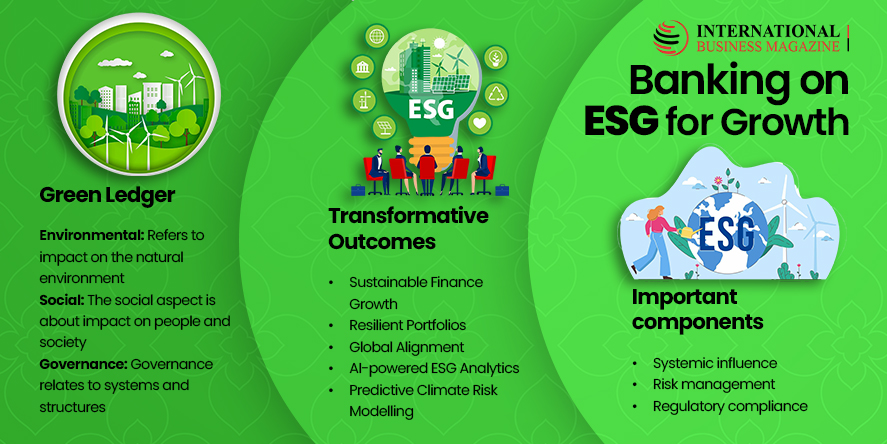
Environmental sustainability is also influencing the evolution of digital assets. Earlier concerns regarding the energy consumption of certain blockchain networks prompted the industry to explore more energy-efficient consensus mechanisms and sustainable operational practices. Green blockchain initiatives, carbon-neutral digital asset platforms, and sustainability-linked tokenised investments are gaining prominence. Investors are increasingly seeking digital wealth opportunities that align with environmental, social, and governance principles, creating incentives for responsible innovation across the sector.
Despite the immense opportunities, challenges remain. Regulatory uncertainty, cybersecurity threats, market volatility, technological complexity, and investor education continue to pose risks. Governments and regulators face the delicate task of fostering innovation while ensuring financial stability and consumer protection. Experts feel successful participation in the emerging digital asset economy will require a combination of technological literacy, strategic planning, and prudent risk assessment.
In essence, the future of wealth appears increasingly digital, decentralised, and interconnected. Digital assets are not merely a passing trend but part of a broader transformation that is redefining ownership, investment, and economic participation on a global scale.
Article by Imtiaz Ahmed Shariff