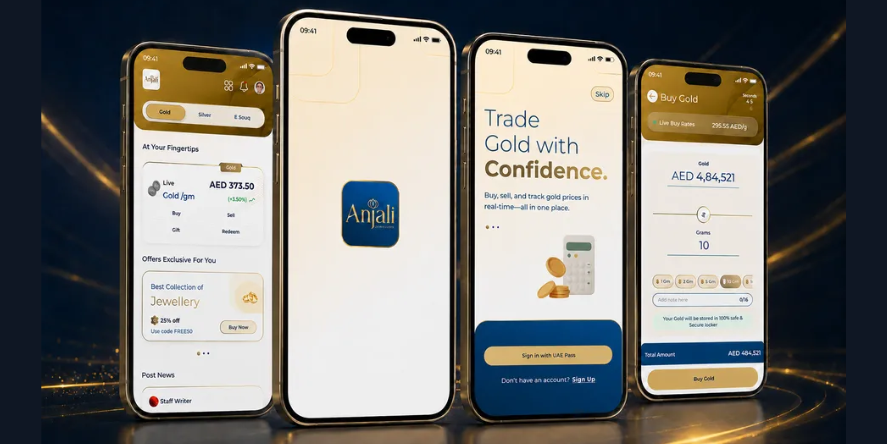

Technology in the financial services industry has redefined how people access and use financial services
Mobile money adoption in low-income countries is being boosted by technology, with the number of mobile money accounts growing more than twice the number of bank accounts per 1,000 adults on average, a new study reveals.
Technology in the financial services industry has redefined how people access and use financial services, especially through the proliferation of mobile phones. It has also enabled a new class of payment services to reach populations that were previously excluded, the International Monetary Fund said in its 2018 Financial Access Survey.
Africa, which many considered the epicentre of mobile money growth, is still posting strong growth. After initial success in Kenya, Tanzania, and Uganda, survey data suggests Ghana, Guinea, Rwanda, Mozambique and Madagascar are among the countries leading the next wave of mobile money growth in the region.
Africa, which many considered the epicentre of mobile money growth, is still posting strong growth. After initial success in Kenya, Tanzania, and Uganda, survey data suggests Ghana, Guinea, Rwanda, Mozambique and Madagascar are among the countries leading the next wave of mobile money growth in the region.
“Other regions are not far behind in the mobile money revolution. Bangladesh, Myanmar and Guyana have registered significant increases in the number of mobile money accounts and transactions,” the IMF said in the report.
The number of mobile money transactions per 1,000 adults in Bangladesh has increased from 10,891 in 2015 to almost 16,000 in 2017. In Guyana and Myanmar, the figures have risen from 890 and 19 in 2015 to 3972 and 533, respectively.
The use of mobile money has several economic benefits, including improving public sector efficiency, supporting small businesses, and promoting inclusive growth. Several governments and central banks in different parts of the world have promoted mobile money usage, with Jordan being one of the most recent examples within the broader Middle East.
Last year was significant for Jordan Mobile payments (JoMoPay), which the central bank had originally launched in 2013. The regulator implemented several initiatives to promote its usage, including allowing refugees to use UN papers as a proof of identity to open an account for mobile money transactions.
“This has enabled registered refugees, who typically operated outside the formal financial system, to gain access to a secure way of carrying out transactions,” the IMF noted.