
Here’s something that doesn’t get said enough: most fit-out budgets in Dubai don’t get blown by bad contractors. They get blown by good contractors working off bad information — drawings that weren’t coordinated with site conditions, specs that changed three times before anyone picked up a tool, design decisions made by people who weren’t around when the problems showed up.
I’ve had enough post-project debriefs with developers and corporate real estate teams to know how it usually goes. The original budget looked fine. Then the variations started. Then the opening date started moving.
The Split That Causes Most of the Damage
Standard commercial fit-out practice in Dubai separates design from delivery. You hire a design consultancy to produce the drawings and specifications. Those go out to tender. A contractor wins — often the one who came in lowest — and they take responsibility for building what the drawings show.
That handover between design and construction is where projects start going wrong, and here’s why: the contractor didn’t write the spec. They priced it based on their interpretation of it, which may or may not match the designer’s intention. When ambiguities surface on site — and they always surface on site — the contractor does what’s cheapest unless someone is standing there with the authority and the incentive to insist otherwise. The designer is usually long gone by then, or they’re a phone call away with no contractual leverage.
The result is what most clients eventually accept as ‘close enough.’ Finishes that look like the renders from a distance. Joinery that fits but doesn’t sit quite right. Lighting that works but doesn’t do what it was supposed to do for the space. A final product that functions without ever quite delivering on what was pitched.
This isn’t a contractor problem. It’s a structural problem.
What an Integrated Firm Actually Does Differently
When a single firm handles design and fit-out together, the dynamic shifts in a way that’s hard to overstate. The designer who drew the joinery is in the same building as the team manufacturing it. The project manager who built the delivery programme is also the one who signed off on the design phasing. When a decision needs to be made on site, it gets made by someone who understands both the design intent and the construction reality.
- Material calls get made with the build in mind, not just the render. Design changes that come up mid-construction get resolved in hours, not across a week of emails between separate companies.
- The programme is built around reality, not a tender price
- Snagging is a quality check, not a dispute
For the client it means one contract, one point of contact, nowhere to hide. The same firm that drew the space is the one that built it.
The MGS Sales Office: What This Looks Like in Practice
Sales offices are a good case study for integrated delivery because the brief is unusually specific. A sales office isn’t just somewhere staff sit. It’s the first physical experience a buyer has of a developer’s product — often before a single unit is built. The space has to carry the brand, guide visitors through a structured journey, create an emotional response, and hold up under heavy use during a launch period. And it typically needs to be ready yesterday.
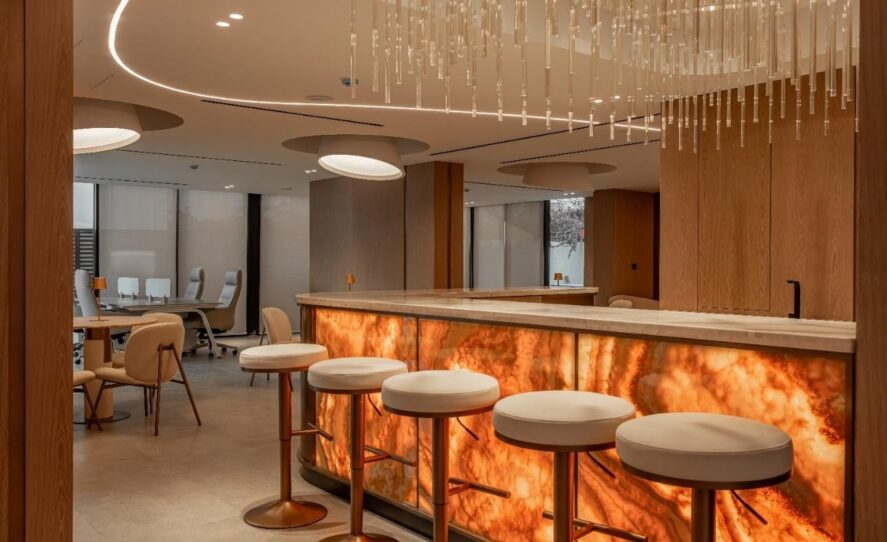
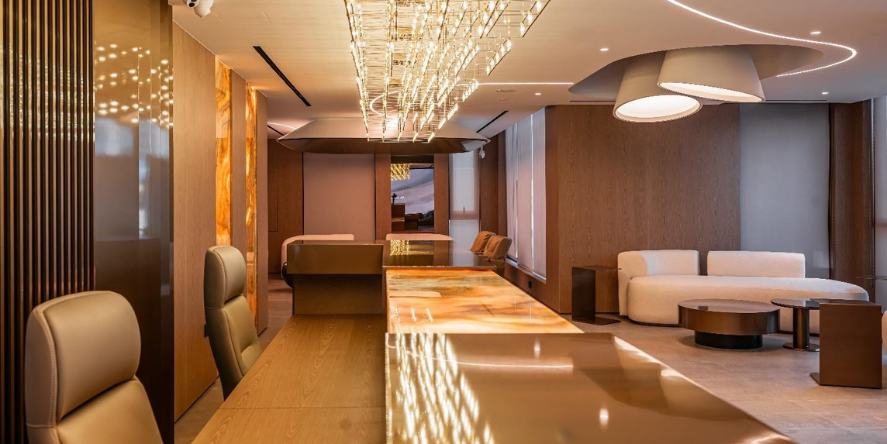
The MGS Sales Office Villa Fit-Out, delivered by Spazio Interior Decoration LLC, is a useful example of what that brief looks like when it’s handled by an integrated team. The design concept centered on a restrained, neutral palette — premium materials that frame the developer’s product rather than compete with it. Bespoke joinery was produced in-house, which matters more than it might seem: when the firm manufacturing the millwork is the same firm that designed it, you don’t get a piece that’s ‘close’ to what was specified. You get the piece.
Lighting was handled with a level of precision that’s harder to achieve when you’re coordinating across separate contractors. Different zones — reception, presentation, private consultation — needed different light qualities, and getting that right required the lighting design and the fit-out execution to be developed together rather than sequentially.
The project was delivered on a compressed timeline. That’s only possible when you’re not waiting for a designer to approve a contractor’s RFI, or for a contractor to confirm whether a substituted material meets the original spec. The team making those calls was the same team that set the design intent.
The project is documented in full on Spazio’s portfolio: MGS Sales Office Villa Fit-Out by Spazio.
What to Actually Look For
The term gets used loosely. Plenty of firms in Dubai describe themselves as design-build because it sounds better than ‘contractor with a design department.’ Before you sign anything, push on a few specifics:
- In-house manufacturing. Specifically, joinery and millwork. If a firm designs bespoke elements but outsources their production, you still have the design-to-build handover gap, just hidden inside the same contract. Ask explicitly whether they make their own joinery.
- Years in the Dubai market specifically. The 2008 correction and the 2014 slowdown wiped out a lot of firms. The ones still standing have been tested in ways newer entrants haven’t.
Spazio Interior Decoration LLC has been designing and building commercial, residential, and hospitality spaces in Dubai since 2008. As an interior fit-out company that handles everything under one roof — design, execution, and in-house manufacturing — the model hasn’t changed much over the past 16 years. Over 500 projects across the UAE and four international markets later, it still holds up.
Blog received on mail