
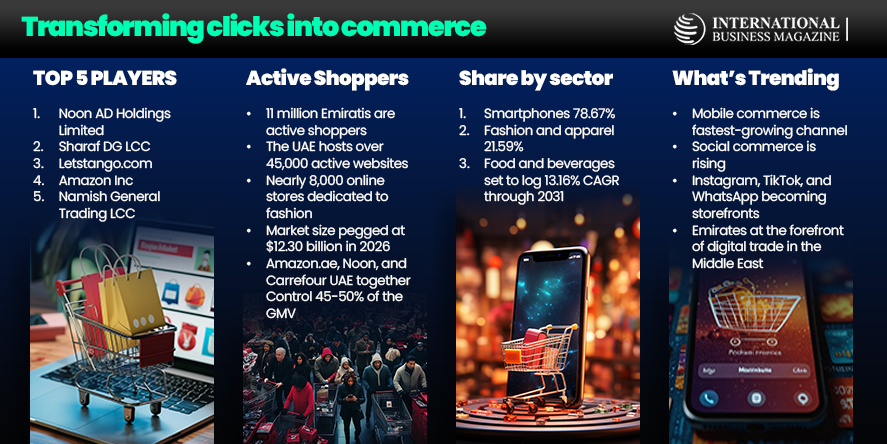
With a whopping 96% internet penetration and smartphone adoption, the UAE has created fertile ground for online shopping. Today, more than 11 million Emirati residents are active e-commerce shoppers, a figure expected to rise to nearly 13 million by the end of the decade. For a country of nearly 12 million residents, this indicates that online shopping is not just a convenience but also a way of virtual shopping. The UAE hosts over 45,000 active e-commerce websites, ranging from global giants to niche boutiques.
According to Grand View Research, UAE accounted for 0.2% of the global e-commerce market in 2025 in terms of revenue. In a report in 2024, University of Sharjah, which organised International Conference of Business Analytics in Practice, revealed that the UAE ranks as the 27th largest e-commerce market in the world. A tech-savvy Gen Z and millennial population, coupled with government support and substantial investments in digital infrastructure, are driving the region’s rapid e-commerce growth the report added.
Apparel dominates sales
Apparel dominates the landscape, with nearly 8,000 online stores dedicated to fashion. Electronics, luxury goods, and grocery delivery are close behind. The sheer diversity of platforms reflects both consumer appetite and entrepreneurial ambition. Transaction volumes are staggering. Online purchases now account for nearly half of total consumer spending in the Emirates. Payment innovations – digital wallets, “buy now, pay later” schemes, and open banking APIs – have further accelerated adoption, making checkout seamless and secure. Cross-border shopping is also significant. By 2026, 32% of UAE e-commerce sales are likely to come from foreign platforms, underscoring the country’s global orientation. In terms of market segmentation, automotive, beauty & personal care, books & stationery, consumer electronics, home appliances, clothing & footwear, healthcare may dominate this segment.
The Titans of Competition
Competition in the UAE’s e-commerce sector is fierce, with three players Noon, Amazon.ae, and Namshi dominating the skyline. Noon, the homegrown hero backed by Saudi and Emirati investors, commands nearly 9 million monthly visits. Its strength lies in local fulfilment centres and aggressive discounting, positioning it as the champion of regional pride. Amazon.ae attracts over 8 million monthly visits, leveraging Prime subscriptions, same-day delivery, and a vast product catalogue. Its global logistics muscle makes it a formidable competitor.
Namshi, focused on fashion and lifestyle, has carved out a niche with curated collections and private-label offerings, attracting younger and style-conscious consumers. Beyond these giants, Carrefour’s online platform, Talabat’s food delivery empire, and niche verticals like Babyshop and Redtag add layers of tough competition fuelling price wars, delivery speed, and customer loyalty programmes are constant battlegrounds.
15 top e-comm players
- Noon AD Holdings Limited
- Sharaf DG LCC
- Letstango.com
- Amazon Inc
- Namish General Trading LCC
- Ounass
- Talabat/Instashop
- Lulu Hyper Marker Online
- Mumzworld
- FirstCry UAE
- Carrefour UAE
- Danub Home
- Tradeling (B2B)
- Tabby (BNPL)
- Zamoji
Three players Amazon.ae, Noon, and Carrefour UAE together control 45-50% of the GMV (Gross Merchandise Value). In 2025, smartphones grabbed a big slice of market share of 78.67% followed by fashion and apparel taking a share of 21.59% in the same year. Food and beverages likely to log 13.16% CAGR through 2031. Boyed by 90% internet penetration in 2025, Dubai claimed around 60% of the UAE’s ecommerce market. In the same year, the payment method saw a surge and digital wallets grabbed 43.92% share. Several factors such as investments in micro fulfilment, 5G connectivity and Cloud infrastructure helped in compressing delivery lead time, which in turn boosted online sales.
Infrastructure and Regulation
The UAE’s e-commerce success is underpinned by world-class infrastructure. Dubai’s Jebel Ali Free Zone serves as a logistics hub, enabling rapid last-mile delivery across the Emirates. Warehousing, cold-chain logistics, and AI-driven inventory systems ensure efficiency. Regulation has kept pace with innovation. The Ministry of Health and Prevention (MoHAP) enforces strict product safety standards, particularly for health and beauty goods. The UAE Central Bank oversees digital wallet licensing and open banking APIs, ensuring consumer protection while encouraging fintech innovation.
Trends Shaping the Future
Several trends are reshaping the UAE’s digital marketplace: Mobile commerce is the fastest-growing channel, driven by smartphone penetration and super-app ecosystems that integrate shopping, payments, and delivery. Social commerce is rising, with Instagram, TikTok, and WhatsApp becoming storefronts in their own right. Personalised shopping experiences are curated through influencers and AI-driven recommendations.
Challenges in the Digital Bazaar
The glittering numbers often mask challenges. Competition is intense, with Noon and Amazon locked in price wars that squeeze margins. Regulatory compliance – Arabic labelling, product safety standards – adds costs for merchants. Cross-border platforms threaten local brand visibility, while consumer expectations for same-day delivery and seamless digital payments raise operational pressures.
The Outlook: A Market in Motion
Looking ahead, the UAE’s e-commerce sector is poised for sustained double-digit growth. By 2031, the market could exceed $21 billion, driven by mobile-first shopping, quick commerce, and digital wallet adoption. In 2026, the market size pegged at $12.30 billion. The revenue share of business to consumer transactions model was 67.89% in 2025, while the business-to-business channel projected to expand at 17.43% CAGR through 2031.
The Emirates’ role as a regional hub ensures that its platforms will not only serve domestic consumers but also spread influence across the Middle East and North Africa. The UAE e-commerce market in the future may continue to expand guided by factors such as rising consumer demand and increasing internet penetration, cross-border e-commerce growth as the local consumers frequently shopping from international websites. Further, innovation and digital transformation with emerging technologies like AI, AR, virtual reality (VR), and blockchain will stretch the market. Continued government initiatives and policies aimed at fostering a digital economy will also support and strengthen the growth of e-commerce. Sustainability and ethical shopping is set to govern this segment. Retailers’ focus on sustainable packaging, reducing carbon footprints, and promoting responsible consumption will help this sector zoom.
In many ways, the UAE’s e-commerce story mirrors its broader economic narrative: ambitious, globally connected, and constantly innovating. The Emirates is now rapidly transforming clicks into commerce, building a digital marketplace that rivals the world’s best. With over 45,000 websites, 11 million shoppers, and billions in annual sales, the Emirates stand at the forefront of digital trade in the Middle East.