
Cybersecurity is the practice of protecting systems, networks, and data from digital attacks, unauthorised access, or damage. It essentially keeps information safe in the connected world. Core Elements of Cybersecurity is safeguarding computer networks from intrusions or misuse, protecting the confidentiality of data, whether stored or in transit. Cybersecurity is critical for individuals, businesses, and governments alike. It protects personal privacy, financial assets, intellectual property, and even national security. Without it, the digital infrastructure would be vulnerable to exploitation inflicting huge damage to systems and Data.
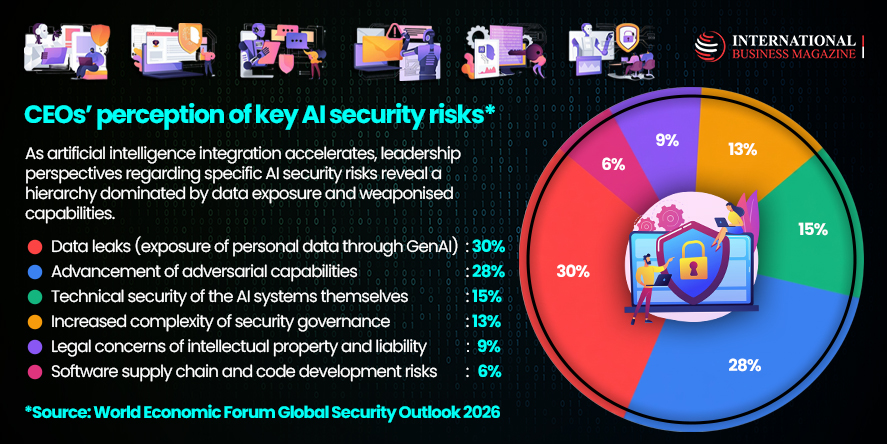
In the AI era, cybersecurity risks have multiplied in both scale and sophistication, reshaping the way organisations, governments, and individuals must think about digital vulnerability and defence. This vulnerability of cyberattacks are no longer confined to protecting isolated systems; it is about safeguarding interconnected ecosystems where artificial intelligence itself plays a dual role as both a weapon and a shield.
A wake up Call
Attackers are increasingly using AI to automate phishing campaigns, generate polymorphic (having many forms) malware that constantly changes its code to evade detection, and deploy deepfakes that impersonate trusted figures to authorise fraudulent transactions or spread disinformation.
This is a wake-up call. It is time to upgrade cybersecurity defences and implement continuous monitoring. In a highly vulnerable virtual environment, maintaining a 360-degree watch against cyber threats is non-negotiable. It is important to take note of this wakeup call to ensure Digital Safety and Data Protection. Many governments across the globe have formulated policies and enacted laws for Data protection. However, this may not deter the hackers and cyber crooks to find new ways to carry out cyberattacks across a broad spectrum of virtual world.
Thriving on speed & deception
Most often cyber threats thrive on speed and deception, exploiting the very qualities that make AI powerful. Defenders, meanwhile, are compelled to adopt machine learning – based anomaly detection and predictive analytics, but this reliance introduces its own risks, such as false positives, overconfidence in automated tools, and the erosion of human judgment in critical decision-making. Cloud vulnerability is another defining risk in this era. As enterprises and individuals migrate to cloud platforms, misconfigurations, weak access controls, and exposed APIs have become the most common gateways for breaches and is often misunderstood, leading to gaps that attackers exploit.
Geopolitical cyber warfare
Hybrid warfare, where cyber operations precede or accompany physical escalation, demonstrates how digital conflict has become inseparable from geopolitics. In this environment, cybersecurity is no longer just an IT issue – it is a matter of national security and global stability. The risks in this landscape are multifaceted. Over-reliance on AI tools can create blind spots, as attackers may create exploits specifically to fool machine-learning models. Human error remains a persistent vulnerability, with social engineering bypassing even the most advanced defences.
Ethical hacking
In this vulnerable virtual world, ethical hacking too exists. This ethical hacking is a tool to protect system, data and organisations. Ethical hacking is the authorised practice of probing systems, networks, and applications to uncover vulnerabilities before malicious actors exploit them. Ethical hackers, often called “white hats,” simulate cyberattacks to strengthen defences, ensure compliance, and protect sensitive data. Their work builds trust, resilience, and proactive security in the digital ecosystem.
Governments across the globe use this method to solve any threat to nation’s security by rough organisations trying to destabilise the government and create havoc in the society. Military and police agencies employ ethical hackers to solve criminal cases, financial fraud, and social distrubances.
Kinds of Cyber Security Threats
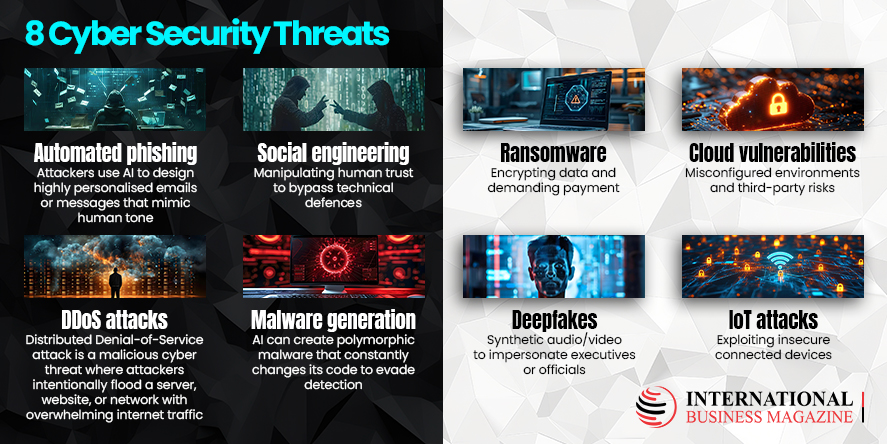
Reliance on Online activities and use of Cloud services are increasing at a faster rate, it is time to look at different kinds of cyberattacks. Here is a lowdown:
- Automated phishing: Attackers use AI to design highly personalised emails or messages that mimic human tone, making them harder to detect.
- Social engineering: Manipulating human trust to bypass technical defences.
- Ransomware: Encrypting data and demanding payment; increasingly targeting hospitals and critical services.
- Cloud vulnerabilities: Misconfigured environments and third-party risks.
- IoT attacks: Exploiting insecure connected devices.
- DDoS attacks: Distributed Denial-of-Service attack is a malicious cyber threat where attackers intentionally flood a server, website, or network with overwhelming internet traffic.
- Deepfakes: Synthetic audio/video to impersonate executives or officials to authorise fraudulent transactions.
- Malware generation: AI can create polymorphic malware that constantly changes its code to evade detection.
Conclusion
As the world grows more connected, keeping a watchful eye on cybersecurity is no longer optional. With cloud adoption exposing systems to frequent breaches, staying safe requires a proactive approach: implementing a Zero Trust model, practicing continuous threat monitoring, and establishing a clear incident response plan.
.
Article by Imtiaz Ahmad Sharif