
Modern bathroom fixtures are revolutionizing hygiene and water efficiency through touchless sensors, digital mixing consoles, and in-line filtration systems. High-tech space-savers like self-cleaning bidets and modular wall racks turn small, eco-conscious homes into relaxing retreats. Modern home fixtures are evolving into intelligent, automated systems. They prioritize hygiene, comfort, and proactive wellness through features like hands-free controls, self-sanitizing technology, personalized climate control, ambient lighting, and integrated health-monitoring tools.
What Is a Smart Toilet?
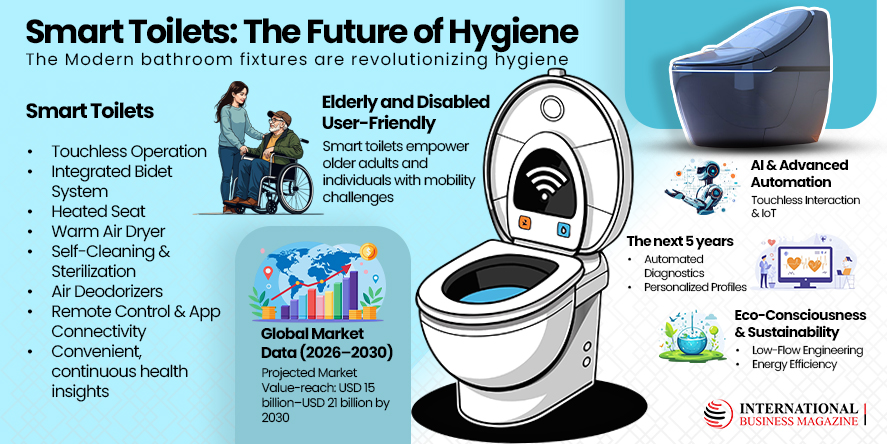
A smart toilet is a high-tech bathroom fixture that upgrades the standard bathroom experience by offering touchless operations, built-in bidet washing, heated seats, and self-cleaning mechanisms.
Smart toilets provide hands-free hygiene and convenience through features like bidets, heated seats, self-cleaning, and auto-flushing. Premium models elevate this experience with smart connectivity, artificial intelligence, and health monitoring.
The outcome is a bathroom experience that is more hygienic, efficient, and comfortable than ever before.
Key Features of Smart Toilets
- Touchless Operation: These features describe a hands-free, motion-activated toilet (commonly found on advanced smart toilets or automated bidets). In short, the toilet uses sensors to automatically open, close, and flush, requiring zero physical contact.
- Integrated Bidet System: This feature provides a fully customizable, luxurious wash that can be tailored exactly to your preferences.
- Heated Seat: Adjustable, cozy warmth during colder days is best captured by terms like toasty, regulated, or thermoregulated.
- Warm Air Dryer: This device is most commonly referred to as an electronic bidet seat, smart toilet, or washlet. These units use a built-in, customizable water jet to wash and a temperature-controlled warm-air stream to dry the user.
- Self-Cleaning & Sterilization: Self-cleaning nozzles and advanced features like UV sterilization and automated flushing ensure minimal maintenance.
- Air Deodorizers: Automatically trap and eliminate unpleasant smells before and after operation.
- Smart Nightlight: Toilet Night Light, Glow Bowl, IllumiBowl, Toilet Sensor Light, Loo Light, Commode Light.
- Remote Control & App Connectivity: fully customizable wash controls—including water temperature, pressure, and cycle settings that you can adjust remotely using a smartphone app or a wireless remote control.
- Water Efficiency: Advanced dual-flush systems are highly eco-friendly because they optimize water consumption by automatically distinguishing between liquid and solid waste.
Smart Toilets and Personal Health
Smart toilets offer convenient, continuous health insights, their constant tracking of bodily functions raises significant concerns regarding data privacy, security, and the psychological impact of passive monitoring. Connected technologies are shifting healthcare from a reactive response to illness toward proactive, personalized prevention. By gathering continuous, real-time data, these systems empower individuals and professionals to optimize health through targeted lifestyle adjustments, early detection, and custom-tailored interventions.
Has Time come To Equip Our Toilets with Health Sensors?
By automatically analyzing bodily fluids on a daily basis, these devices offer a simple, non-invasive way to track vital health data and catch early signs of disease. Digital health companies are developing smart toilets and bowl attachments to analyze human waste in order to provide personalized, non-invasive health insights
Here is how these advanced, preventative metrics work in real time:
- Urine & Hydration Tracking: Systems like the Withings U-Scan use replaceable cartridge-based modules that track urine composition, specific gravity for hydration, and pH balance, alerting users to dietary imbalances or vitamin deficiencies.
- Kidney Health Markers: Advanced urine test technologies detect key biomarkers to monitor metabolic health and flag early signs of infection or kidney disease.
- Digestive Health: Smart tech analyzes stool properties—consistency, color, and frequency—to produce a gut score. This enables individuals to track microbiome trends and monitor gastrointestinal disorders without invasive testing.
- Blood Glucose Indicators: Advanced health monitors act as non-invasive tools to track blood sugar and screen for cancer. They measure metabolic waste and analyze cell-free DNA to evaluate overall physiological health and oncology risks.
- Body Temperature & Vitals: Smart toilet seats use built-in sensors to track vital signs like heart rate, body temperature, and blood oxygenation—every time to use the restroom.
- Blood Pressure: Smart bathroom ecosystems use interconnected devices like smart cuffs and mirrors to monitor cardiovascular trends, bridging the gap for devices like toilets that do not measure heart health directly.
- Infection Detection: Smart urinary monitoring systems determine early signs of infection before physical symptoms appear by continuously tracking daily changes in urine cloudiness and chemical makeup.
Key Health & Hygiene Advantages
Smart toilets enable safe, independent bathroom use for individuals with limited mobility by replacing difficult physical movements—like twisting and reaching—with automated, hands-free features such as touchless flushing, sensor lids, and cleansing bidets.
Benefits for Elderly and Disabled Users
Smart toilets empower older adults and individuals with mobility challenges to use the bathroom independently and comfortably. By eliminating difficult physical tasks through hands-free automation and customizable bidet controls, this technology allows users to maintain their personal dignity without relying on caregivers.
These advanced technologies are expanding rapidly across the broader healthcare system to improve efficiency, patient monitoring, and long-term care.
Smart Home integrator
Today’s smart toilets can perfectly integrate into connected home ecosystems.
Smart toilets integrate with voice assistants (like Amazon Alexa or Google Assistant) and home automation platforms to offer fully hands-free control and personalised, automated routines across your bathroom’s lighting, ventilation, and fixture settings.
Challenges to Wider Adoption: Smart toilets provide advanced hygiene and health monitoring but face major adoption hurdles like prohibitive upfront costs, complex plumbing/electrical installations, and data privacy concerns over sensitive health information.
Higher Initial Cost: The entry level price USD 100 to USD 500, fully integrated smart models typically range from USD 800 to over USD 5,000
Installation Requirements: Older homes may need electrical and plumbing upgrades to support new appliance models, complicating installation.
Maintenance: Electronic components, sensors, and bidet systems require periodic maintenance to ensure optimal performance.
Privacy Concerns: Health-monitoring features create major data security and privacy risks, which means companies must implement transparent data policies to protect user information.
Future of smart toilets: Future smart toilets serve as automated, eco-friendly wellness hubs. Using integrated AI and sensors, they will passively analyze bodily waste for early disease detection while connecting to home ecosystems.
Major innovations shaping the future of smart toilets include:
- Preventive Health Tracking: By continuously tracking nutritional intake, hydration, and disease biomarkers, they enable early detection of chronic and acute conditions.
- Integrated Wellness & Bidet Systems: Personal smart bathroom features like bidet settings, dryers, and heated seats quickly link directly with wearables.
- Zero-Touch Hygiene: Zero-touch hygiene utilizes automated technology and smart cleaning to replace manual scrubbing.
- Water & Energy Sustainability: Systems cut water and electricity usage by up to 50% using air-assisted mechanics and energy-saving technologies like low-power standby and solar power.
- Universal Design & Voice Control: Voice-activated smart home technology promotes universal design by enabling seniors and individuals with limited mobility to operate devices completely hands-free.
Smart toilets are being designed to act as private, in-home diagnostic clinics. Using automated sensors and AI to analyze daily bodily waste, they track key health indicators and instantly flag potential medical issues.
Leading Global Manufacturers
Global smart toilet leaders such as TOTO, Kohler, LIXIL, and Duravit dominate the market through continuous innovation, integrating hygienic and automated features like touchless flushing, UV sterilization, heated seats, and app-controlled bidets.
Industry leaders provide diverse, smart solutions tailored to specific market needs
- TOTO (Japan): TOTO is a leading Japanese innovator of smart toilets, renowned for its flagship Washlet bidet and luxury Neorest line. These high-end smart toilets use advanced features to keep themselves hygienic and virtually hands-free.
- Kohler (United States): Kohler designs luxury bathroom fixtures that blend minimalist design with advanced technology. Its premium models, such as Numi 2.0, feature cutting-edge, spa-like amenities including built-in surround sound, customized bidet settings, and ambient lighting.
- LIXIL Group (Japan/Global): LIXIL Group is a global parent company owning major brands like INAX and American Standard, recognized for its advanced energy-efficient, water-saving, and specialized ceramic glazing technologies.
- Villeroy & Boch & GROHE (Germany): German brands Villeroy & Boch and GROHE are premier European manufacturers celebrated for their design excellence in high-end hospitality projects.
Global market
The surging global smart toilet market will reach USD 15 billion–USD 21 billion by 2030, driven by a 10–12% CAGR (Compound Annual Growth Rate). These fixtures are evolving from luxury items into central, AI-driven nodes designed for preventative healthcare and digital wellness monitoring.
Global Market Data (2026–2030)
Projected Market Value: Global market value over a decade highlights a growth trajectory rising from approximately USD 10 billion to USD 15.76 billion by 2030.
Regional Leaders: Europe leads the market with over 35% revenue due to strict regulations, while Asia-Pacific is the fastest-growing region at a 12.1% CAGR.
Product Segments: Smart conversion kits are growing the fastest because they provide a cheap, non-disruptive way to upgrade bathrooms without full remodels.
Future in the next 5 years
- Automated Diagnostics: Upcoming smart toilets will evolve from luxury gadgets into preventive health monitors and eco-friendly utilities. Powered by AI and IoT, they will use non-invasive sensors for wellness tracking while offering advanced automation and sustainable water conservation.
- Personalized Profiles: AI systems will use personal biometrics to identify different family members and automatically adjust their sleep environment and health tracking.
Preventive Health & Wellness Hubs
- Automated Diagnostics: Smart toilets will continuously analyze your urine and stool to passively track your hydration, nutrient levels, and provide early warnings for diseases like diabetes and kidney issues.
- Personalized Profiles: AI-powered systems autonomously identify individuals using biometrics like weight or voice, automatically personalizing bed support, temperature, and health tracking.
AI & Advanced Automation
- Touchless Interaction & IoT: Smart home integration lets users control bidet settings such as water temperature, nozzle position, and lighting—hands-free using simple voice commands.
- Self-Maintenance: Predictive maintenance uses smart sensors to monitor equipment and automatically warn users or technicians about developing faults such as leaks or wear so they can be fixed before a catastrophic breakdown happens.
Eco-Consciousness & Sustainability
- Low-Flow Engineering: Manufacturers must create ultra-low-water toilets (1 gallon per flush) that still clear waste effectively.
- Energy Efficiency: Future smart toilets use renewable power and smart idle features to drastically reduce overall electricity consumption.
Ultimate Hygiene and Comfort
- Next-Level Sanitation: UV-C sterilization and electrolyzed water systems are increasingly popular, chemical-free methods for maintaining bidet and toilet hygiene.
- Foam Shields: Auto-foaming toilet bowls will become standard in order to eliminate unpleasant Odors and prevent water splashing.
Conclusion
Smart toilets are advanced, eco-friendly bathroom fixtures that improve user hygiene and convenience through features like touch-free operation, self-cleaning, and water conservation. They also function as proactive health monitors, providing users with a comprehensive, personalized sanitation experience.
As technology becomes more affordable, it is shifting from luxury homes to everyday households, public spaces, and healthcare facilities. In the near future, these fixtures will evolve into essential everyday tools focused on personal comfort, preventive healthcare, and water conservation.
Modern bathrooms have evolved into connected, intelligent spaces that promote wellness, optimize hygiene, and provide highly personalized, convenient daily experiences.
Article by Baldeb Ram