
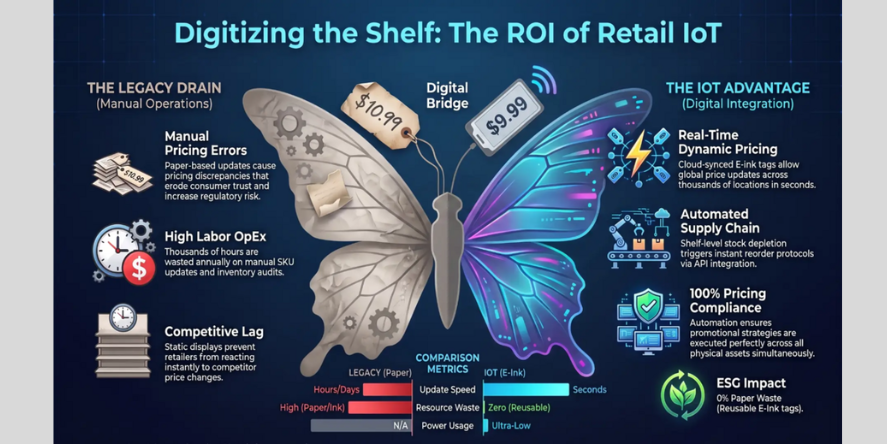
The New Benchmark for Retail Operational Efficiency
The retail sector is currently navigating a complex macroeconomic environment characterized by persistent inflation and acute labor shortages. Traditional operational models, heavily reliant on manual labor and decentralized data management, are rapidly becoming margin-depleting liabilities. To sustain profitability, executives must pivot toward comprehensive technological integrations that automate routine tasks. The new benchmark for operational efficiency is defined by how seamlessly a retailer can merge its physical footprint with its digital infrastructure.
The Hidden Costs of Legacy Processes
Legacy processes, particularly paper-based price tags and manual inventory audits, introduce severe financial bleeds. The labor hours required to manually update thousands of SKUs not only inflate operational expenses but also result in critical pricing discrepancies. These errors erode consumer trust and lead to regulatory compliance risks in regions with strict consumer protection laws. Furthermore, the inability to react instantly to competitor pricing leaves traditional retailers at a severe competitive disadvantage.
Bridging the Physical and Digital: The Role of Smart Displays
To truly synchronize online and offline operations, major retailers are rapidly moving away from static displays. The implementation of enterprise-grade IoT hardware, such as the electronic shelf label solutions engineered by Zhsunyco, allows large-scale retail chains to push real-time pricing updates instantly across thousands of locations. This level of infrastructure fundamentally transforms the physical shelf into a trackable, data-driven digital asset. By digitizing the shelf edge, retailers effectively bridge the gap between their e-commerce agility and their brick-and-mortar presence.
Real-Time Pricing and IoT Connectivity
Dynamic Pricing is no longer exclusive to e-commerce platforms; IoT connectivity brings this high-speed capability directly to the physical store. Digital tags sync seamlessly with central cloud servers and POS systems, allowing algorithms to optimize prices based on inventory levels and demand curves. This connectivity ensures that promotional strategies are executed with 100% compliance across a global chain in a matter of seconds. Consequently, markdown optimization becomes a precise science, preserving profit margins on perishable goods.
Streamlining Global Supply Chains and Warehousing
The digitization of the storefront extends naturally into back-end warehousing and global supply chain management. Advanced API Integration allows IoT devices on the sales floor to communicate directly with enterprise warehouse management systems. This creates a bidirectional flow of data where shelf-level stock depletion automatically triggers reorder protocols or warehouse picking assignments.
- Stockout Prevention: Enhanced through real-time shelf-level visibility and automated alerts.
- Holding Costs: Minimized via accurate, localized data driving precise demand forecasting.
- Labor Allocation: Shifted from manual inventory counting to strategic customer service.
By automating these logistical handoffs, retail chains can achieve leaner operations, higher inventory turnover ratios, and a more resilient supply network.
Sustainability (ESG) as a Competitive Corporate Advantage
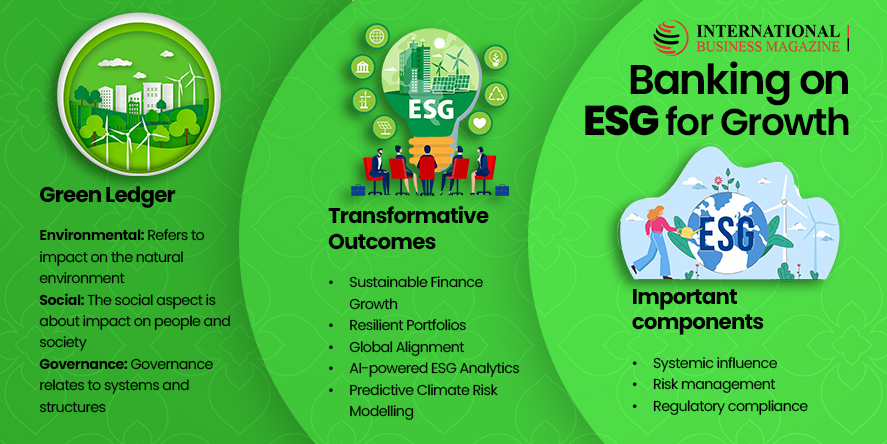
Modern retail stakeholders and institutional investors are increasingly holding corporations accountable for their ESG targets (Environmental, Social, and Governance). Transitioning from paper tags to multi-stable E-Ink technology presents a highly measurable reduction in a retailer’s carbon footprint. Millions of paper labels and their associated logistical carbon emissions are eliminated annually.
- Resource Conservation: Complete elimination of commercial paper and ink consumption for pricing.
- Energy Efficiency: Drastic reduction in power usage due to ultra-low-power E-Ink displays.
- Brand Equity: Enhanced corporate reputation among environmentally conscious consumer demographics.
This commitment to sustainability not only satisfies strict regulatory mandates but also serves as a potent differentiator in a crowded, highly competitive consumer market.
key Takeaways
| Area | Key Takeaway | Impact/Data |
| Pricing Ops | Digitize shelf labels via IoT | 100% promo compliance in seconds |
| Supply Chain | Automate WMS & POS data flows | Drives higher inventory turnover |
| Cost Model | Shift manual OpEx to CapEx | Drastically reduces labor costs |
| ESG Goals | Deploy multi-stable E-ink tech | Eliminates millions of paper labels |
Measuring the Bottom-Line Impact of Retail Tech
The initial capital expenditure required for comprehensive retail digitization often deters conservative boards. However, the long-term cost savings are undeniable. According to analytical insights on retail digital transformation published by Forbes, integrating smart automation and real-time data analytics can boost operational profit margins significantly by drastically reducing labor costs and pricing discrepancies. The transition from manual OpEx to a highly leveraged, tech-driven CapEx model fundamentally re-architects the P&L statement. Ultimately, the ROI of retail IoT is measured in revenue protected through pricing accuracy and agile inventory management. Those who fail to digitize their physical assets risk operating at a permanent structural disadvantage. Retailers who embrace enterprise-grade IoT are positioning themselves for resilient, scalable, and highly profitable futures.
Blog received via email