

Telecom bills have a habit of growing quietly. Hybrid work added devices, carriers and circuits, and few finance teams kept the inventory current. Mordor Intelligence’s telecom expense management report puts the 2026 market at USD 5.64 billion, and it lists invoice error rates above 35% as one of the reasons buyers keep spending on the category.
That’s a lot of wrong invoices. The six providers below take different routes to the same problem: some sell software, some run audits for you, and one is built natively on ServiceNow. We ranked them with multi-site and multi-country operations in mind, since that’s where billing errors pile up fastest.
What to look for when choosing a telecom expense management provider
Start with audit depth. A provider that only loads invoices into a dashboard will show you the errors you already suspected. One that checks each charge against contracts and the circuit inventory, then disputes the difference with the carrier, finds money.
Inventory accuracy comes next. If the record of what you own is wrong, every audit built on it is wrong too. Then look at carrier coverage and geography, whether you’d rather buy software or a managed service, how well the tool plugs into ServiceNow or your ERP, and how much AI automation sits behind the reports.
Two practical questions separate the field. Will someone visit a site when a circuit can’t be traced? And is the pricing tied to savings found, or to a flat license? FCC consumer guidance also advises reviewing bills every month, which is a fair test of any vendor: can they show you a line-by-line review, not just a total?
1. TailWind

Multi-site enterprises that want someone to do the work, not just flag it, will find one of the best telecom audit solutions here. TailWind, based in Minnetonka, Minnesota, reviews carrier bills, invoices and services to find billing errors, then contacts the carriers on the client’s behalf.
The company says it serves more than 40,000 enterprise locations. Its process runs Connect, Evaluate, Execute: gather the carrier data, build a single-spreadsheet inventory of services, then act on what the review turns up. Because TailWind Voice & Data handles both sides of the demarc and sends technicians on site across the country, a circuit nobody can locate becomes a work order instead of a dead end.
Monthly reviews are optional, and audits tie directly into its carrier services, network engineering and field services work. TailWind’s own blog reports average monthly savings of 14.5% through service consolidation. That’s a company-reported figure, so treat it as a starting benchmark, not a promise. The tradeoff is scope: buyers who want a self-service software platform to run in-house will find it leans toward managed work.
2. Tangoe

Tangoe is the name most large global enterprises already know. Its platform covers invoice audit, inventory, bill payment, managed mobility and cloud expense management, with technology consulting alongside. The company’s site claims USD 15 billion of IT spend under management, around 370,000 invoices processed each month and coverage in 206 countries and territories, as of October 2026.
It also lists a Gartner “Visionary” placement in the Magic Quadrant for Managed Mobility Services. Tangoe fits companies with a global footprint and a dedicated telecom team. Smaller buyers may find the scale more than they need.
3. Calero

Calero, which operates as Calero-MDSL, manages telecom, mobility, SaaS and market data spending in one place. Its reputation is strongest in wireless: lifecycle management for devices and carrier plans is where it tends to win deals.
Choose Calero if mobile fleets drive most of your costs, or if you’d like telecom and software subscriptions reviewed together. If your pain is mostly wireline circuits across many sites, ask how deep the inventory work goes.
4. Sakon
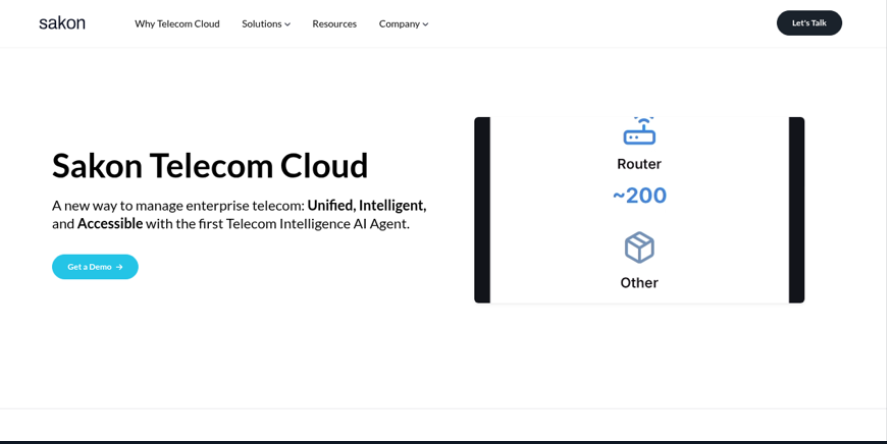
Sakon offers a platform for device management and telecom services, covering wireless and network lifecycle plus accounts payable automation. It has also introduced a “Telecom Intelligence AI Agent” for querying telecom data.
The accounts payable angle is the reason to shortlist it. Finance teams that care most about invoice approval workflows and payment automation get more from Sakon than from audit-first providers. Buyers wanting hands-on dispute work should confirm who does it.
5. Brightfin
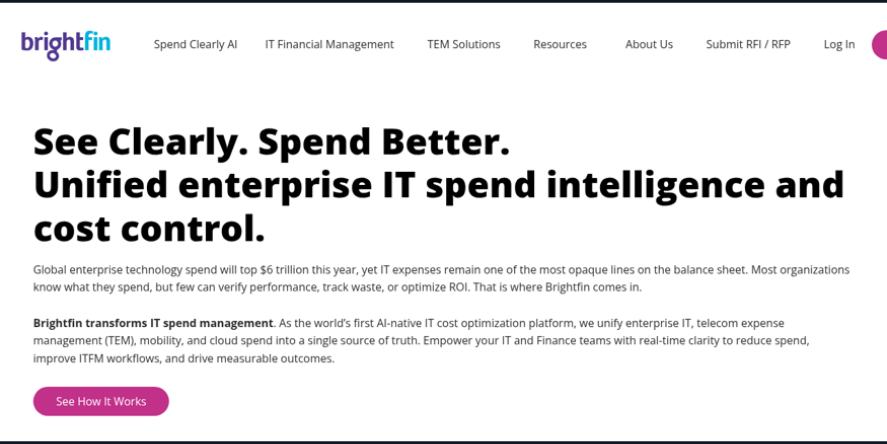
Brightfin calls itself an AI-native IT cost optimization platform, and it’s built on ServiceNow. It consolidates telecom, mobile and cloud expenses inside the system many IT departments already run.
That’s the whole pitch, and for ServiceNow shops it’s a strong one: no new login, and spend data sits next to assets and contracts. Companies outside that ecosystem lose most of the advantage.
6. vCom Solutions
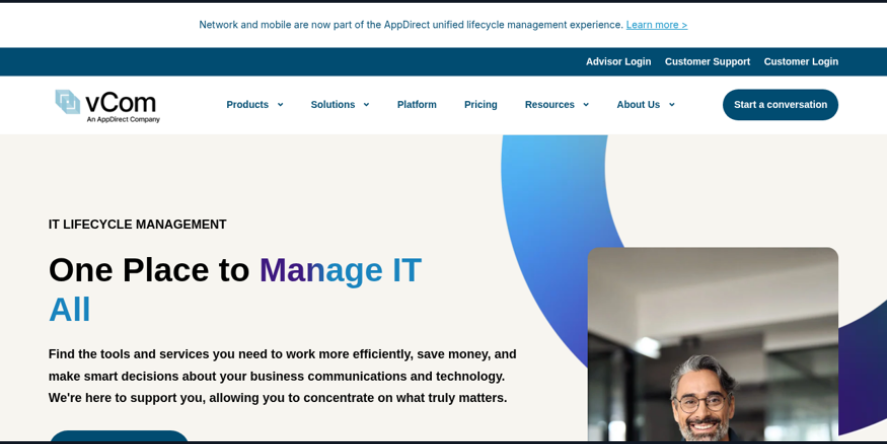
vCom Solutions provides IT lifecycle management software and services to procure, manage and optimize network, mobile and other technology expenses. It suits mid-market buyers best.
It’s a reasonable pick for companies that have outgrown spreadsheets but don’t need a global platform. The usual caution applies: ask how many carriers and countries it handles today before you assume it matches your footprint.
How to match a provider to your situation
The first decision is software versus service. Mordor Intelligence’s report says managed services held 41.82% of the market in 2025, which suggests many buyers have concluded that dashboards alone don’t recover money. If you have a telecom analyst on staff, software may be enough. If you don’t, pay for the service.
Estimates differ by research firm. 360iResearch, via Research and Markets, sees the 2026 market at USD 5.07 billion, against Mordor’s 5.64 billion. The two disagree on size but agree on direction.
INTLBM’s earlier explainer on managing telecom costs across voice, data and internet covers the basics for teams starting from scratch.
If your network is moving to the cloud, that changes what needs auditing. INTLBM’s piece on cloud-delivered networking explains the shift.
Conclusion
Run a bill audit before you buy tooling. Pull twelve months of invoices, compare them with what’s actually installed, and see how many charges you can’t explain. The result tells you whether you need software, a managed service or both.
Keep the review recurring, too. The FCC’s guide to understanding your telephone bill explains how to spot unfamiliar charges and where to dispute them. Handing that work to a provider is a similar call to outsourcing security operations: you keep the decisions and give up the grind.
Article received on email.