
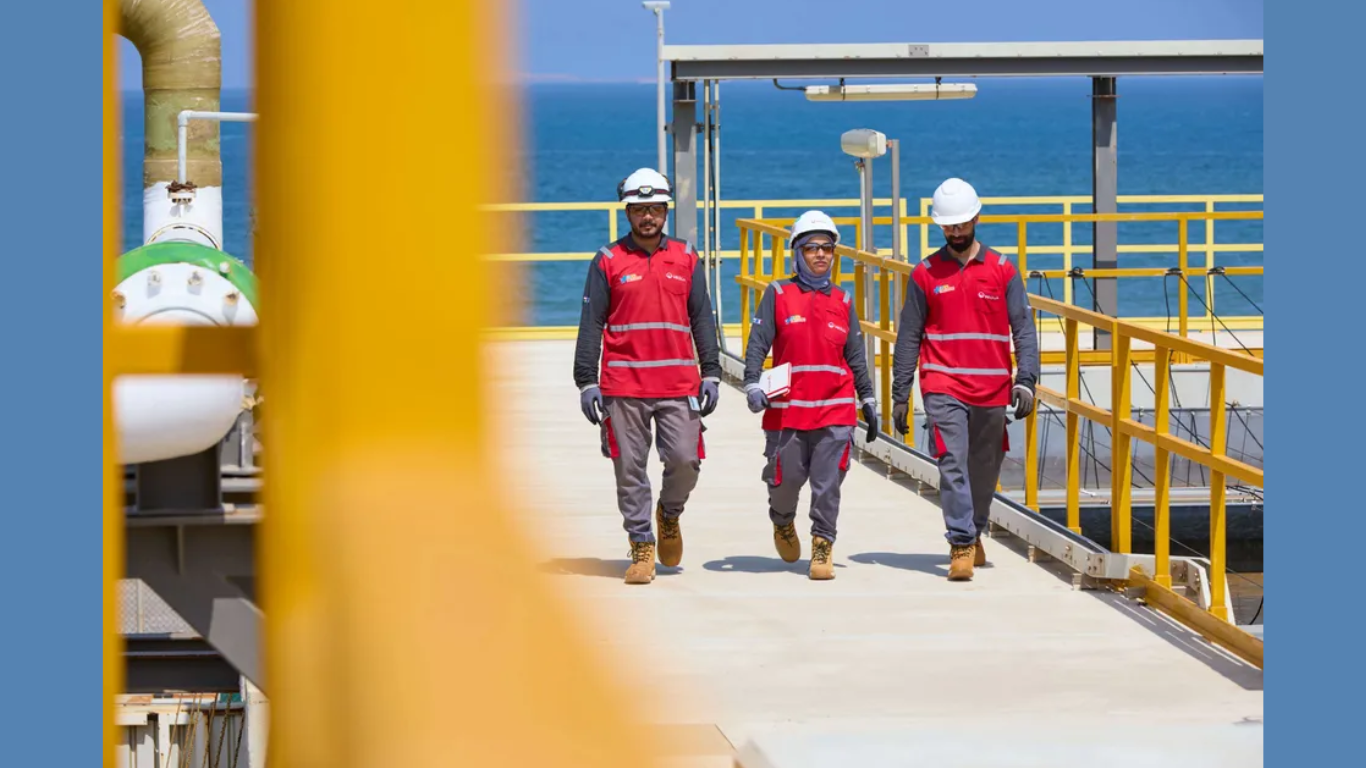
Veolia strengthens its expansion and capabilities in the Middle East with two major desalination contracts worth a total of nearly EUR 200 million. This momentum includes a five-year operations and performance optimization contract for the Al Asilah desalination plant in Oman and a design contract for the Al Hamriyah desalination plant in the United Arab Emirates, for which Veolia will provide the technology.
As an industry leader with 18% of the world’s installed capacity built using its innovative technologies, Veolia intends to further strengthen this position and its operated desalination capacity of 1.4 million m3 per day by 2030. The Middle East is one of the key markets driving this ambition. For over 30 years, Veolia has drawn on its full expertise and cutting-edge technologies in the region to secure and optimize this essential service, contributing to the region’s water and ecological security.
For more than 50 years, Veolia has profoundly transformed the desalination sector through technological innovation. These advances have notably reduced the energy consumption required for desalination by 80% since the 1980s, while cutting the cost of producing one cubic meter of water by 90%.
“Desalination is one of the cornerstones of water security in the Middle East. The dozens of desalination plants equipped with Veolia technologies currently operating in the region illustrate how cutting-edge innovation, local expertise, and a diversified energy mix enable us to provide efficient, competitively priced drinking water production services. With these contracts, we continue to strengthen our long-term strategic partnership in the region and pursue our goal of doubling the desalination capacity we operate worldwide by 2030”, said Estelle Brachlianoff, CEO of Veolia.
In the United Arab Emirates, Veolia is carrying out the design of the Al Hamriyah desalination plant, which will have a capacity of 410,000 m³ per day and supply drinking water to approximately 1.4 million people. Thanks to the optimized implementation of Veolia technologies for water pretreatment and remineralization, including dissolved air flotation, dual-media pressure filters and limestone filters, the plant will achieve a record energy consumption of 2.75 kWh per cubic meter of water produced, thereby setting a new benchmark for energy efficiency in large-scale desalination.
Through this major project, Veolia strengthens its position as a leading desalination player in the UAE, where the Group already has landmark references such as Hassyan in Dubai, Mirfa 2 in Abu Dhabi, Umm Al Quwain, and Fujairah. Together, these ambitious projects demonstrate Veolia’s technological expertise and its contribution to the UAE’s water security through increasingly efficient, tailored solutions that support the region’s economic and demographic growth.
In Oman, Veolia has been awarded a five-year contract to operate and optimize the operational performance of the Al Asilah desalination plant, which has a capacity of 80,000 m³/day. The plant supplies water to 200,000 inhabitants and is equipped with a solar farm to diversify its energy mix. Its electricity consumption will be further optimized through the deployment of the Smart Connectors and Hubgrade digital solutions, which will improve equipment monitoring and performance.
As a key contributor to Oman’s drinking water supply, Veolia currently operates four large-scale desalination plants in the country, including the nearby Sur plant, which is also equipped with the latest technologies, providing drinking water to nearly 2.5 million inhabitants.
Leveraging more than 50 years of desalination expertise, Veolia has driven major advances in the sector, both in reducing energy consumption and improving plant performance, notably through AI-enabled reverse osmosis systems. These efforts also include reducing the environmental footprint of desalination plants through lower chemical consumption, improved brine dispersion, and the use of decarbonized electricity.
Veolia in the global desalination market
A treatment capacity of approximately 13 million m³ of water per day across more than 2,300 sites in 108 countries.Flagship references: United Arab Emirates: Hassyan desalination plant (2024); United Arab Emirates: Mirfa 2 desalination plant (2023) Australia: Sydney desalination plant (2007); Oman: Sour desalination plant (2007 and extension in 2014)