
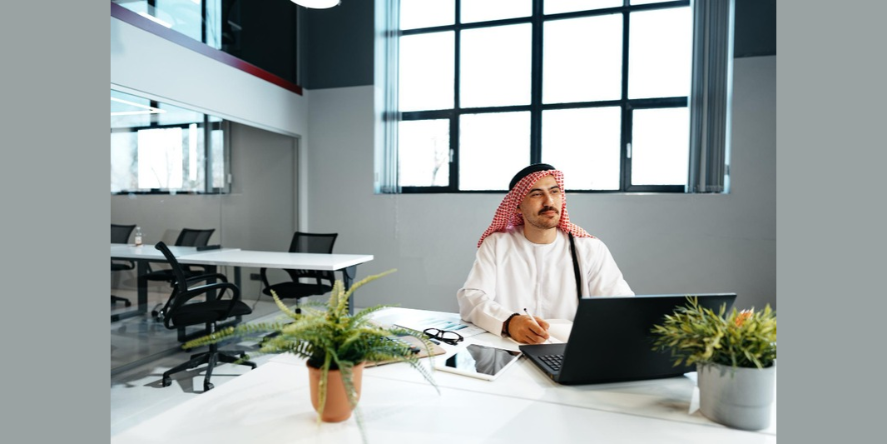
Most founders setting up in Dubai treat the office as a cost decision. A virtual office costs a few hundred dirhams a month, a private office several thousand, and for a company with no revenue the cheaper option looks obvious. But in Dubai the office is part of the licence, it shapes how many people the company can sponsor, and the wrong choice usually means paying to change it within a year. That is a common trap for founders comparing office space in Barsha Heights with a virtual address elsewhere.
The better starting point is what the company must do in its first 12 to 18 months: get licensed, renew, hire, sponsor visas and meet clients. With 71,830 new companies joining Dubai Chamber of Commerce in 2025, according to the Dubai Media Office, getting this right early matters.
The Office Is Part of the Licence
On the mainland, premises are evidence the licensing authority checks. For renewal, the tenancy contract must be registered on Ejari with at least one month’s validity left, according to HiDubai Focus, an initiative of the Department of Economy and Tourism and Dubai SME, which names an expired Ejari as a primary cause of rejected renewals.
That is why “virtual office with Ejari” exists as a product: a plain virtual address does not satisfy a mainland licence, but a package with an Ejari-registered contract can. Free zones use their own facility agreements, so first confirm which authority will issue the licence.
Count the Visas Before the Rent
Visa allocations are usually tied to premises, often by floor area or package type, and each authority sets its own. A virtual or flexi-desk arrangement typically supports very few visas; a private office supports more. For a founder planning to hire two or three people within a year, this decides the question, so ask how many visas an arrangement supports, in writing.
When Each Option Makes Sense
A virtual office suits solo consultants, founders testing the market, overseas owners who need a Dubai presence but not a team, and businesses that work at clients’ premises. It keeps fixed costs low while the company finds its feet. The risk is assuming it will stay that size.
A private office earns its cost once the company has staff, visiting clients or confidential work. It is also where the market is heading. In the second quarter of 2026, leases for spaces under 500 sq ft rose 17% and made up 66% of office leasing activity, while average rents held at AED 238 per sq ft, according to Savills.
Run the Numbers Honestly
Take an illustrative comparison: a virtual office with Ejari at AED 12,000 a year against a small furnished private office at AED 52,800, a gap of about AED 40,800. But moving within the year means a new Ejari, possibly an amended licence, address changes with the bank and clients, and lost selling time, plus meeting-room hire along the way. For a company hiring soon, these costs can close much of the gap.
Location and the Upgrade Path
Barsha Heights, still widely known as TECOM, sits next to Dubai Internet City and Dubai Media City, with metro access along Sheikh Zayed Road. Many companies start virtual and upgrade when the first hire arrives. That works best within the same business centre, which keeps the licence address, bank details and website unchanged.
Questions to Ask Before You Sign
- Which authority issues the licence, and does this arrangement meet its premises requirement?
- Is the contract Ejari-registered, and does its term match the licence renewal date?
- How many visas will it support, confirmed in writing?
- What does upgrading to a private office in the same building involve?
- What is included: meeting-room hours, mail handling, reception, parking?
- What are the deposit, cheque and exit terms?
A founder who can answer all six has chosen an office. One who compared only the monthly price has chosen a number. Rules differ between the mainland and each free zone and change over time, so confirm current requirements with the relevant authority before committing.
Blog received on email.