
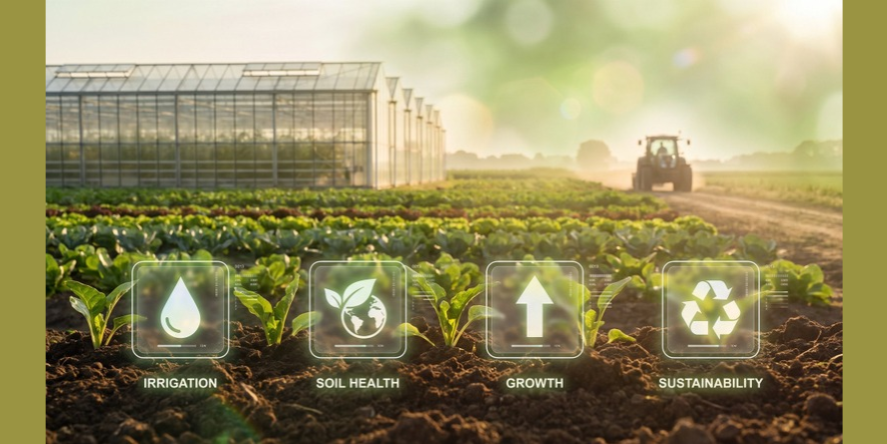
While food remains just as vital for human survival today as it has throughout history, the methods we use to grow, process, package, and distribute it have undergone a massive transformation. What was once a highly localized practice dependent on manual labour has evolved into a sophisticated global infrastructure powered by digital systems and advanced automation. Today, food manufacturing operates at the dynamic intersection of agriculture, cutting-edge technology, modern engineering, and proactive environmental stewardship.
As the global population steadily climbs, food manufacturers face the immense challenge of scaling production while ensuring that products remain safe, nutritious, affordable, and sustainable. Addressing this demand requires a complete overhaul of traditional methods. Consequently, technology is entirely reshaping the modern food supply chain by introducing innovative solutions at every single stage – from precision farming to automated factories. This ongoing evolution ensures that global food systems can withstand future pressures while minimising environmental impact and maximising efficiency across the entire production ecosystem.
Food is just as vital for human existence today as it has always been, yet the ways we cultivate, prepare, wrap, and transport it have changed beyond recognition. What began as a localized operation reliant on manual farming techniques has transitioned into a highly advanced universal infrastructure defined by digital integration and manufacturing automation.
Food manufacturing now operates at the convergence of farming, technology, engineering, and environmental stewardship. Manufacturers face a huge challenge to produce safe, nutritious, affordable, and sustainable food as the global population climbs toward projected milestones. Technology is completely reshaping the food production supply chain by introducing advanced innovations at every step.
The transition from farming to processing and distribution is more than technological growth it represents a vital shift toward a smarter, more durable, and sustainable food system.
Connected Machinery, the Game Changer
Historically, agricultural output was bound by seasonal cycles, requiring intensive manual labour and reliance on ancestral preservation techniques—namely dehydration, curing, fermentation, and smoking. Limited transportation meant people ate locally grown food and had few outside choices. Limited transportation meant people ate locally grown food and had few outside choices.
The Industrial Revolution transformed food production through mechanization, large-scale processing, refrigeration, and improved transportation. These innovations allowed manufacturers to achieve three main outcomes:
- Boosted production volumes
- Extended shelf life for products
- Expanded distribution over much greater distances
Innovations in food preservation and mass production made food safer, longer-lasting, more affordable, and widely accessible.
Digitalisation is transforming modern food factories through connected machinery and automation to boost efficiency, consistency, and product quality
Human-Machine Collaboration
Machine learning models analyse sales histories, weather, and market trends to predict spikes in perishable goods, reducing overproduction and waste. Predictive analytics uses historical sales, seasonal trends, and consumer behaviour to forecast demand, enabling manufacturers to optimize production, streamline inventory, and minimize waste.
AI-powered vision systems use high-precision cameras and machine learning to automatically inspect food products and packaging in real time, catching flaws and improving quality control far faster than manual checks.
Machine learning paired with human expertise helps manufacturers optimize energy, track equipment, and detect anomalies. This combination enables factories to maintain consistent quality standards and adapt rapidly to changing production conditions.
Automating the Line: The Rise of Industrial Robots
Food processors are increasingly adopting automation and robotics to optimize labour-intensive, repetitive, and exact tasks. This technology drives efficiency across the entire production line—including sorting, dicing, weighing, compounding, filling, sealing, and bulk packaging.
Robotic arms, automated conveyors, and intelligent control systems work together to precisely handle and coordinate the movement of ingredients and products throughout a facility.
Automation and food-service technologies boost productivity and reduce handling errors while minimizing human contact with food to ensure high hygiene, speed, and consistency.
Collaborative robots allow humans and machines to work together by handling routine tasks, allowing employees to shift their focus toward more complex responsibilities like supervision, quality assurance, and decision-making.
While significant financial barriers and setup complexities persist, technological leaps in robotics are driving automation adoption across both small and large manufacturers.
Unifying Production Lifecycle
Smart devices monitor energy and material usage to cut waste and lower manufacturing costs.
Temperature and humidity sensors track ingredients and finished goods during processing, storage, and transport. They trigger real-time alerts if conditions breach safe limits, allowing operators to intervene and protect product quality.
Connected equipment provides real-time data on machine performance, energy use, speed, and maintenance needs, helping businesses cut downtime, fix bottlenecks, and plan resources better. IoT sensors and GPS modules constantly transmit live data to central cloud platforms, offering second-by-second tracking instead of relying on post-trip data loggers.
Integrating connected technologies with manufacturing execution systems (MES) and enterprise software provides complete, end-to-end visibility across the entire supply chain.
Importance of Food Safety and Traceability
Food safety is a critical responsibility for the manufacturing industry, as failures like contamination, poor storage, undeclared allergens, and inconsistent handling pose severe risks to both consumer health and business operations.
Modern technology shifts food safety management from reactive checks to proactive, real-time control across the entire supply chain.
Digital traceability platforms replace manual recordkeeping by recording end-to-end supply chain data—including ingredient origins, batches, production dates, storage conditions, and distribution routes.
Blockchain secures data after it is recorded, meaning it guarantees data immutability, not data truth. If wrong or fake information is entered initially, the blockchain simply preserves that error permanently. Advanced testing, rapid microbial tools, and automated quality-control systems help food manufacturers spot hazards early, boost traceability, and handle safety incidents faster.
Minimizing Waste and Environmental Impact
Rising pressure from both eco-conscious consumers and strict government regulations accelerates the shift toward greener practices.Modern technology optimizes resource use and reduces waste across the food production lifecycle.
Smart energy-management and water-recycling systems help factories improve efficiency and reduce resource consumption.
AI-driven production planning optimizes production by aligning supply with demand to minimize excess inventory. Furthermore, enhanced forecasting, storage, and logistics significantly cut down on product spoilage.
Sustainable packaging innovations—such as recyclable materials, lightweight designs, and compostable options—help lower environmental impact, but they must balance eco-friendliness with functional food protection and regulatory rules.
By merging operational efficiency with smart resource use, manufacturers can hit environmental targets while securing their long-term survival and stability.
Alternative Proteins and Individualized Nutrition
Food technology goes beyond just refining how food is made; it is fundamentally transforming what we eat by creating entirely new types of products.
Emerging food technologies—such as plant-based proteins and fermentation-derived ingredients—are reshaping how food manufacturers create products.
Cell-cultivated meat faces four major hurdles to widespread success:
- Commercial adoption: Winning over consumers and achieving market acceptance.
- Regulatory approval: Gaining government clearances across different countries.
- Production costs: Reducing the expense of manufacturing the meat.
- Scalability: Expanding production capabilities to meet mass-market demand
Growing demand for nutrition, convenience, and special diets is driving manufacturers to develop fortified, portion-controlled, and flexible food options. Advances in food science and data analytics enable highly tailored nutritional products, but their success relies heavily on strong scientific evidence, accurate labeling, and responsible health claims. New technologies are enabling production methods that no longer rely solely on conventional farming or processing plants.
Smart Packaging and Intuitive Supply Chains
Modern packaging innovations are transforming traditional food protection and information sharing into intelligent, interconnected systems. Smart packaging uses embedded tools—such as time-temperature indicators (TTIs), freshness indicators, and environmental sensors—to track the real-time condition of products like food or pharmaceuticals. Specific allergen warnings, cross-contact statements, and real-time safety or recall alerts.
Warehouse automation, route optimization, and digital inventory systems are streamlining food supply chains from factories to consumers. By syncing production with logistics, these technologies reduce delays, boost stock availability, and minimize food loss. Modern supply chains rely on connected packaging, digital records, and intelligent logistics to preserve food quality and boost operational visibility
Risks of Digital Transformation
The adoption of advanced food-manufacturing technology offers high potential but faces significant challenges.
Automation presents significant challenges for smaller manufacturers due to high upfront costs, complicated system integration, and increased cybersecurity risks.
AI and predictive tools fail or produce unreliable results (“garbage in, garbage out”) when fed incomplete, inaccurate, or poorly structured data.
Food manufacturers must comply with all regulations regarding safety, equipment, labelling, new ingredients, and advanced processing technologies.
Successful business transformation requires a clear strategy, skilled employees, reliable infrastructure, strong cybersecurity, and measurable goals, rather than just buying new machinery. Organizations can minimize costs and implementation risks by starting with small, targeted improvements and scaling up what works.
Next-Generation Food Production
The next generation of food manufacturing will be driven by four key pillars: digital connectivity, automation, advanced food science, and sustainability.
The next generation of food manufacturing will be driven by four key pillars: digital connectivity, automation, advanced food science, and sustainability.
AI and advanced robotics are transforming the supply chain and manufacturing process by making them highly integrated and adaptable.
Biotechnology and fermentation are expanding available food ingredients, while advanced packaging and traceability are increasing global supply chain quality management.
Food manufacturing is changing toward data-driven, resource-efficient, and flexible operations, though the speed of this shift depends on regional infrastructure, funding, regulations, and market demand.
The future of food must balance technological innovation with five key pillars: affordability, high nutrition, food safety, environmental sustainability, and equitable global access.
Blog by Baldeb Ram
For similar news, please visit these web pages:
Syrve MENA partners with LDC Kitchen + Coffee
Sustainable agriculture: Can agriculture be environment-friendly?