

Ask traders about their last experience with a broker and one may hear surprisingly little about the trade itself. They might remember how long it took to verify an account, whether they could work out the margin before placing an order, or what happened when a withdrawal didn’t arrive when they expected. From the broker’s point of view, those are separate processes handled by different teams. From the client’s part, it’s one experience, and the difficult parts are often the ones that stick.
This distinction has shaped how Kudo is being built. The company was launched in 2024 as Kudotrade, with MetaTrader 5 at the centre of its brokerage business. In 2026, it shortened the name and called it Kudo and moved to kudo.com. The new name created room to narrate a broader story, but the more consequential work has taken place inside the business: how account opening, funding, trading, education, and support fit together. The point of connecting them is to give people fewer things to figure out at the exact moment they need to make a decision.
Where Smart Trades Begin
The order ticket is where a broker’s work becomes most visible, but much of the experience is determined before a client ever sees it. Someone opening an account should be able to tell what information is needed, why it is needed, and what happens next. An identity check is necessary. Asking someone to resubmit information without explaining why, or leaving them unsure whether they need to do anything at all, is a separate issue that a better design can solve.
The same thinking applies when money moves. A client checking on a withdrawal wants to know whether it’s still under review, whether the broker has sent it, or whether something is needed from them. Those states mean different things. Treating all of them as “pending” saves a line of text on the screen but can create a support conversation that neither side needed to have. Product and support teams can learn a great deal from which questions come up repeatedly. If clients are asking the same thing, the first place to look is the product.
One practical example at Kudo is the automation of eligible crypto withdrawals. The aim is to reduce manual processing where the relevant checks have cleared. Security and compliance checks still apply, and the time it takes for funds to reach a wallet can depend on the blockchain. That distinction matters to the person waiting for his funds. It also illustrates where automation earns its place: by moving routine work along while making exceptions easier for a team to see and explain.
How Brokers can Support Broader Access
Kudo offers Contracts for Difference (CFD) across markets including forex, indices, metals, commodities, and shares, with MetaTrader 5 as its flagship platform. A CFD provides exposure to a change in price without ownership of the underlying asset. That difference is worth spelling out. The name of a familiar company or commodity can look the same on two screens even though the products, costs, and risks are different.
Kudo’s 2026 launch of XAUUSD247, a gold CFD available seven days a week through MT5, is an example of the trade-offs that come with broader access. Traders can use the instrument outside the conventional trading week. That doesn’t mean the underlying gold market is open around the clock or that conditions on the instrument will be identical across sessions. The value of the extra hours depends on whether traders understand the instrument they’re using and how those hours fit into their own decisions.
Launching a product like XAUUSD247 raises several practical questions for a broker. The question is “Where will a client find the contract specifications? Can he distinguish it from a similarly named instrument? What tools and customer details are visible on support team’s screen when a customer calls in seeking info about pricing or an order?.” The opportunity is real, and the hours are just one piece of a much bigger product brief. Explaining how this tool works isn’t an afterthought – it’s a core part of the launch itself.
Education at the Point of Decision
The best time to learn how margin works is right before a client places a trade. In that moment, a broker needs to quickly calculate what a larger position demands, how scaling down shifts exposure, and why margin deposit isn’t the same as total risk. Concepts that feel straightforward in a quiet article often become much harder to apply when prices are moving fast and traders are juggling multiple numbers on the screen.
That is where Kudo Academy fits into the business. It offers learning paths covering trading fundamentals, how to place trades and risk management, alongside quizzes and calculators for position size, margin and profit or loss. A beginner can learn what a term means and then work through an example with numbers. The calculators can show the implications of a choice; they don’t tell the client which position to take. Keeping that distinction clear is as important as making the tools easy to find.
The company introduced Kudo Copy Trader in 2025. Social trading poses a related design challenge. It’s easy to show which strategy has recently returned the most. It takes more care to help a person ask useful questions about how the result was achieved. What happened during a difficult stretch? How much of the track record is visible? What fees apply? A follower’s result can differ from the provider’s, and past performance does not predict future results. If the information that would qualify a headline figure is consistently harder to find than the figure itself, the interface is doing the trader a disservice.
One Brand and Clear Local Responsibilities
Operating internationally makes clear language even more important. Two clients can visit the same brand and still be eligible for different services depending on where they live and which entity serves them. Traders need to spot that edge early enough to decide if opening an account is worth it. They should be able to identify their contracting entity, find the terms that apply them, and know who to contact in case they face any problem.
At Kudo, Kudo Trade (Mauritius) Ltd holds a Financial Services Commission investment dealer licence in Mauritius, while Kudo Financial Services LLC holds a UAE Category 5 licence for promotion and introduction. The UAE entity does not hold client funds or execute trades. Keeping those roles distinct helps explain what a shared brand does and doesn’t mean. The fact that a business operates in several markets is no substitute for naming the entity responsible for a particular service.
Growing across markets also means paying attention to local details that can easily disappear in a regional strategy deck. A funding method that is familiar in one country may be unusual in another. A translation can be accurate word for word and still leave clients unsure what to do next. The teams that talk to clients regularly are well placed to spot those differences. Their feedback is useful when it changes a product, a process, or a piece of writing that people actually see.
Building Better Mobile Experiences
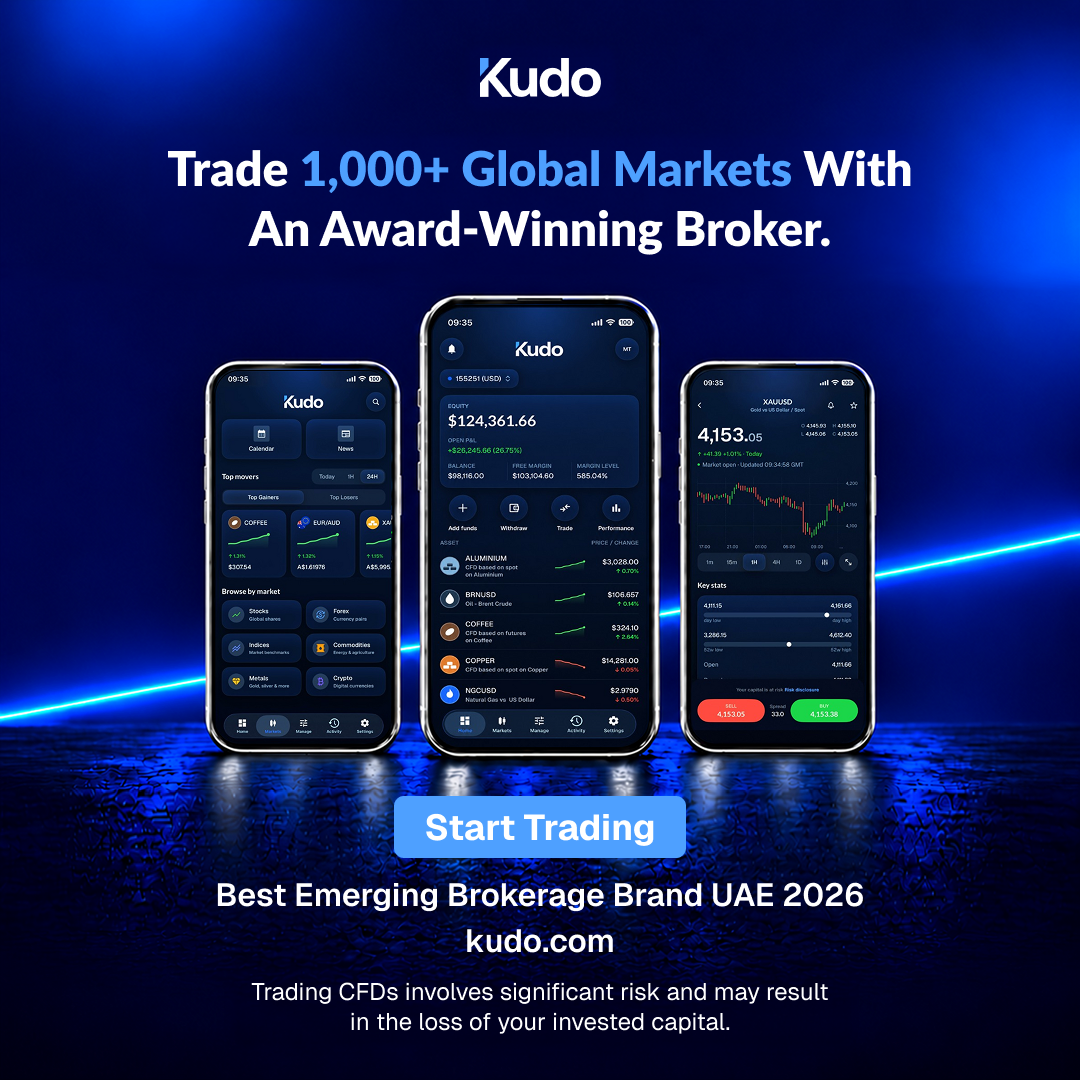
Mobile is where a lot of these decisions become harder to avoid. A desktop screen has room for more context. On a phone, choosing what appears first means choosing what a user is likely to notice before tapping. Kudo is preparing a native mobile app, with a likely launch in December 2026. The goal is to enable client experience one unified place, rather than simply shrinking the desktop experience to fit a smaller screen.
Why Edge Cases Define Next Phase
The practical test for the next phase is whether clients know where they stand when something is unfamiliar, delayed, or goes wrong. An experienced broker can count accounts and release seamlessly. Knowing where to focus after a launch requires a closer look at how people actually use the product. The customer care team pays attention to whether users can track what happened to their requests, if the feature triggers unexpected questions, and whether handling edge cases has become a hassle. Those signals inform the brokers where to spend their time.
Brokerage involves trade-offs. More markets bring more choices to explain. Faster processes still need checks. A smaller screen requires harder decisions about what earns space. Kudo aims to be defined by how it handles these trade-offs in its day-to-day operations, long after the excitement of a launch announcement fades. Clients should always understand the service they are using, feel empowered to make their own decisions, and know exactly where to turn for support. As the business grows, this remains Kudo’s core standard.
In an exclusive interaction with Finley Wilkinson, Chief Operating Officer of Kudo, we understand the strategy and mindset behind the success of one of the emerging brokerage brands in the UAE region.
Q1: As the Chief Operating Officer, could you give us an overview of the brand and take us through its journey, highlighting how the company’s portfolio has evolved and expanded over the years?
Kudo has come a long way since we first started. We originally launched as Kudotrade, with our main focus on providing a competitive and reliable brokerage service.
As the business grew, we saw opportunities to expand beyond traditional brokerage services, which led to our rebranding to Kudo. This was an important step for us as we wanted to create a wider brand that could support different products and services.
One of the biggest developments has been the launch of Kudo Funded, which allowed us to enter the proprietary trading space and reach a new audience of traders.
We’ve also continued to expand into new international markets and invest in our technology and infrastructure.
Looking back, it’s been a significant journey, but I think we’re still at a relatively early stage of what we want to achieve as a business.
Q2: Can you tell us about the vision and mission of your company?
Our vision is to establish Kudo as a globally recognised financial services brand, built around accessibility, innovation, and a strong commitment to our customers.
Our mission is to simplify the trading experience by providing intuitive technology, competitive trading conditions, and reliable services that meet the needs of traders worldwide.
Ultimately, we want to build long-term relationships with our customers, where trust, transparency, and the overall quality of their experience are what set Kudo apart.
Q3: What sets Kudo apart from other competitors in the market?
I think one of the biggest things that sets Kudo apart is our approach to technology and the fact that we’re always looking at what’s next.
A great example of this is our new Kudo app, which we’ve been developing and are preparing to launch very soon. It’s a big step forward for us and something we’re really excited about.
We also have the advantage of being able to make decisions quickly and adapt to changes in the market. We’re always looking for ways to improve, whether that’s through new technology, better processes, or enhancing the overall customer experience.
Q4: As one of the leading online brokerage platforms, how does your company prioritise enhancing the overall user experience through easy-to-use applications, multilingual customer support, and a comprehensive mobile trading app?
Customer experience is something we place a huge amount of importance on, and I think it’s become one of the biggest factors in the brokerage industry today.
Traders expect things to be simple. They want to be able to open an account quickly, deposit and withdraw funds easily, access their trading accounts wherever they are, and get support when they need it.
For us, it’s about constantly reviewing these areas and finding ways to improve them. We’re investing in technology and automation to make processes quicker and remove unnecessary steps for customers.
As we continue expanding into different markets, providing accessible support across different languages and regions will also remain a priority.
Ultimately, we want customers to have a consistently positive experience with Kudo, regardless of where they’re based or how they choose to trade.
Q5: How do you envision an upcoming brokerage platform such as Kudo shaping the investment pattern for Generation-Z and people in developing/least-developed countries?
I think the next generation of traders will have a big influence on how the industry develops over the coming years.
Generation Z has grown up with technology, and they expect financial services to be just as accessible and easy to use as any other app or digital platform.
At Kudo, we want to be at the forefront of that change by continuing to develop technology that makes the trading experience simpler and more accessible.
We also see a lot of potential in emerging markets, where access to financial services and trading technology is continuing to improve.
For us, it’s about understanding what customers in different regions actually need, whether that’s local payment solutions, educational resources, or better access to support.
I believe the companies that understand these changing expectations will be the ones that lead the industry going forward.
Q6: Looking at the future, what are your plans for the Global Market?
Our main focus over the coming years is to continue expanding Kudo into new international markets and building on the progress we’ve already made.
We see opportunities across a number of regions, particularly in markets where demand for online trading continues to grow.
However, expansion isn’t just about entering as many countries as possible. We want to make sure we understand the needs of customers in each region and provide the right products and services to meet those expectations.
Alongside our international growth, we’ll continue investing in technology, improving our existing offering, and developing new products across the wider Kudo brand.
We’ve achieved a lot over the past few years, but we’re ambitious about where we can take the business next.
Risk notice: CFDs are leveraged products and carry a high risk of loss. Product availability and applicable terms vary by jurisdiction and entity. This article is for general information only and does not constitute investment advice.
Blog received on email.