
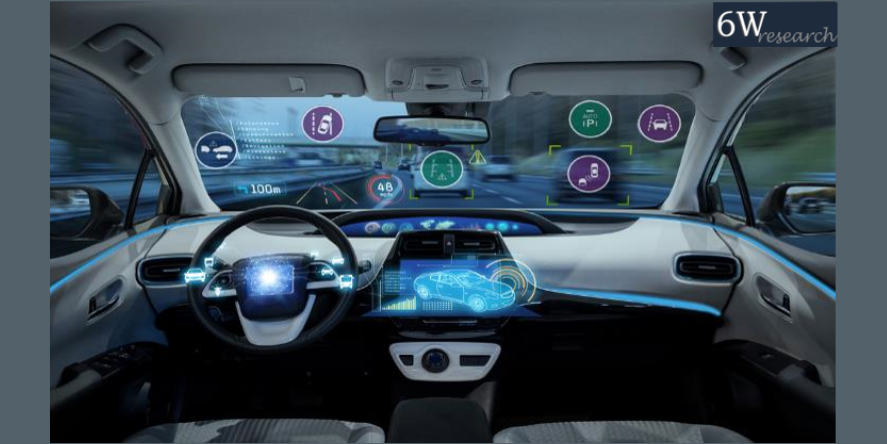
Research analysis by 6Wresearch indicates that a new era in the automobile industry is unfolding, where vehicle safety is becoming as crucial as performance and efficiency due to accelerated digitalization, stringent regulations, and the trends of electrification and connected mobility. These changes are characterized by the growing integration of highly sophisticated driver assistance technologies into vehicles within the India Advanced Driver Assistance Systems (ADAS) Market, which is witnessing rapid expansion.
Road Safety Challenges
According to 6Wresearch Survey, Safety on roads remains a critical issue, with high mortality rates due to road accidents, even with a fairly small proportion of the total number of vehicles across the globe. Over 1.68 lakh lives were lost in road accidents in 2022. It emphasizes the necessity of finding intelligent measures to help prevent road accidents. Government policies like the Bharat NCAP have further emphasized road safety by raising awareness about the importance of vehicle crash ratings. India accounts for nearly 11% of global road fatalities, despite having only around 1% of the world’s vehicles.
Increased Use of Intelligent Driving Solutions
The latest cars have become smarter owing to integrated technologies that assist drivers in preventing any accidents. Some of these functionalities include collision prevention tools, lane guidance, speed assistance, alert systems, and driver behavior tracking.
Among these, three capabilities stand out due to their strong impact on accident reduction:
- Emergency braking aid reduces collision impact under unexpected risk situations.
- Blind spot warning, which enhances surrounding traffic situation awareness;
- Driver monitoring, which alerts drivers about fatigue/distracted driving.
These functions are becoming essential because human error remains one of the leading causes of road incidents.
Complex Road Environment
The traffic environment can be characterized by its diversity and unpredictability with mixed traffic where two-wheelers, pedestrian traffic, the presence of animals, and heavy traffic can be found. Discipline of drivers in terms of lane use is not consistent throughout all the zones, and driving behavior differs from one area to another. Given the described environment, globally designed safety technologies are impossible to use straight away without some adaptations.
Localization Ensures Global Safety Technologies
The automotive industry is increasingly focusing on developing customized intelligent technologies for the local environment. Artificial intelligence, computer vision, and sensor fusion are employed to better analyze traffic environments and improve object detection accuracy. Nowadays, software updates will enable further technology advancements in vehicles, making them software-defined.
Bourgeoning Role in Purchase Decisions
According to Pankaj Khandelwal, Head of Strategy and Growth, 6Wresearch, Safety has emerged as one of the most significant criteria affecting decisions regarding the purchase of vehicles. Around 86.3% of ADAS users reported a positive impact on their driving behavior, while 82.3% believe that it can help reduce accidents. Moreover, there may be risks due to distraction and fatigue. In this context, blind spot and monitoring features are beneficial.
Real-World Limitations
Even though the current level of penetration is high, there may still be certain difficulties associated with the functioning of these systems. There might be cases where users may receive false warnings; there could be some difficulties during operations in traffic jams, as well as some reduction in effectiveness in adverse weather conditions. Nevertheless, continuous development makes systems increasingly reliable.
Future of Connected Mobility
Innovations related to artificial intelligence and connectivity will shape the future of automobile technologies. New trends include V-to-V communications, risk prediction, cloud-based diagnostics, and behavior monitoring. Additionally, as the infrastructure of new expressways expands and becomes smarter, these innovations may be more effective since there will be improved traffic flow on roads.
Conclusion
Intelligent driving technologies are becoming an essential part of modern mobility. Features such as emergency braking assistance, blind-spot warnings, and driver monitoring are helping to reduce hazards and improve situational awareness, and as they become more sophisticated, they’ll be important in building a safer transportation ecosystem.
Blog received via e-mail