
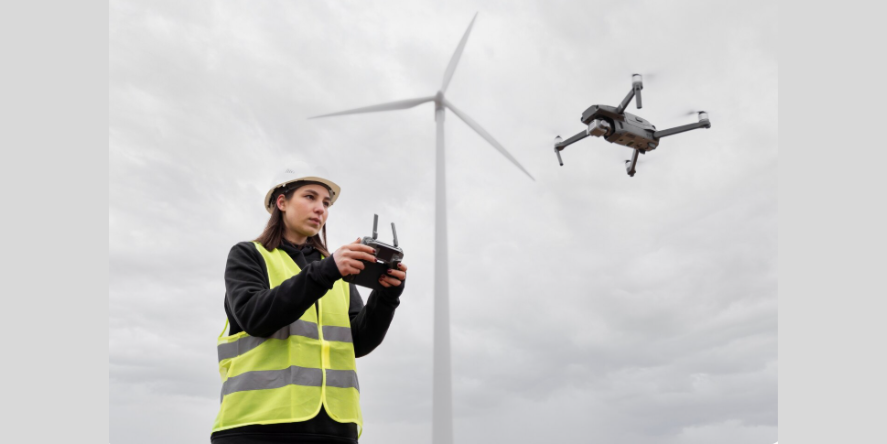
Looking down from above, drones offer businesses a safer way to inspect structures without delays. Instead of relying on traditional techniques requiring equipment for hard-to-reach areas, flying devices capture full views efficiently. With progress in flight stability and imaging quality, these systems reduce physical risks tied to manual checks. From rooftops to facades, aerial observation avoids disruptions common in older approaches.
Over time, improvements in battery life and data handling increase their role in property upkeep. Seeing details clearly from a distance allows teams to act sooner when issues appear. As adoption grows quietly across industries, reliance on airborne scans becomes standard practice.
Inspections Are More Accurate
From above, modern drones capture images with exceptional clarity due to advanced optics. These devices rely on sensitive detectors to reveal minor surface changes across rooftops, facades, or paved areas. Sharp resolution makes it possible to spot fine fractures invisible to a person at ground level. When focus shifts to isolated zones, accuracy improves noticeably. Detail becomes evident only through close framing.
Soon, improved software along with enhanced imaging tools will arrive. With these advances, oversight systems could detect minor faults earlier. Because of that, facility upkeep becomes more predictable. As a result, structures remain functional over extended periods. Maintenance scheduling gains accuracy through early warnings.
Inspections Are Safer
What makes drone services stand out is its role in protecting people. High rooftops and masts at industrial locations often pose serious risks when inspected manually. Instead of sending someone upward on equipment meant for heights, aerial devices gather visual data safely. Reaching difficult spots becomes possible – without physical strain or exposure to falls. Progress continues in drone stability and obstacle detection, leading to fewer workplace incidents during inspections of challenging spaces.
Steady advancements allow oversight tasks once considered risky to proceed with greater confidence. Movement through complex environments becomes less dependent on human intervention over time. Fewer disruptions arise when flight systems adapt quickly to changing conditions. Confidence grows among teams using updated models for routine checks. Reduced concern about mid-operation failures supports wider adoption across industries. Safer outcomes emerge not from sudden breakthroughs but consistent refinements in aerial navigation.
Property Checks Now Faster
When repairing structures or transferring ownership of real estate, timing plays a critical role. Scanning vast spaces becomes faster through drone technology rather than traditional techniques. Reports reach companies without delay due to this speed. Earlier data delivery allows restoration work to begin ahead of schedule.
Longer flight times may become common as battery technology advances. With quicker data handling, tasks unfold more smoothly across wider areas. Efficiency rises when fewer stops interrupt operations. One journey could now include what once needed several. Progress in power sources shapes how far machines roam. Speedier computing supports continuous workflow patterns.
Better Planning For Maintenance
A close inspection of structures may reduce future expenses while supporting long-term value retention. From above, devices capture images that form a timeline visible across seasons or extended periods. When past views meet recent ones, priorities in maintenance become clearer through comparison.
Nowadays, drone imagery offers reliable documentation, which explains their growing presence across businesses. With advances in software intelligence comes smoother scheduling processes. Problems may get addressed ahead of serious consequences, thanks to proactive oversight by supervisors.
Drones And Digital Tools Combined
From a drone comes data useful beyond mere images. Stored within digital mapping tools or facility systems, it becomes part of structured records. One central location holds visuals of inspections, timelines for fixes, details about structures – neatly arranged through integration. Organization improves when updates link directly to locations on virtual layouts.
Soon, artificial intelligence could enhance such systems further. With time, programs may detect faults without human input while proposing solutions – offering property holders clear guidance rooted in evidence. Decisions gain speed when driven by data rather than guesswork. Tools like these shift how outcomes are shaped behind the scenes.
Helping The Environment
Buildings often lose efficiency due to unnoticed damage – small leaks, worn surfaces, or blocked outlets escape attention over time. Yet spotting such flaws early makes upkeep far simpler. Aerial devices move silently above structures, detecting weak zones without delay. When repairs follow fast, performance improves. Efficiency returns quietly, almost on its own.
Should new sensors come into use, plant vitality and irrigation efficiency could be monitored. When data appears, oversight shifts toward careful land use. Resource loss drops as insight grows. Decisions follow conditions, not guesses. Awareness spreads through fields quietly, via signals buried in soil readings. Oversight gains precision when observations arrive steadily. What once relied on routine now responds to real-time clues.
More Value For Owners
A structure seen clearly helps when dealing with claims, potential buyers, or lease discussions. From above, images captured by unmanned aircraft show precise conditions on a given date – offering neutral evidence during financial conversations. What remains visible later often supports decisions made earlier.
As drone usage grows, report formats may settle into familiar patterns. These predictable outcomes tend to support owner certainty. Confidence across property transactions often rises when expectations align. A shared understanding emerges where clarity replaces doubt.
Conclusion
With time, drones will handle inspections of commercial structures through accuracy, care, and intelligent design. Improved imaging systems paired with self-guided functions increase their value across business operations. Since speed and effectiveness exceed traditional methods, these flying units become central to upkeep tasks. Long-term savings along with reliability support steady adoption into facility management routines.
Blog received via email