
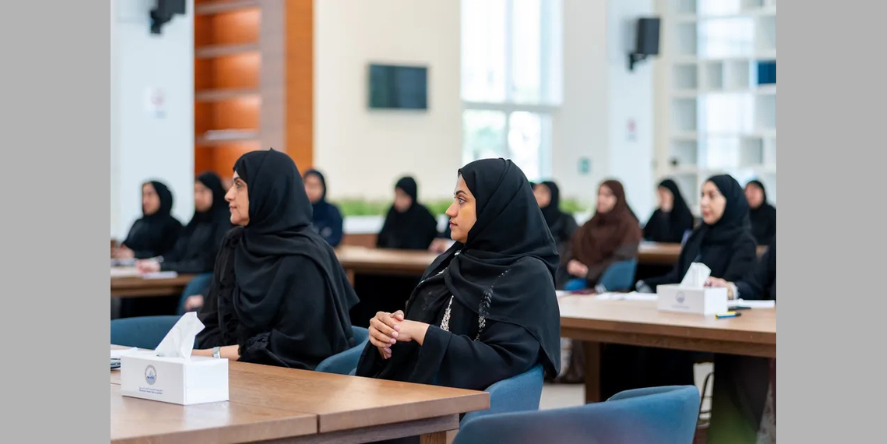
NAMA Women Advancement, in collaboration with Sharjah Islamic Bank, concluded the three-day “Mastering Financial Management: Saving, Financing and Investment” programme, held from 9 to 11 November 2026 at Sharjah Maritime Academy in Khorfakkan. Bringing together 40 women, the programme reinforced NAMA’s ongoing commitment to advancing financial literacy as a foundation for women’s economic independence, equipping participants with practical knowledge and skills to manage their finances, understand Islamic financing options and make informed investment decisions.
Through a combination of interactive workshops and practical exercises, participants developed essential skills in personal budgeting, saving, managing financial obligations, understanding Islamic financing options and assessing investment opportunities. Drawing on real-life financial scenarios, the sessions enabled participants to apply these concepts in practice, weigh potential returns against associated risks, and make informed financial decisions aligned with their individual priorities and long-term aspirations.
The programme comes amid growing participation by women in the UAE’s investment markets. According to data attributed to the Capital Market Authority in August 2026, Emirati women’s investments in securities markets reached approximately AED 63 billion, reflecting their growing presence in the investment landscape and highlighting the importance of financial literacy in helping women navigate investment opportunities and understand the associated risks.
Financial knowledge as a foundation for economic independence
H.E. Mariam Al Hammadi, Director General of NAMA Women Advancement, said: “Women’s economic independence depends on having the knowledge and skills to make informed financial decisions and take advantage of available opportunities. Financial literacy extends beyond managing money; it empowers women to plan for their future, navigate financial responsibilities and pursue their ambitions at every stage of their personal and professional lives. At NAMA, we believe that investing in women’s financial knowledge is an investment in their ability to build a more secure and independent future, transforming their aspirations into achievable goals.”
She added: “We are committed to moving beyond financial awareness to developing practical capabilities that women can apply in their everyday lives. Our collaboration with Sharjah Islamic Bank reflects the importance of specialised partnerships in delivering financial education that is relevant to the UAE’s economic and banking landscape, while introducing participants to financing and investment options aligned with Islamic finance principles. Our ambition is for this knowledge to translate into lasting financial practices, enabling women to navigate economic changes, manage their commitments responsibly and pursue opportunities with greater confidence and independence.”
From Income Management to Financial Planning
The programme was delivered by Hassan Al Balghouni, Head of Corporate Communications and Community Awareness, and Talal Al Shami, Head of Training, Research and Sharia Development at Sharjah Islamic Bank. Drawing on their specialised expertise, they led interactive sessions that combined essential financial concepts with practical exercises and real-life scenarios, enabling participants to apply financial knowledge to everyday situations.
The first day laid the foundation for effective financial management, focusing on budgeting, responsible spending and developing sustainable saving habits. Participants explored how to prioritise expenses, distinguish between essential needs and discretionary spending, and balance financial commitments with longer-term goals. The sessions also highlighted the importance of establishing emergency funds to prepare for unexpected expenses. Through hands-on exercises, participants assessed their spending patterns, developed realistic personal budgets and identified opportunities to optimise expenditure and set achievable savings targets.
Managing Debt and Exploring Islamic Financing Options
The second day focused on responsible borrowing and effective debt management, equipping participants with the knowledge to assess their financing needs, evaluate repayment capacity, and understand the implications of financial commitments. The sessions also addressed common borrowing pitfalls and practical strategies for avoiding excessive debt and maintaining long-term financial stability.
Participants also gained insight into the principles of Islamic finance and the financing solutions available within the UAE banking sector. Through practical examples and comparative exercises, they explored how to review financing terms, associated costs and contractual obligations, enabling them to compare available solutions and assess their suitability for different financial needs and financial circumstances.
Evaluating Investment Opportunities and Managing Risks
The final day focused on building participants’ investment knowledge by exploring the distinction between saving and investing, the relationship between potential returns and associated risks, and the role of portfolio diversification in managing investment exposure and supporting long-term financial goals.
Participants also developed practical skills in assessing investment products, verifying the legitimacy of investment opportunities and recognising potential warning signs of financial fraud. Through hands-on exercises, they analysed and compared hypothetical investment scenarios, taking into account their financial objectives, available resources and individual risk tolerance to identify suitable investment approaches.
A Sustained Commitment to Women’s Financial Empowerment
The training was part of NAMA’s ongoing Financial Literacy Programme, launched in 2024, which recorded a cumulative total of 416 training participants from its inception through June 2026, across its basic and advanced levels. Reflecting NAMA’s sustained commitment to strengthening women’s financial capabilities, the programme offers progressive learning opportunities that enable participants to build on their knowledge, develop practical skills and adopt responsible financial practices.